
An endgame that has always lacked breath
Travis Northup from IGN First spent several hours on the Lord of Hatred demo, the upcoming Diablo 4 expansion, and he brings personal baggage to the subject. In 2023, he praised the vanilla version's endgame, before walking back his words a few weeks later, once the content became too thin to go the distance. This kind of mea culpa says a lot about the structural problem Blizzard has never truly solved.
Every iteration of the endgame, from the Tree of Whispers to the Vessel of Hatred activities, has followed the same pattern: fun at launch, then exhausted within a few weeks. The game pushes you to play relentlessly, but the number of available activities has never lived up to that call. A few well-built pieces of content, but not varied enough to justify months of investment. This observation also applies to the new talent tree system, which had raised a lot of hope without necessarily extending endgame longevity.
It's with this context in mind that Northup approached Lord of Hatred. And for the first time, he walks away with the feeling that Blizzard has taken feedback into account. The endgame structure he got to see has at least a serious chance of holding up over time.
War Plans: the playlist that chains activities together
Once the Lord of Hatred is defeated, the real endgame grinding begins through War Plans. The principle is simple: a structured playlist that guides you from one activity to the next, without friction. Nightmare Dungeons, Helltides, the Pit — the six existing Diablo IV activities are all represented, and the system chooses for you the order in which to chain them through a branching tree where you select a few options before each step.
The War Plans side menu centralizes all endgame access from a single screen. No more searching for where the next Helltide is happening or farming Nightmare Dungeon keys. You finish an activity, you teleport directly to the next. The result: less time navigating menus, more time killing.
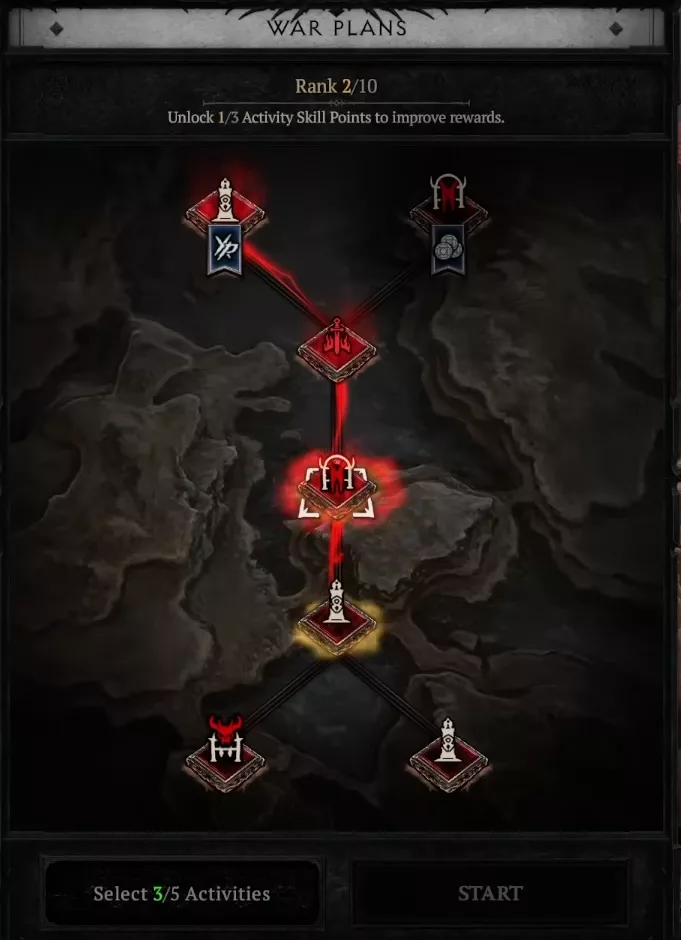
What the IGN First preview highlights well is the effect it has on pacing. Where systems like Uber Boss or the Vessel of Hatred Raid invited you to focus on a single activity in a loop, War Plans keep the session dynamic. For players returning after a break, it's also a lifeline: the system clearly indicates what to do and in what order to progress efficiently.
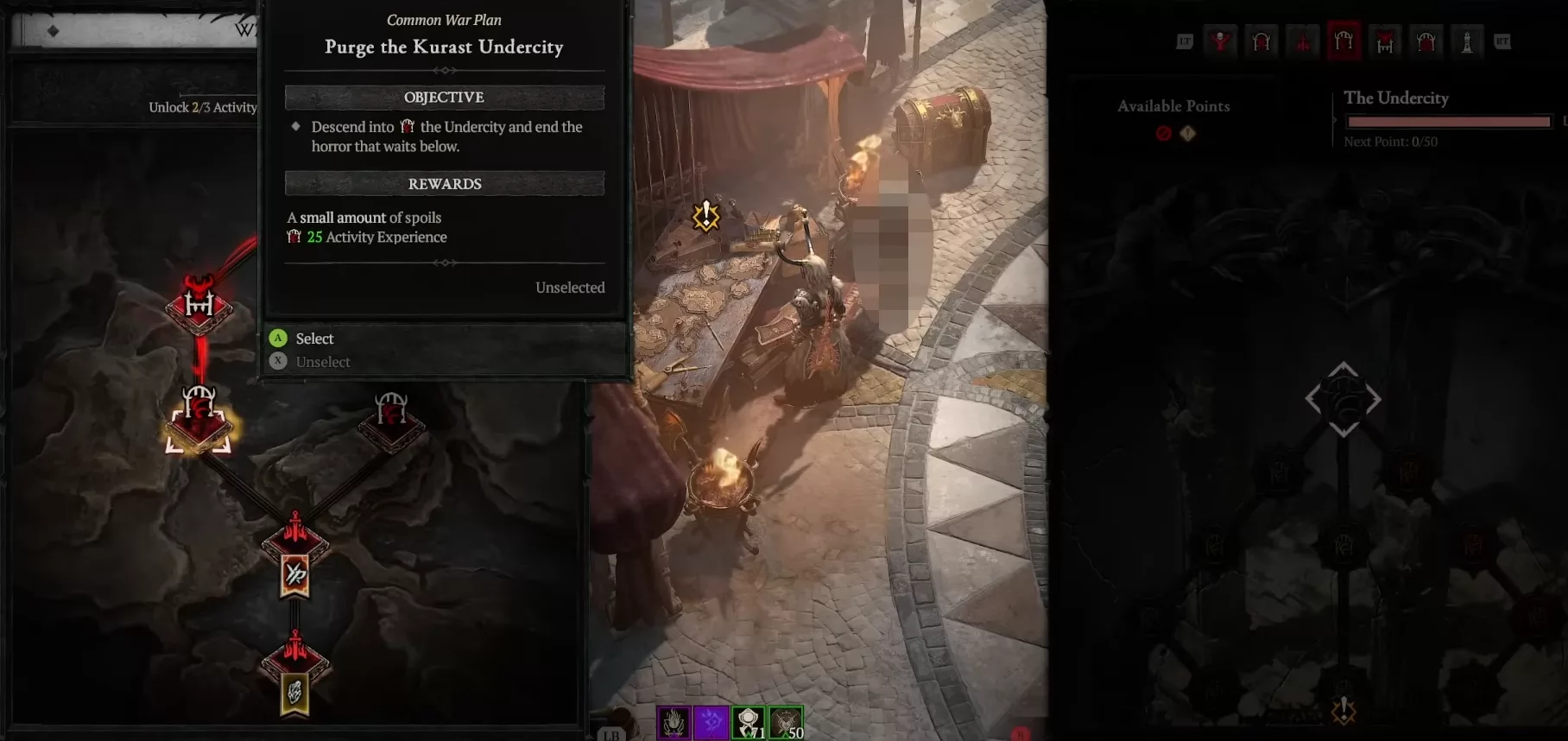
Building the War Plan itself adds an interesting strategic layer: by arranging activities in the branching tree, you accumulate experience bonuses that improve subsequent activities in the sequence. Each path choice therefore has a direct impact on run efficiency, making each new playlist more thoughtful than the last.
Upgrade trees: customizing every activity
Every endgame activity — from Nightmare Dungeons to Helltides, Infernal Hordes, and the Tree of Whispers — has its own upgrade tree. These trees let you either modify the activity's behavior or the type of rewards you pull from it. It's not a simple passive bonus — it's a real orientation of your playstyle.
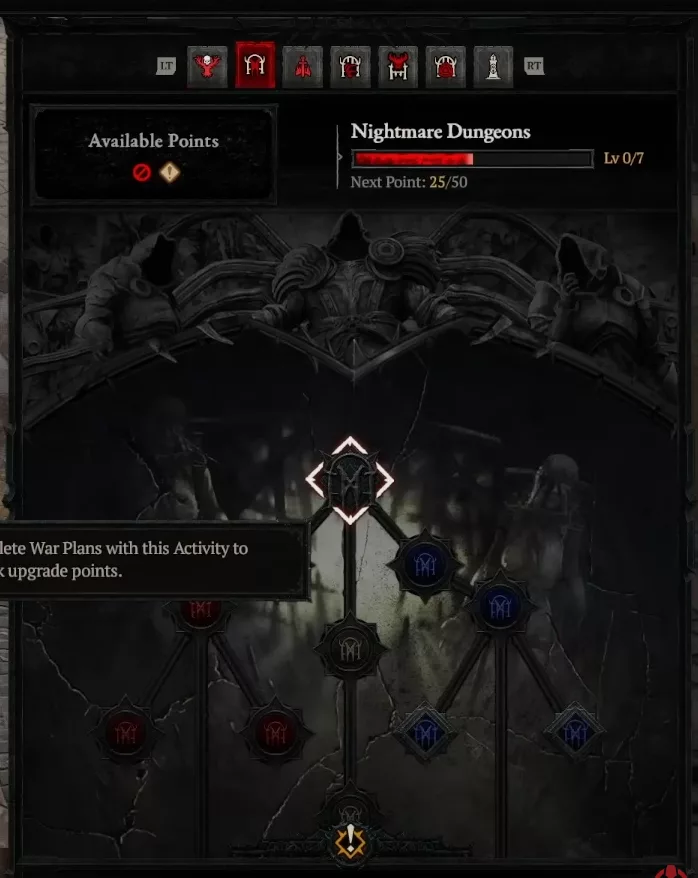
In the Nightmare Dungeons tree, for example, one perk guarantees that Treasure Goblins drop a specific type of loot when killed. This kind of modification directly changes the activity's profitability depending on what you're looking to farm. Points are limited, so you can't unlock everything. You have to choose.
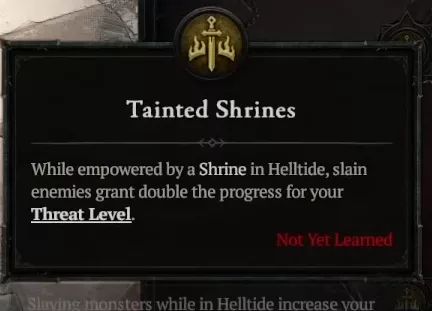
Infernal Hordes have their own tree, with a different logic. One perk, for example, doubles the speed at which your kills increase the threat level when you're under a shrine's effect. Some perks are clearly mutually exclusive — you can't have everything, and that's by design. Each choice reflects a different way to play.
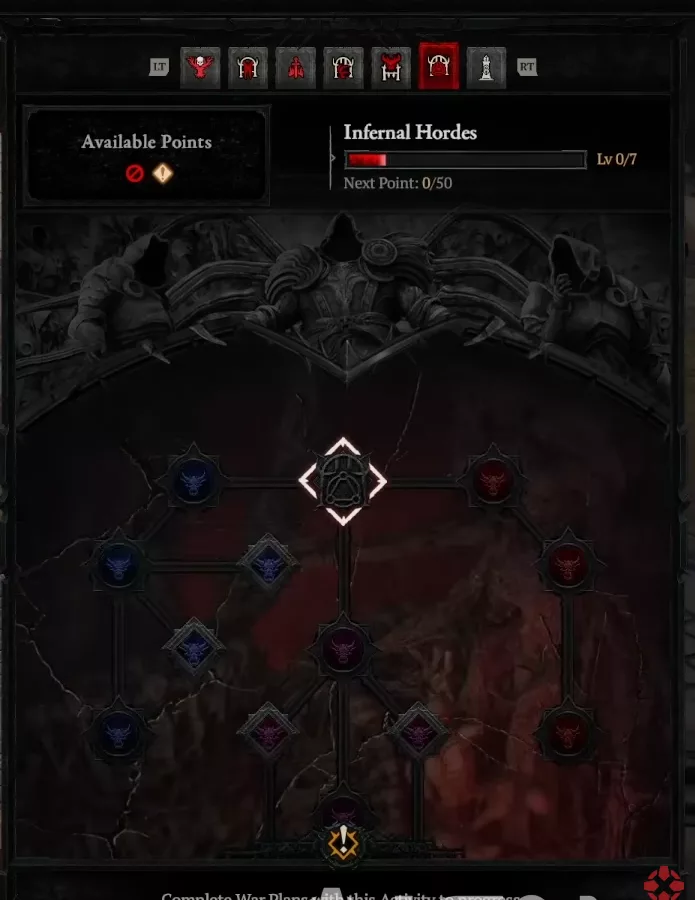
These two trees give an overview of the system's depth. Every activity has its own perks, its own specialization axes.
Tree of Whispers: choosing between guaranteed drops and rarity
The Tree of Whispers is one of Diablo 4's foundational activities. Present from the base game in the form of contracts to complete across Sanctuary, it's one of the endgame systems players know best. With Lord of Hatred, it too gets an upgrade board through War Plans, letting you concretely shape the type of rewards you want to pull from it.
The base mechanic stays the same: you complete Whispers, fill your gauge, claim your caches from the Silent Witness. What changes is that you can now spend your War Plan points to shape these caches according to your current needs.
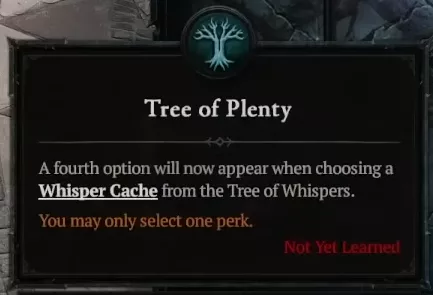
The Tree of Plenty perk plays on quantity. If you want to maximize the volume of drops per opened cache, this is the one to go for. Handy when you're targeting crafting materials or just want to swim in items without worrying too much about their quality.
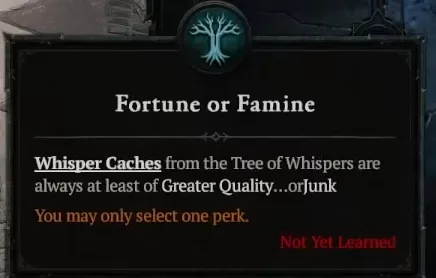
Fortune of Famine plays in another register. Its name alone says it all: scarcity as a paradox. Fewer drops, but higher quality. This kind of perk targets players who hunt specific pieces and prefer opening a cache with three genuinely interesting items rather than ten that go straight to salvage.
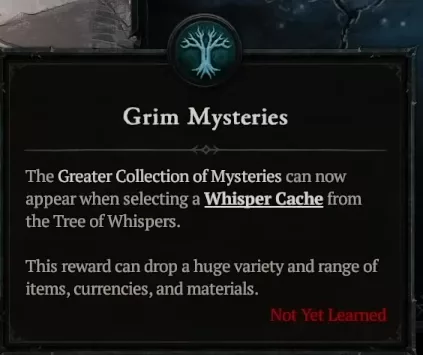
Grim Mysteries pushes the logic even further. The name evokes less predictable rewards, potentially rarer or more exotic. It's the perk that attracts players willing to accept some uncertainty in exchange for a shot at outlier drops. Some perks are also mutually exclusive, meaning choosing Grim Mysteries likely means giving up Tree of Plenty. Points are limited and decisions matter.
Nightmare Dungeons: steering loot toward your build
Nightmare Dungeons are no longer just about rolling Sigil Stones at random. Lord of Hatred introduces a dedicated upgrade tree, with perks that let you directly influence the nature of the rewards obtained. Three perks stand out for anyone looking to make their runs worthwhile.
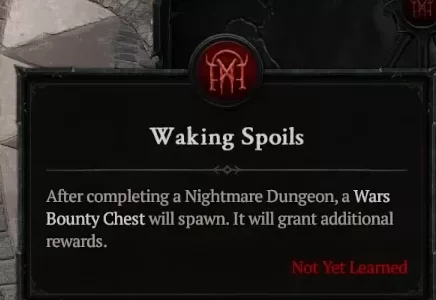
Waking Spoils is the first concrete example of what this tree can offer. The principle is simple: rather than being subject to pure luck on every chest or elite killed, this perk steers the type of loot generated based on specific criteria. A targeting layer aimed directly at players who were already farming Nightmare Dungeons with an objective in mind.
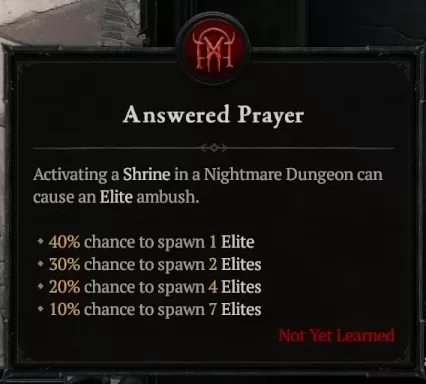
Answered Prayer pushes the logic further by offering another form of targeted reward. The common idea across these perks is to turn part of the randomness into a decision: you choose what you want to optimize before even starting your run. For a player pushing a build, that changes the relationship to farming.
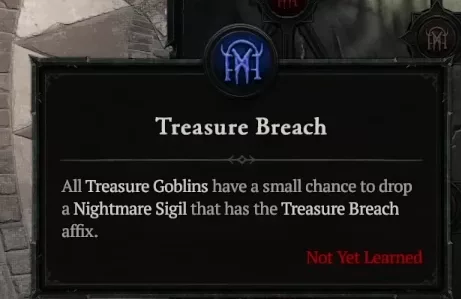
It's Treasure Breach that stands out in the IGN presentation. Travis Northup explicitly mentions this perk: when you kill a Treasure Goblin in a Nightmare Dungeon, Treasure Breach guarantees it will drop a specific type of loot. No more goblins escaping after coughing up three gold coins. This perk transforms these random encounters into targeted opportunities, and it's likely one of the tree's most impactful perks for rare-piece hunters.
Helltides: traps, shrines, and ambushes
Helltides are no longer just a loot rush. In Lord of Hatred, they have their own progression tree, and some perks radically change how you manage threat. The most notable: a bonus that doubles the speed at which your kills raise the threat level when you're under a shrine's effect. Staying near an active shrine becomes as much a tactical decision as an offensive advantage.
This is where Tainted Shrines come in — the corrupted shrines unique to the tide. They amplify the effects of this mechanic and push threat levels to heights unseen before.
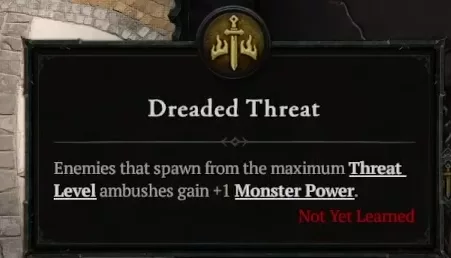
Beyond shrines, the Helltide tree introduces two new event categories: Hordes and Ambushes. The Hellborne Hoard triggers a massive demonic summoning concentrated on a zone. It's not a classic wave — it's a deliberate accumulation of threats to manage within a limited time.
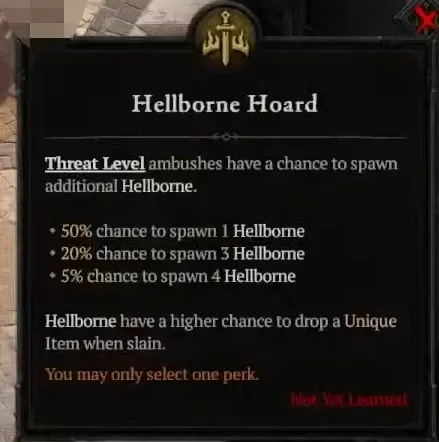
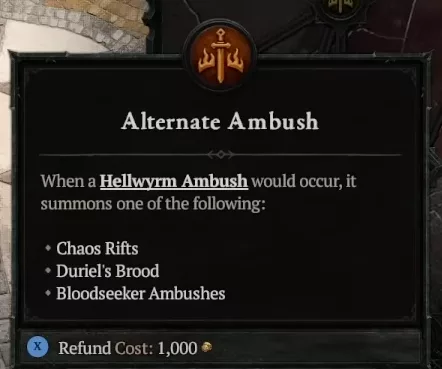
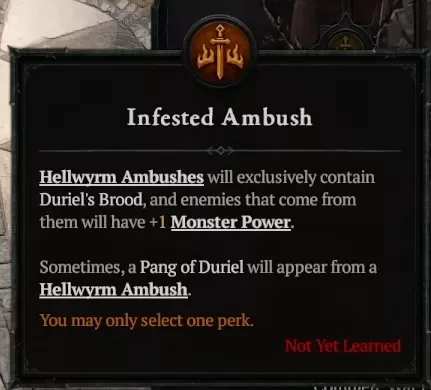
Ambushes round out the picture. Alternate Ambush and Infested Ambush are two variants that appear without warning during the tide. The first offers a different enemy configuration depending on the context; the second bets on density and special enemy types to quickly overwhelm you.
Undercity: exclusive boosts for the Pit
The Undercity is the upgraded version of the Pit. It keeps the time-trial principle but adds an upgrade board that lets you customize each run. Some perks modify event behavior, others directly steer the type of rewards you get. Here are the four options that stood out.
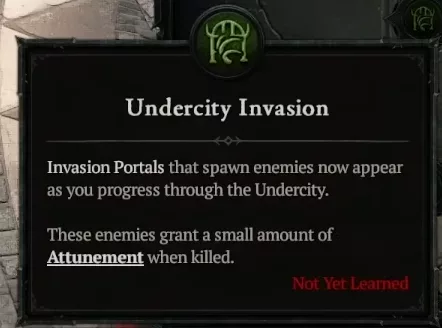
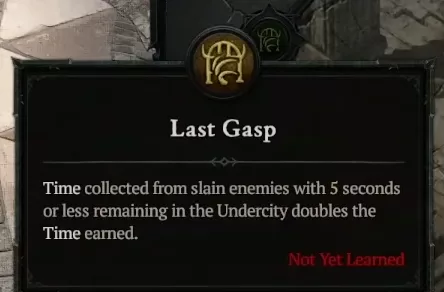
Undercity Invasion introduces a specific event within the Undercity, with its own rules. Last Gasp, on the other hand, plays on survival: a perk aimed at edge situations, where every second saved can make the difference on the final timer.
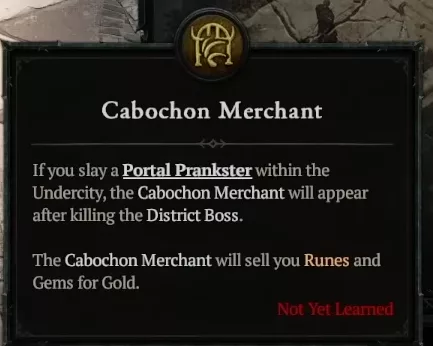
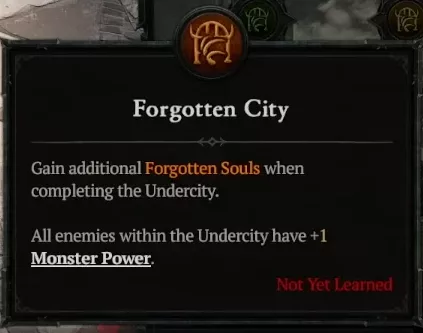
Cabochon Merchant spawns an exclusive vendor during the run, which directly influences available rewards. Forgotten City looks like the board's most ambitious perk, geared toward deep progression inside the Undercity. These four options illustrate the system's logic nicely: each upgrade shapes your experience differently, whether through the run's flow or what you take away from it.
Echoing Hatred: the endless horde mode that opens Torment 12
Lord of Hatred introduces a new horde mode called Echoing Hatred. The principle is simple: you're dropped into an arena, you kill until you fall, and the loot you collect is directly proportional to how far you've pushed. No fixed timer, no objective to check off. You push your build as far as it can go, and difficulty ends your session.
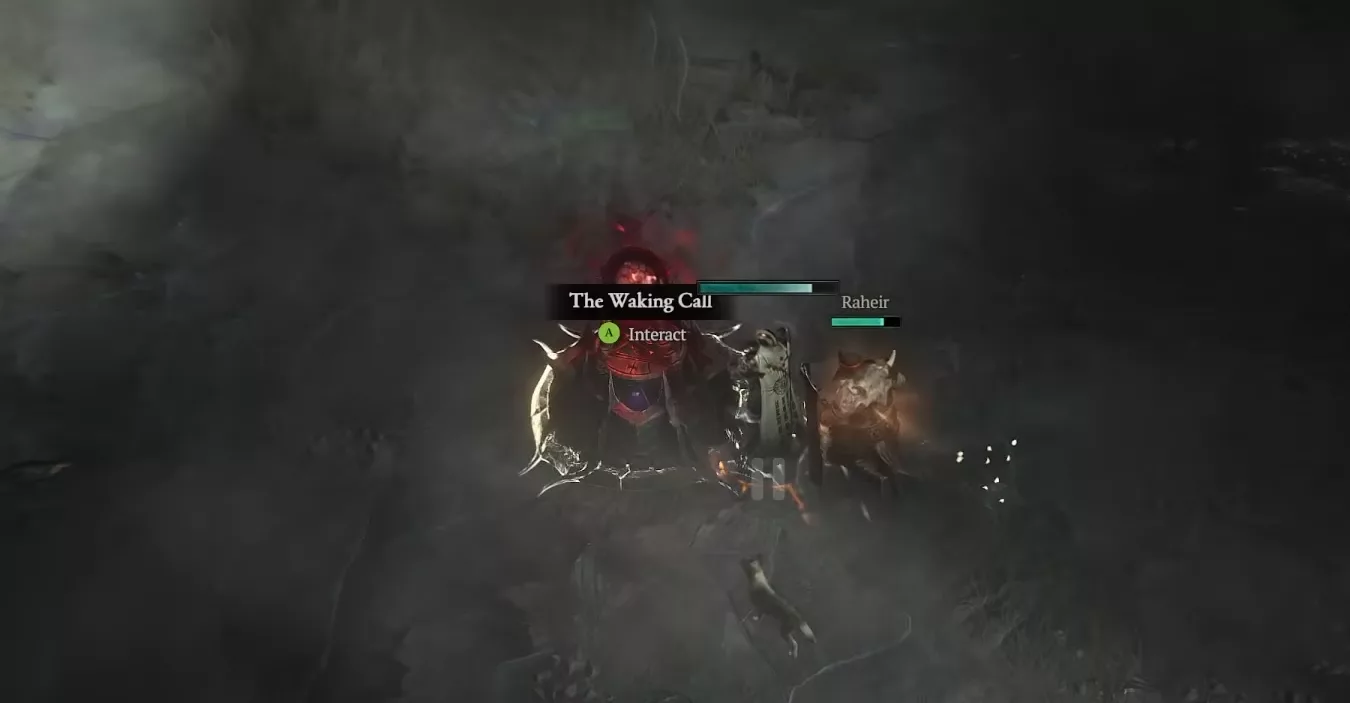
Difficulty automatically ramps up with every wave cleared. Bosses appear regularly, then in groups, until the pressure becomes unmanageable. What makes the mode demanding is the "Overwhelmed" counter: every enemy that spawns fills it up a little. If you don't kill fast enough, this counter ends your run. Action must be constant. You can't afford to breathe.
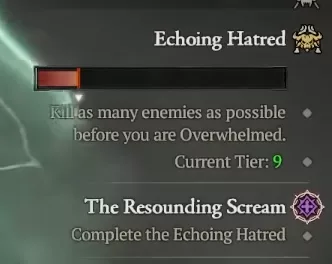
The mode is independent from the World Tier you're playing on. It walks you through difficulty tiers as you go, which makes it a natural measurement tool. If you hold up in a tier above your usual one, it's a clear sign you're ready to move up. This takes on full meaning with Lord of Hatred, which raises the Torment cap from 4 to 12. Eight additional tiers — a significantly longer progression to calibrate.
In terms of positioning, Echoing Hatred might challenge the Pit on its own ground. The Pit remains the reference for pushing a build to its maximum, but Echoing Hatred offers a more immediate, more readable gameplay loop, with rewards directly tied to performance. To test a new build or validate a tier jump, this mode has everything it needs to become a reflex.
Multiplayer and fishing: the remaining questions
Multiplayer: War Plans could create friction
The entire demo session was played solo, which leaves a real gray area: how do War Plans behave in a group?
The War Plan principle relies on a personalized list of activities to chain. The problem in a group is that each player has their own list. It's confirmed that party members get credit and rewards even while following the leader, but the question remains: do we risk feeling like a simple passenger, running after someone whose goals aren't ours?
Playing with others is an important part of the Diablo 4 experience for many players. It's an aspect that will need to be tested concretely at launch, because on paper, the War Plans system seems designed for solo use first and foremost.
Fishing: a fun addition, not much more
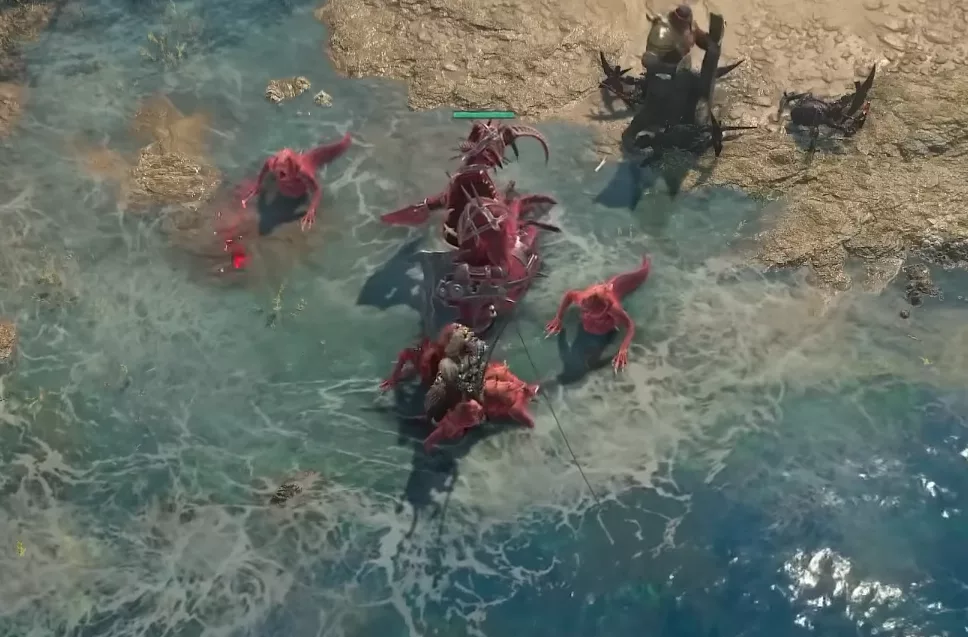
Fishing. The most unexpected addition to this endgame, and probably the hardest to defend seriously.
The activity consists of visiting different regions with a fishing rod, finding water or lava spots, and bringing back fish unique to each zone. The mini-game itself boils down to pressing a button at the right time when the fish bites. That's it.
Hard to claim this is a deep feature. Fish variety per zone is limited, and you see them all fairly quickly. It's more of a wink, a touch of humor from Blizzard, than a real gameplay mechanic.
It makes you smile. And somewhere, it fits better than you might think within Diablo 4's atmosphere. But let's be clear: no one's expecting an Animal Crossing-style fishing mode in an ARPG. That's not the goal, and it's just fine that way. Blizzard also confirmed that more details on Lord of Hatred will be revealed during the pre-launch livestream coming soon.





0 Commentaires
Aucun commentaire pour le moment. Soyez le premier à commenter !