
Mortismal Gaming, aka Mortem, looks back at a string of announcements that ended up wearing out a good chunk of the community. Closed studios, a contested digital shift, botched launches: the bad news keeps piling up at both Xbox and PlayStation. These repeated decisions are fueling a genuine video game trust crisis, one that affects major publishers and players alike.
A Video Game Industry Running Out of Steam

It’s hard to stay excited about the video game industry right now. You can’t go a month or two without one of the big players in the industry making a monumental blunder. The audience is seriously starting to burn out.
The global economic climate isn’t helping. Players’ finances are under pressure, just like everyone else’s, and that’s changing the way people consume video games. A PlayStation announcement about a shift toward all-digital adds to the list of decisions that haven’t gone down well.
Even a game that did fairly well recently, the Gothic remake, needed patches after its release. That confirms an underlying trend. Games are almost always in their best shape later, once they’ve been fixed, and often cheaper too.
As a result, a lot of studios and publishers come across as unreliable companies. At best, that’s a lack of consistency. At worst, it’s flat-out a lack of trust.
Xbox and Ninja Theory: A Showcase That Was Hiding a Shutdown
Xbox is a good illustration of this lack of consistency. In early June, at the Xbox Games Showcase, Microsoft unveiled the sequel to Hellblade, still in development at Ninja Theory. An announcement that seemed to show the studio had a future.

Four to eight days later, the news drops. Xbox is reportedly about to close Ninja Theory, or sell it to another player in the industry. The contrast is brutal between the showcase spectacle and the reality that follows almost immediately.
The theory put forward is simple. This presentation wasn’t meant to show players a game, but to make the studio more attractive at the moment of its sale. Showing that Ninja Theory is still working on an ambitious project, right before getting rid of it.
On a PC-focused channel, Xbox remains by far the most closely followed publisher day to day. This kind of sequence weighs heavily on how the company is perceived, especially since Xbox is going through a much broader crisis in recent months.
The criticism is mainly about the method. If the goal was to help the studio bounce back or continue in another form, it would have been enough to announce it clearly. Say things as they are, rather than dressing up a sale behind a trailer.
PlayStation and All-Digital: Trust Broken

Sony doesn’t escape this kind of controversy either. The company announced it wouldn’t even try to port its games to PC anymore, an admitted retreat after several attempts.
But the real point of tension goes back further. When PlayStation announced its shift toward all-digital, the company took a wave of criticism that never really died down. Players pointed to several concrete problems. Game preservation, first, with titles at risk of disappearing if servers shut down or digital rights change hands. Compatibility, next, between console versions and generations. The ability to lend a game to a friend or play it together, too. And for many, the simple attachment to the physical object, the box on the shelf.
What makes the situation even more frustrating is that digital itself doesn’t bother anyone. On PC, millions of players buy their games digitally without ever complaining about it. The reason is simple. Steam works. The platform guarantees reliable access to your library, game after game, year after year.
Faced with that, PlayStation’s PC releases have often turned into a fiasco. Helldivers 2 is the most telling example. The game was sold on Steam, so in theory accessible wherever Steam is available. Except you also had to link a PSN account, and that account didn’t exist in certain regions. As a result, players who had paid for their game found themselves unable to play it, purely because of an administrative constraint added after the fact. It’s not the first time Sony has badly mismanaged its PC bets, as shown by the emergency refund of its hero shooter HIGHGUARD shut down two months after launch.
Why These Decisions: The Race for Short-Term Profit
Behind these Xbox and PlayStation controversies, the same logic keeps coming back. The answer boils down to one word: money. Big video game companies answer to their shareholders, and that constraint pushes them to favor immediate results over a multi-year strategy. A studio closing or a franchise disappearing is almost never a coincidence. It’s often the direct consequence of a financial calculation made months, even years earlier.

The COVID boom is the most blatant example. Xbox and PlayStation took advantage of a spike in sales and playtime to buy up dozens of studios. The problem is that this level of activity was never meant to last. Once the boom faded, both giants ended up with structures far too heavy for their actual revenue. The result: waves of layoffs and entire studios shut down, having been bought at a premium just a few years earlier. Epic Games lived through a very concrete version of this scenario, with a thousand employees laid off despite the success of Fortnite.
Steam comes out ahead, and that’s no coincidence either. Valve remains a private company, with no shareholders to reassure every quarter. That lets it make long-term decisions without having to justify every choice with an immediate result. It’s not an automatic guarantee of success, but it removes a pressure that often pushes other industry players to miscalculate their bets.
Not every decision can succeed, and some factors are beyond a company’s control, market, competition, economic climate. But one observation keeps coming back: a lot of these companies need to learn to think beyond the present moment. Reacting to a sales spike by hiring left and right, or gutting a studio after just one disappointing quarter, are short-term reflexes that end up costing dearly.
There’s also a more subtle mechanism, this time on the players’ side. The best time to buy a game is often a year or two after release, when it goes on sale. This widespread habit means most players’ playtime is concentrated on older titles rather than new releases.
This behavior deprives new releases of quick profitability. A game that doesn’t perform fast enough at launch is seen as a failure, even if it could have found its audience later. This vicious circle in turn fuels new studio closures, closing the loop with the short-term decisions mentioned above.
The Myth of the Perfect Launch-Day Game
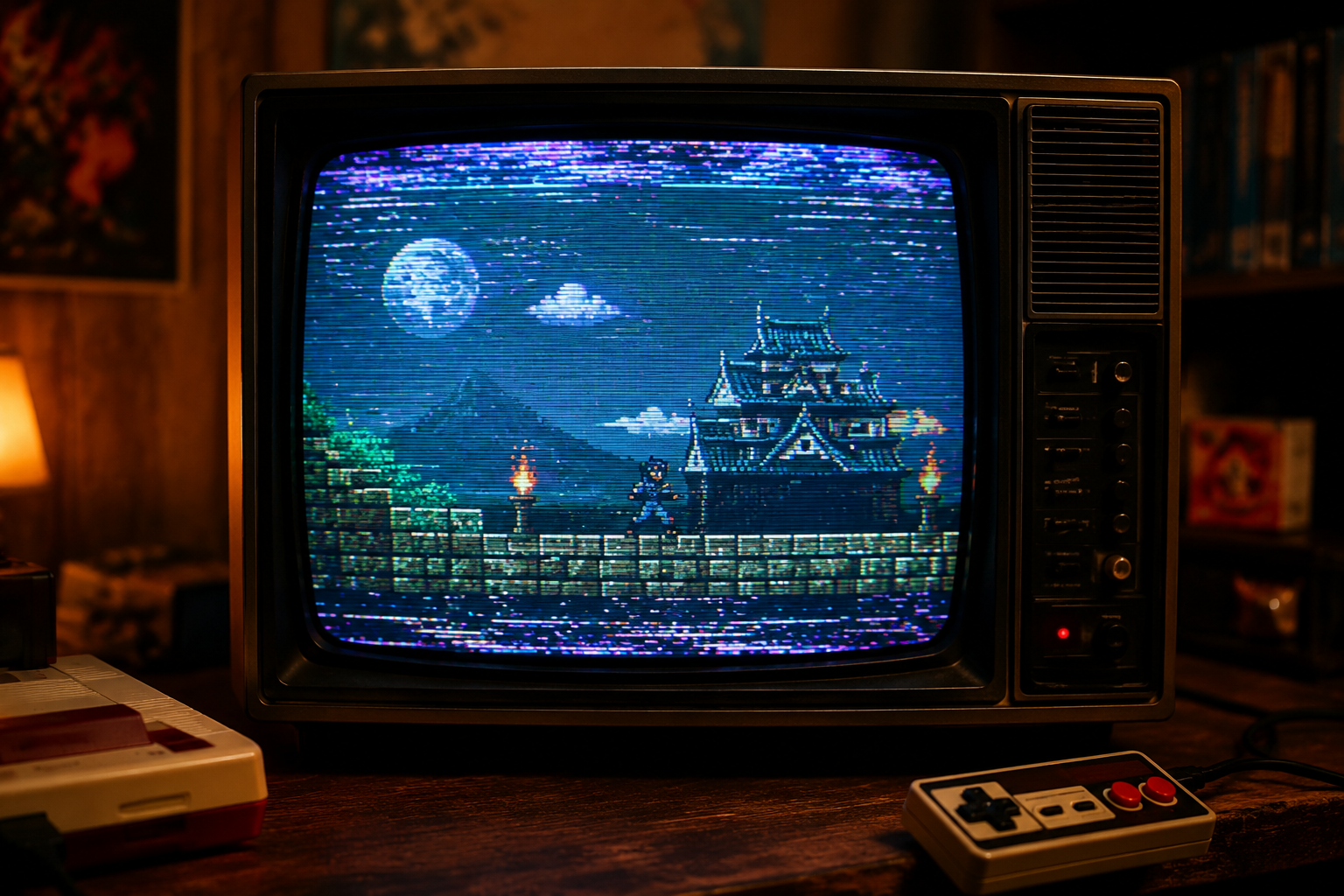
There’s always someone claiming that ‘back in the day, games shipped flawless, no bugs.’ That’s false. Games from fifteen or twenty years ago crashed, glitched, and corrupted saves just as much as today’s do. Nostalgia just makes people forget the crashes, the glitches and the day-one patches that already existed back then.
That doesn’t mean we should accept just anything. If you pay for a game, it should be in a decent, playable state the moment you launch it. It’s not a question of perfection, it’s a question of basics.
The real problem is what happens when those basics aren’t there. A botched launch drives players away, as they’d rather wait for fixes before buying. And that delay can be costly. A game that starts off badly may never make up for lost sales, to the point of endangering the studio behind it, or even getting it shut down.
A Storm That Will Eventually Pass

What’s hitting video games right now is a perfect storm of circumstances. Several distinct problems are colliding at the same time, fueling this video game trust crisis that’s wearing down a good chunk of players. The industry isn’t about to collapse because of it. But it could go through a few rough years.
The mechanism is almost clockwork. Publishers make decisions hostile to their own customers. Players lose trust. They turn to older games instead, often cheaper and already proven. As a result, new releases struggle to become profitable. Studios shut their doors. And these closures fuel the ambient distrust even further. A circle that closes in on itself, visible even in the way Xbox keeps collapsing while other franchises try to keep the ship steady.
In this context, there’s still room to be claimed. Room for a company capable of pulling itself out of this video game trust crisis while staying profitable. The two aren’t incompatible, despite what the current situation might suggest.
In the meantime, we should probably expect two or three more difficult years. Long enough for the industry to be forced to correct its course.









0 Commentaires
Aucun commentaire pour le moment. Soyez le premier à commenter !