Lord of Hatred: Diablo 4's next major expansion
On April 24, 2026, the official Diablo channel streamed the Developer Update for Lord of Hatred, the next major expansion for Diablo 4. Nearly two hours of content to showcase everything arriving on April 27: two new classes, redesigned progression systems, and a host of long-awaited features the community has been asking for.
On the class front, the Paladin arrives alongside the Warlock, a master of the occult who enslaves demons and unleashes hellfire across the battlefield. Existing classes are not left behind — the Rogue, the Sorceress, and the Spiritborn all receive new skill variants that open up entirely new build archetypes.
The stream also covers two major system additions: the talisman, a new equipment slot made up of seals and charms to further customize builds, and the return of the Horadric Cube for endgame crafting. Warplan redefines endgame progression by letting you chain activities in any order you choose. Runes have been overhauled and integrated into the Cube. And the loot filter finally makes its way into the game.
This article breaks down everything announced during the stream. For a full overview of the Lord of Hatred expansion prior to this Developer Update, check out the details revealed during the press embargo.
The talisman system: seals, charms, and new ways to specialize
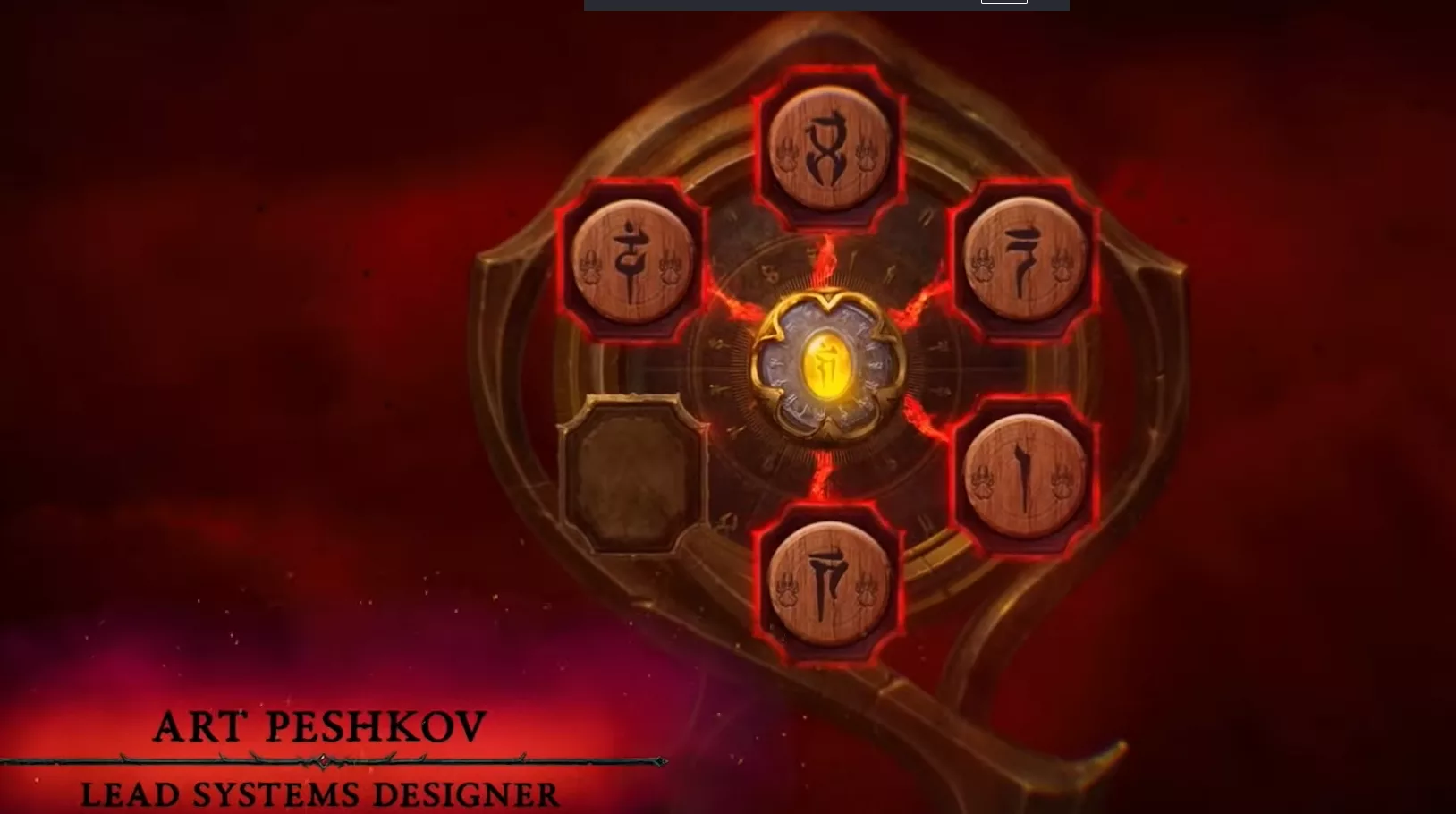
Lord of Hatred introduces the talisman, a new equipment slot designed to add deeper build identity to every character. The concept is straightforward: you combine a seal with charms to create synergies that translate directly into combat impact. Both components drop naturally through normal gameplay, in all rarities, making it a mechanic you will engage with from your very first hours in the expansion.
Seals form the foundation of the talisman. They unlock additional charm slots, can carry bonus Greater Affixes, and some impose restrictions on which charms you can equip. The rarer the seal, the more possibilities it opens — but also the more demanding and interesting the optimization choices become.
Charms come in several types, each with a different power level depending on your progression:
- Normal, magic, and rare charms: accessible early on, they serve to reinforce builds during the leveling and early endgame phase.
- Unique charms: they replicate the iconic effects of existing unique items already in Diablo 4, letting you benefit from those powers without locking a specific gear slot.
- Set charms: these work differently. The more pieces of the same set you equip, the more cumulative bonuses you unlock. Before Torment difficulty, these bonuses are available to all classes and geared toward progression. In Torment, they become class-specific, far rarer, and define true playstyle archetypes.
This system does not replace traditional gear hunting — it layers on top of it. For players who spend hours farming a specific boss or refining their endgame build, unique and set charms represent a new tier of rewards to chase. Blizzard emphasizes readability: the impact of every choice should be felt immediately in combat, without needing to open a spreadsheet.
The Horadric Cube is back and revolutionizes crafting
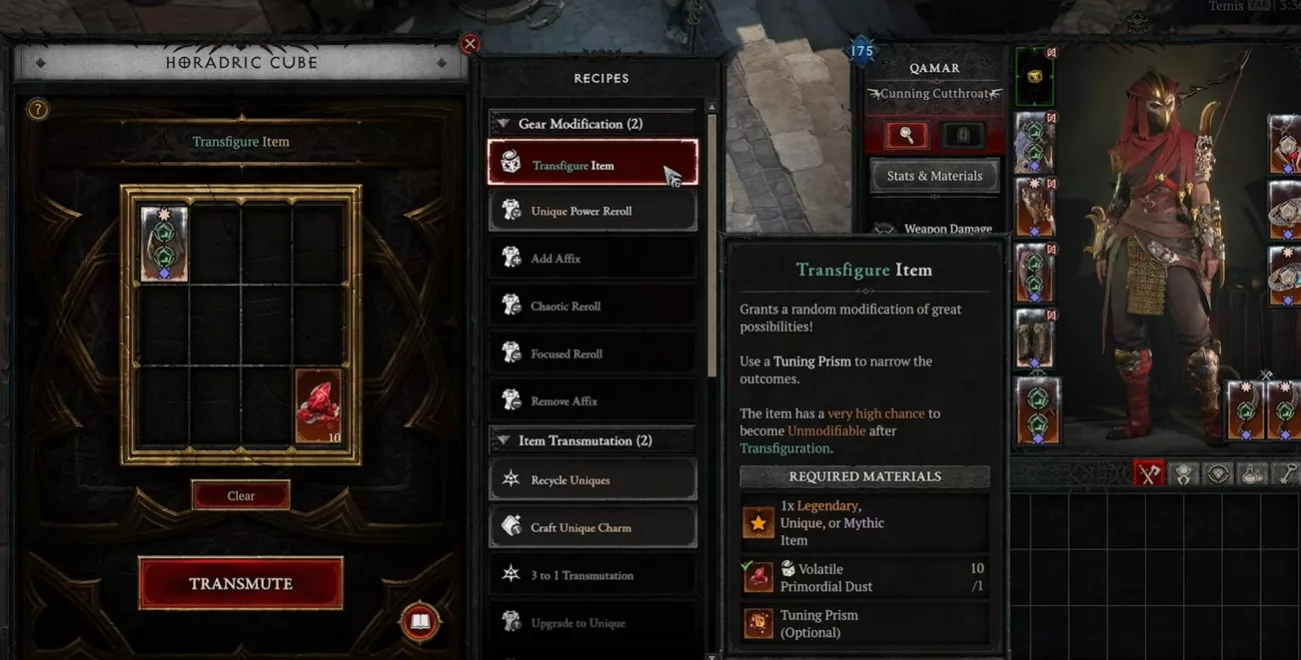
If you grew up with Diablo 2, the name alone is enough to get your blood pumping: the Horadric Cube makes its grand return in Lord of Hatred, and it does not disappoint. More than a simple fusion tool, it is the beating heart of endgame itemization. The core idea: take an item, combine it with rare materials through transmutation, and push it up the rarity ladder — from rare all the way to legendary. A strong drop with the right base affixes becomes a tailor-made piece of gear, without depending on pure luck.
The next step is called transfiguration, and this is where crafting takes on a whole new dimension. It lets you pour a layer of powerful effects onto an already well-built piece — and in the best cases, you can transfigure the same item multiple times. Two options exist depending on your situation: standard transfiguration, chaotic but with a high reward ceiling, and transfiguration with an entropic prism, more stable and always guaranteeing a net improvement. Already sitting on a near-perfect item? The entropic prism is your safety net. For amulets, the Cube has something special in store: an exclusive transfiguration that can graft an additional legendary power onto a piece, even applicable to uniques or mythic items. For a full breakdown of every available recipe, check out our complete Horadric Cube crafting guide.
And sometimes, the smartest move is sacrifice. You can now break down an ancestral unique to create a unique charm — a tough but rewarding choice that opens a direct path to some of the most powerful pieces in the talisman system. The Horadric Cube ties these systems together organically: low-level items become relevant crafting bases again, runes integrate natively, and every drop can potentially become the starting point for a best-in-slot piece. It is a complete rethink of itemization logic, making every farm session feel more intentional.
Rogue changes: new variants and mastery of shadows
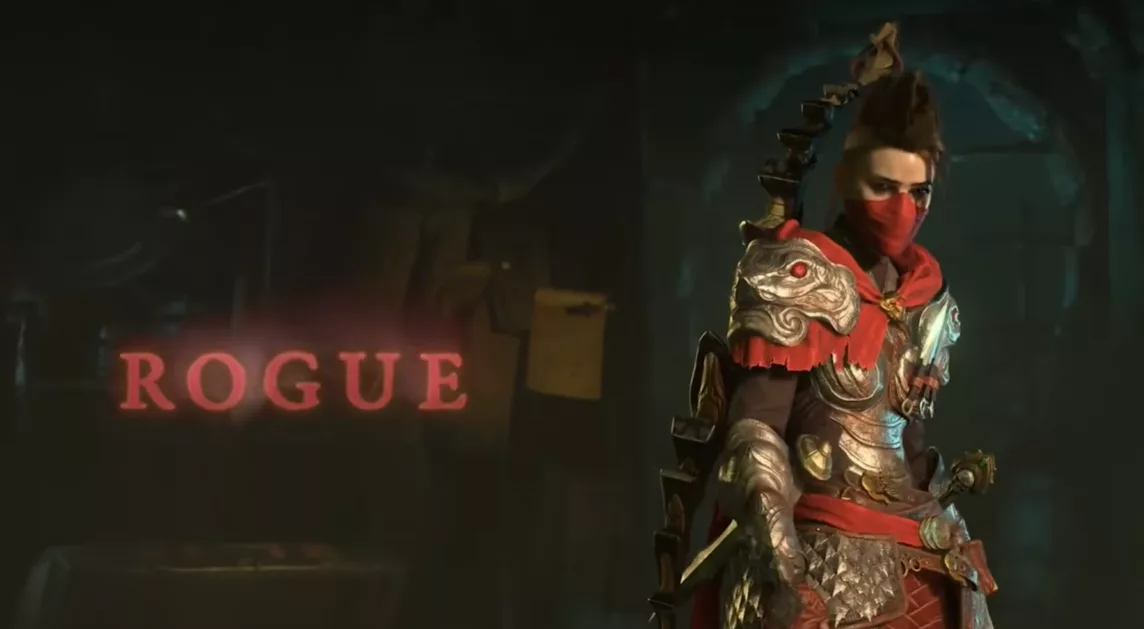
Lord of Hatred also takes a deep look at existing skill trees, and the Rogue comes out significantly transformed. Blizzard's stated goal is simple: make every choice readable, every experiment rewarding. These changes are part of a broader effort around the complete skill tree overhaul that touches every class in Sanctuary.
Blade Dance changes category: it now sits among core skills and continuously drains energy during activation. Players who prefer a more explosive approach will find what they are looking for in the Grenade Jumper variant, which swaps the knives for a relentless stream of explosive grenades. Same energy usage, radically different battlefield output. This is exactly the kind of archetype choice the variant system is designed to deliver.
Shadow Mastery also gets meaningful additions. The Shadow Shot variant, branching off from Penetrating Shot, summons phantom silhouettes that mirror your attacks — a passive pressure multiplier perfectly suited for range-focused builds. Shadow Clone takes a different direction: its turret variant plants stationary clones that relentlessly pummel enemies around them. Two takes on shadow play, two distinct power fantasies, and real freedom to build the Rogue you want.
Sorceress Changes: Elemental Variants and Prismatic Familiar
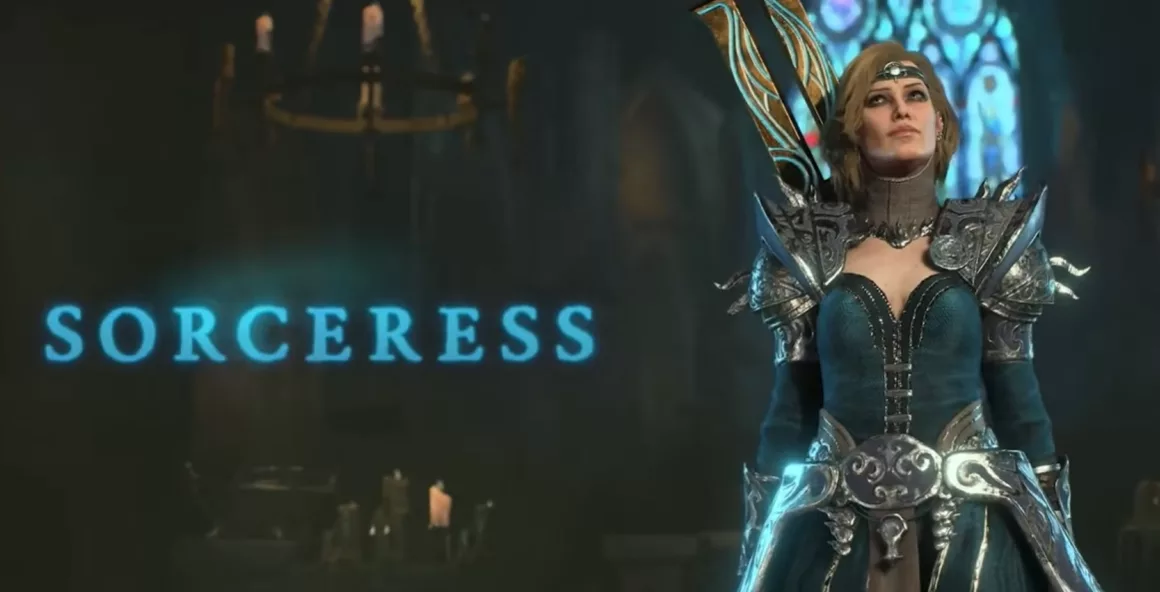
The Sorceress is the supreme master of three elements — fire, cold, and lightning — and Lord of Hatred brings new skill variants to further refine her playstyle. Charged Bolts receives a Burning Pierce variant: instead of piercing through enemies, the bolts release fire orbs on impact. In practice, this transforms a skill usually geared toward corridors into a devastating option against tightly packed groups, ideal for close-quarters combat. It's a paradigm shift that gives the Sorceress a genuine alternative against dense packs without having to overhaul her gear entirely.
Familiar is the skill that benefits from the most variants in the expansion, with no fewer than four options available. The first three let you permanently lock your familiar's element — fire, cold, or lightning — each providing bonuses tied to that element. But it's the fourth option, the Prismatic Familiar, that should generate the most buzz: every spell you cast triggers an explosion of the corresponding element around your familiar. This mechanic directly rewards the Sorceress's elemental diversity and opens up unprecedented build possibilities, turning every action into an elemental chain reaction perfectly synchronized with your spell rotation.
Spiritborn Changes: New Spirits and Form Synergies
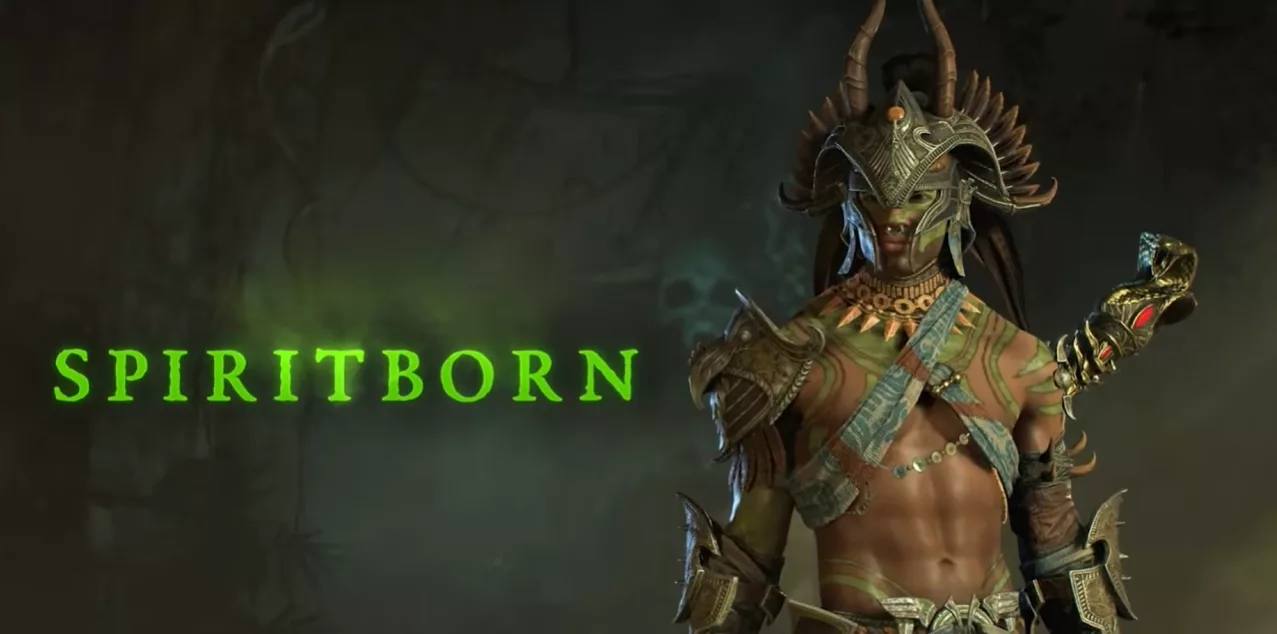
Lord of Hatred brings two significant tweaks to the Spiritborn, and they genuinely change how certain spirits interact with your forms. The first concerns Crackling Earth, a variant of Crushing Stomp that shifts the skill into Eagle territory: gone is the gorilla-style crowd control, replaced by lightning damage and generation of Storm Feathers on every enemy hit. Paired with the Aspect of Plunging Feathers, you get a devastating synergy for shredding tight groups — the kind of combo that turns a movement skill into a true clearing tool. If you're running a lightning-focused Spiritborn with good monster density, this variant clearly deserves your attention. You'll also find our analysis on the two new Spiritborn uniques in exclusive preview if you want to plan your gear ahead.
The second change affects the Protector, and it takes a genuinely original direction. In its new variant, the forest guardian spirit doesn't act alone: the Centipede spirit joins in, poisoning the area around the Protector and continuously weakening nearby enemies while unleashing Pestilent Swarms on the zone. We move from a purely defensive tank to a hybrid defense/debuff duo, opening up interesting prospects for melee builds looking to maintain constant poison pressure without sacrificing survivability.
The Warlock: The New Class That Commands Demons and Infernal Flames
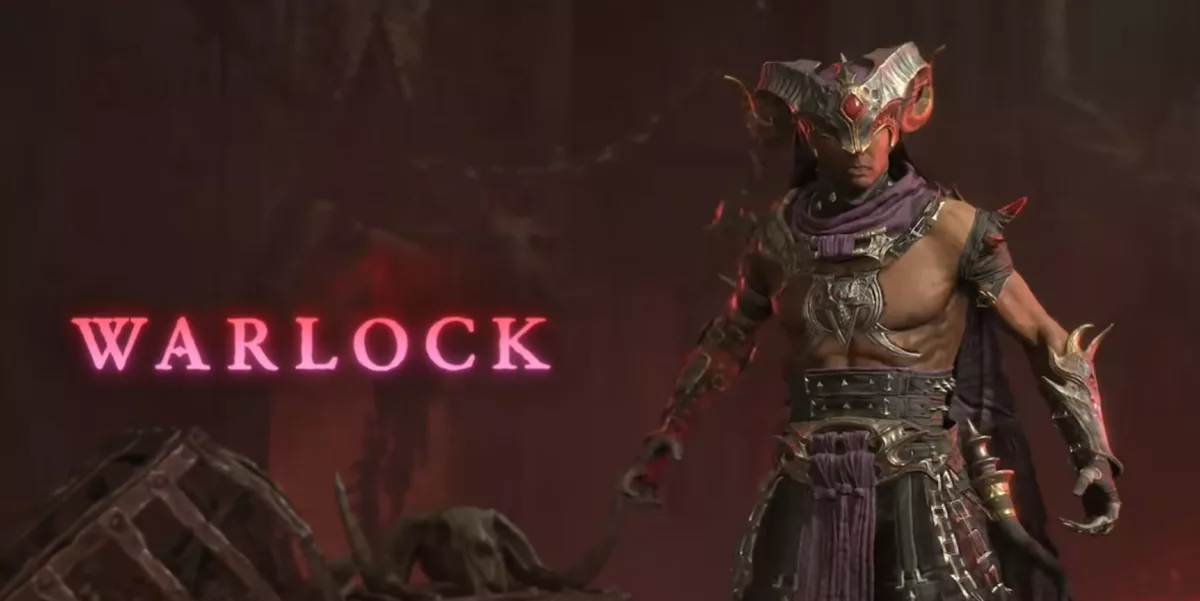
With Lord of Hatred, Blizzard introduces the Warlock. Where the Paladin embodies divine light and righteousness, the Warlock operates on an entirely different register: enslaving demons, channeling Mephisto's pure hatred, and unleashing infernal flames upon enemies. It's a dark, powerful fantasy — immediately recognizable. Exactly the kind of class that Sanctuary was missing.
What makes the Warlock unique is its dual resource system. Wrath is generated through basic skills like Condemnation and spent in core attacks like Infernal Rupture for immediate damage bursts. Dominance, on the other hand, regenerates far more slowly. It fuels the summoning of greater demons, most notably Hellbreath, which breathes devouring flames over everything in range. Both resources coexist and complement each other: managing their balance in the heat of combat is what gives the Warlock its depth. For a detailed look at how these resources fuel each skill, check out the full Warlock talent tree.
For those who want to push destruction to its peak, the ultimate variant Armageddon Ritual transforms Apocalypse into an unrelenting deluge of fire and brimstone across the battlefield. On paper, it sounds like a promise. In game, it's exactly the experience that offensive build enthusiasts were looking for: a class that rewards aggression, resource optimization, and a true sense of controlled chaos.
Warplan: Build Your Own Endgame Path
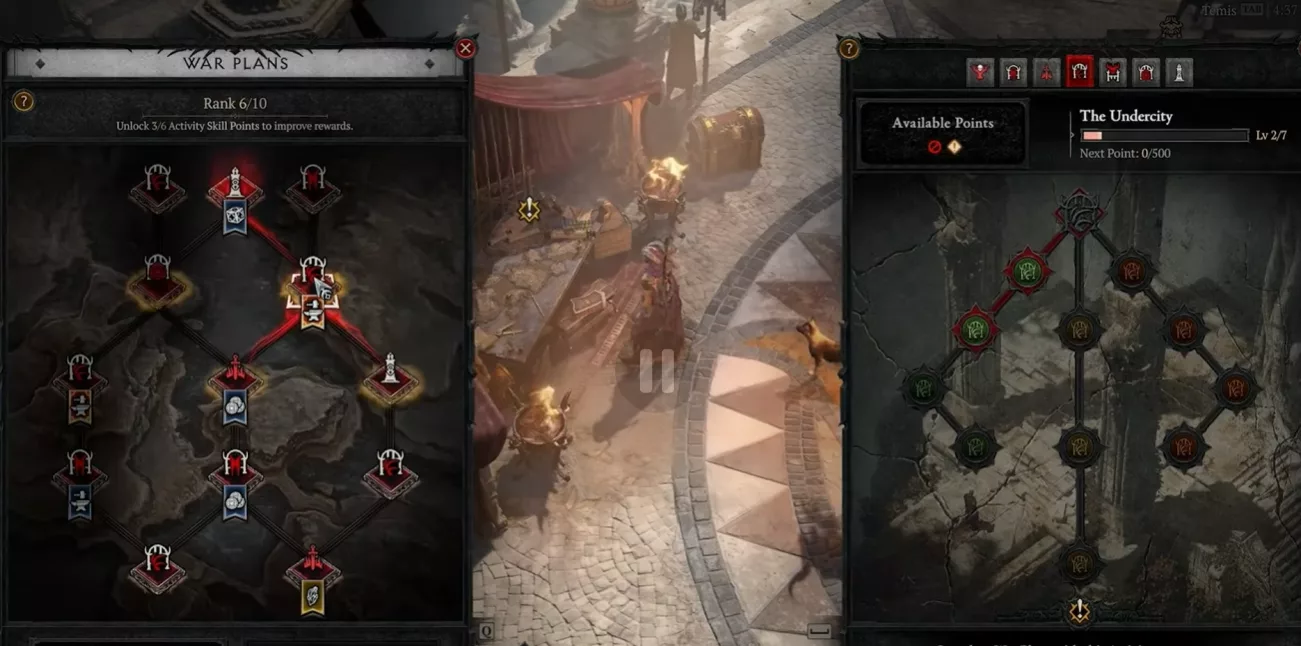
Diablo IV's endgame has long suffered from a flaw that was hard to ignore: the feeling of having a progression imposed on you rather than choosing your own. Lord of Hatred addresses this directly with Warplans, a new system that places the war table at the heart of your endgame experience. Located in Tenos, the capital of the Sco Isles, this table lets you compose your own activity playlist. Dungeons, pit bosses, world events — almost all available content can be chained within a single Warplan, up to five activities in a row. As you progress, the war table gains levels, unlocking higher rarity nodes and longer combinations. The idea is simple but fundamental: you decide how your evening unfolds, not the game.
What sets Warplans apart from a simple selection menu is the fluidity they bring to each session. Once your path is set, you can teleport directly to the next activity without going through menus or transit zones. Once the Warplan is complete, you're instantly returned to Tenos to collect your rewards and build a new one. Progression becomes a continuous flow, and each session is built around what you actually want to do: burning through a pile of seals, grinding a specific pit boss, or alternating between different content types based on your mood.
Warplans don't just organize endgame — they enrich it. Each activity has its own modifier tree in which you invest points earned through play. Seven points per activity, over a hundred different modifiers spread across all endgame content. The same dungeon can become a radically different experience depending on the modifiers chosen: increased enemy density, stronger elite affixes, rewards skewed toward a specific drop type. It's a layer of customization that naturally extends the lifespan of existing content. Warplans aren't a temporary fix for endgame monotony. They redefine its architecture so every player can carve their own path through it.
Loot Filter: Finally in Diablo 4
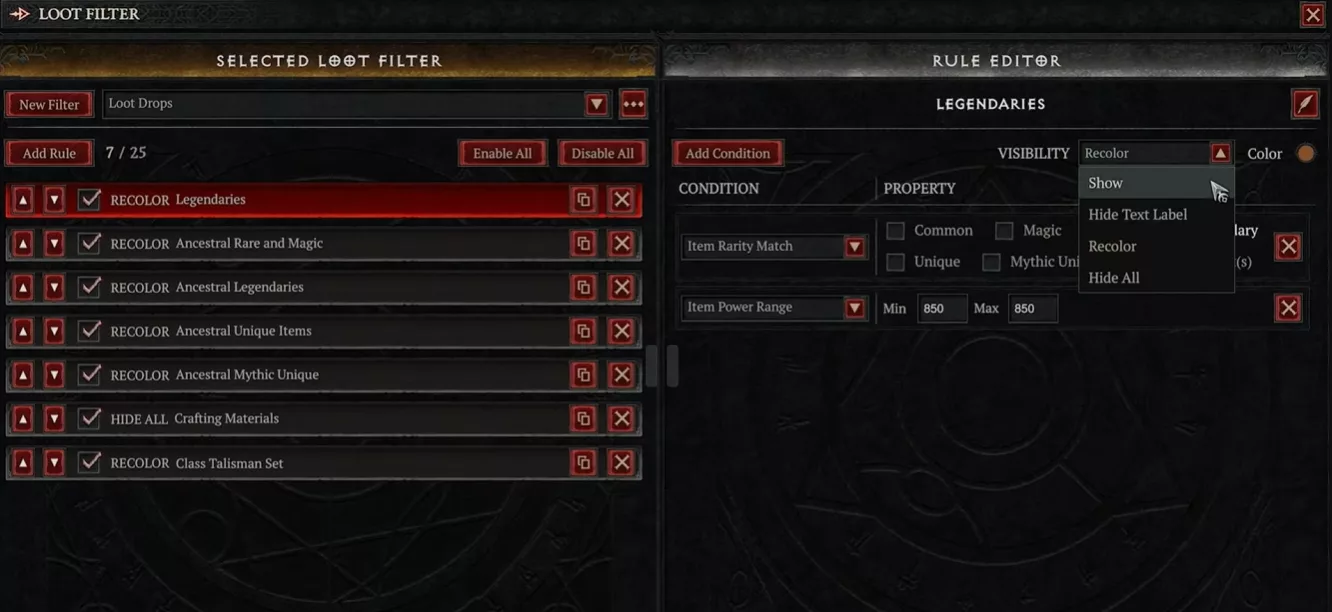
This is arguably the most requested quality-of-life feature in years: the loot filter is finally coming to Diablo 4 with Lord of Hatred. Hardcore loot hunters know how quickly sifting through the ground between enemy packs can turn into a chore. From now on, you decide what deserves your attention and what disappears into the background noise.
In practice, the loot filter gives you control over item display on the ground. You can hide item text, remove ground visual effects, combine both, or recolor text to make the drops that actually matter stand out at a glance. If you're hunting a perfect base with four specific affixes, you set your criteria and a minimum required count. Eligible items light up while the rest fades away. The filter also supports the new systems introduced by the expansion, including talismans, ensuring full compatibility from launch.
The other major QoL addition in this update is the overlay map. Activate the overlay and the minimap steps aside to widen your field of view across Sanctuary without ever taking your eyes off combat. Keyboard shortcuts let you adjust opacity and zoom on the fly, and the map colorization adapts to your preferences. For players who want to maintain continuous flow, an auto-navigation option traces your route directly to your objective.
Runes Update: Less Friction, More Power
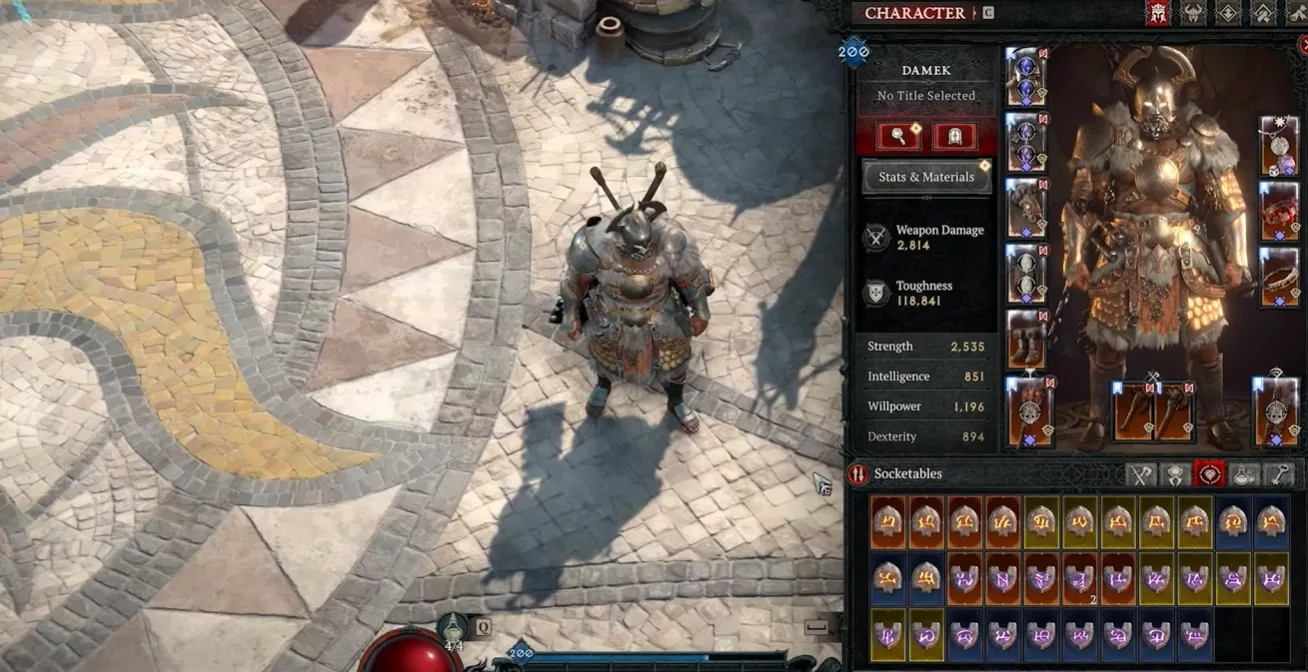
Runes are getting a complete overhaul with Lord of Hatred, and the goal is clearly stated: reduce friction and make progression smoother. Blizzard has trimmed the pool by removing underused runes, and all remaining ones now integrate cleanly into the socketable item inventory. They're also deeply tied to the Horadric Cube crafting system, which constitutes an indirect but real buff to targeted farming. If you were looking for reasons to chase specific runes again, you just got one.
The big piece of this section is the full itemization overhaul. 200 legendary aspects have been reworked at the design level — not just number adjustments, but fundamental updates. Gems are also receiving a major upgrade: weapon gem effects are significantly more powerful, and new gem tiers are being added. On the quality-of-life front, the stack size for stackable items increases to 1,000, finally solving the inventory headaches many players knew too well. Tempered affixes have also been thoroughly revised, with one standout change: unique and mythic items can now be tempered as well.
The most impactful change remains the one to damage multipliers. These now become multiplicative on gear, which fundamentally transforms how you evaluate an item and build your character sheet. Stacking multiple pieces with strong multipliers will create exponential synergies where the additive system used to smooth everything out. Greater Affixes gain even more value in this context, since every point gained counts more when effects multiply together. It's a structural change that will redefine what a good item looks like in Lord of Hatred, and will likely drive the entire meta toward hunting truly optimal pieces. For everything the press embargo already anticipated about these changes, you can revisit everything the press embargo revealed.
Lord of Hatred Launches April 27, 2026: Date, Pre-Download, and Collaborations
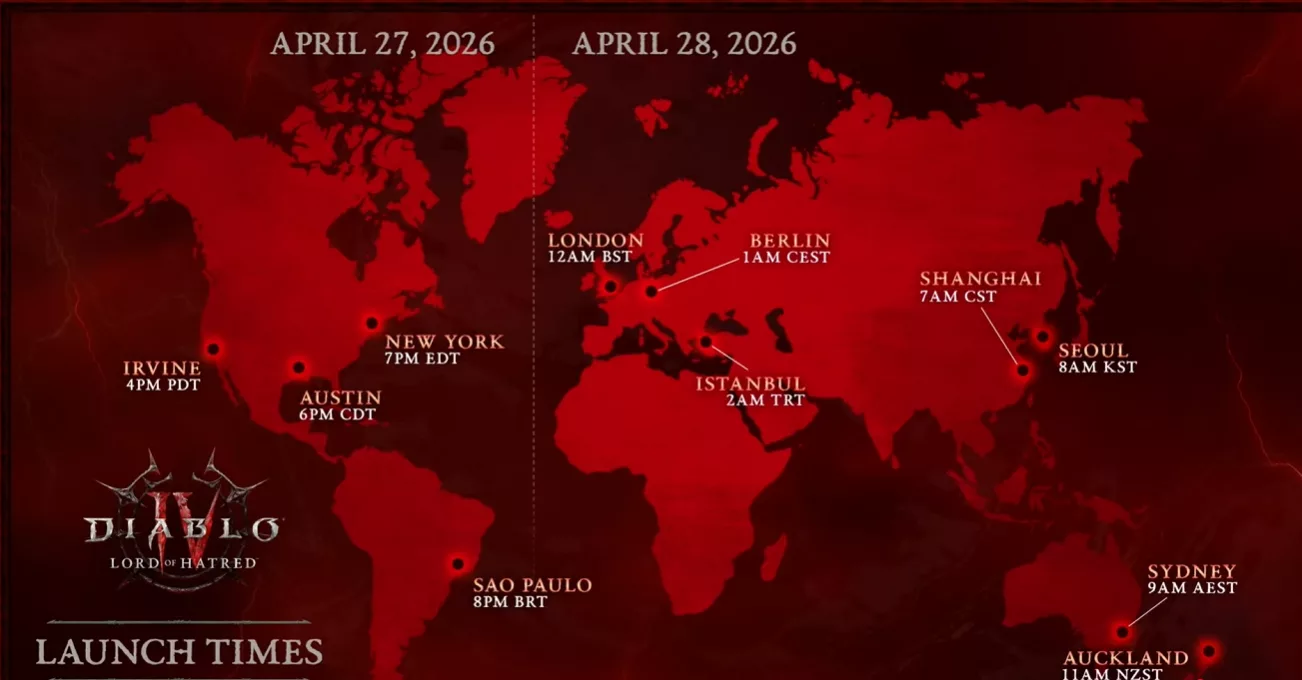
Lord of Hatred arrives on April 27, 2026 at 4 PM Pacific Time. The pre-download for version 3.0.0 is available today on Battle.net, Xbox, and PlayStation. No need to stay up past midnight refreshing your screen: if you've downloaded it in advance, you'll be able to log into the expansion from the very first seconds of launch. A global deployment map was shown during the stream with precise timing for each region.
On the collaboration front, Blizzard has officially announced a partnership with the band Korn, who are releasing their first single in four years with "Reward the Scars." The track is available today and the music video drops Monday. Beyond the music, a range of Fanta Crimson Cherry cans themed around Diablo will be available in stores, featuring the Paladin illustrated on the packs. Haribo is also a partner for this launch, with gummy candy in the franchise's colors.
Blizzard is also launching a global community challenge at launch: "Hatred's Downfall." The goal is to collectively accumulate 266,666,000 Paragon points to unlock the Helm of Hatred, offered for free to all Diablo 4 players. The cap is ambitious but the challenge involves the entire global player base from day one. See you in the Sco Isles on April 27.





0 Commentaires
Aucun commentaire pour le moment. Soyez le premier à commenter !