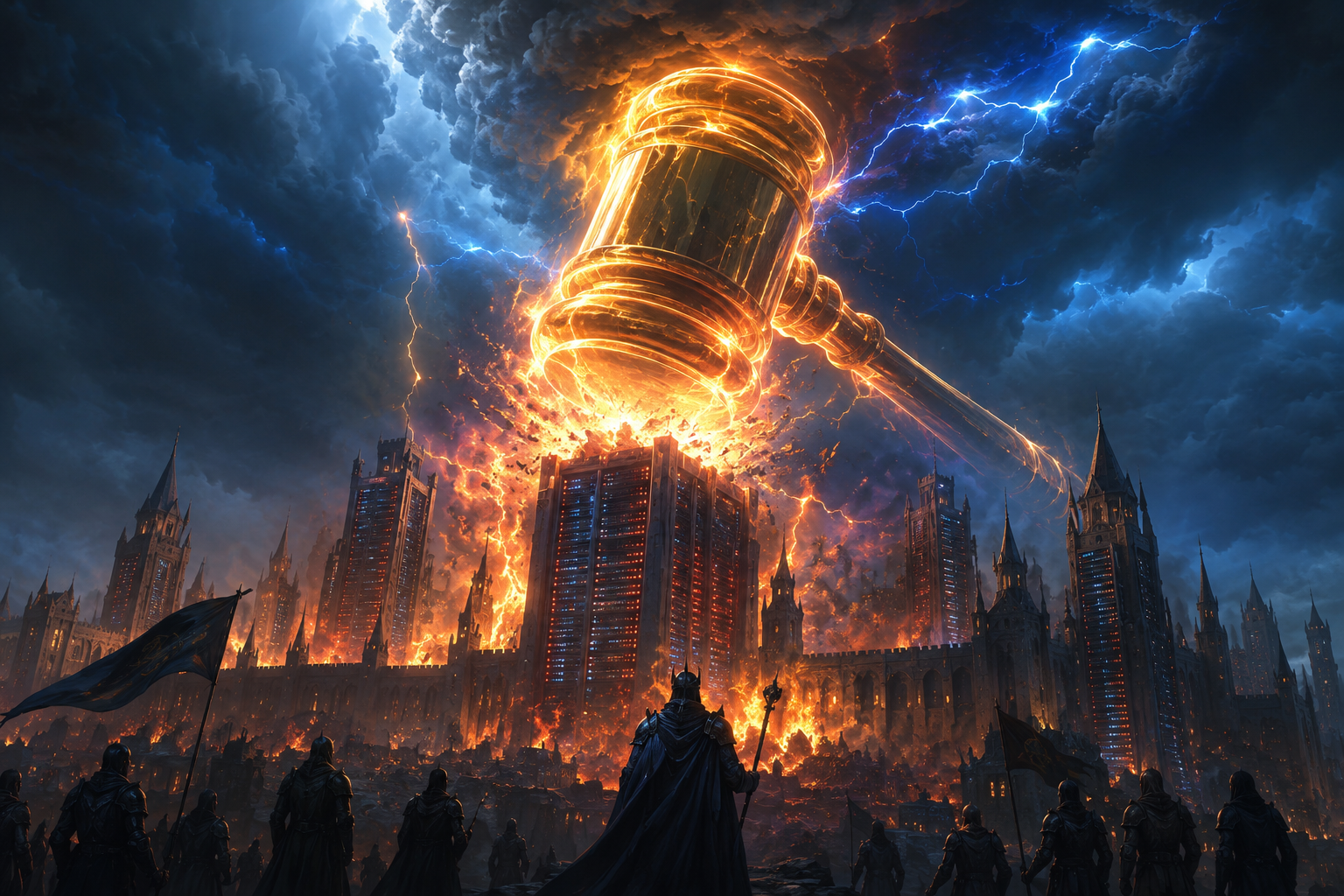
Turtle WoW, one of the most popular WoW private servers in the world, shut its doors on May 14, 2026, after eight years in operation and a lost federal lawsuit against Blizzard. Three weeks earlier, a final judgment permanently banned its operators from ever touching an emulated server again. At the same time, Project Ascension is facing a California court on nine counts, including suspected money laundering through shell companies. This purge is no isolated outburst: it closes a twenty-year-old cycle, and it feeds a crisis of player trust toward major publishers.
This feature retraces two decades of legal escalation against WoW private servers, from the bnetd lawsuit in 2004 to the summer 2026 subpoenas, including the shutdown of Nostalrius that gave birth to WoW Classic. One question runs through this entire timeline: is Blizzard laying the groundwork for an official Classic+, whose announcement is expected at BlizzCon on September 12-13, 2026?
Why WoW private servers exist (and how they run)
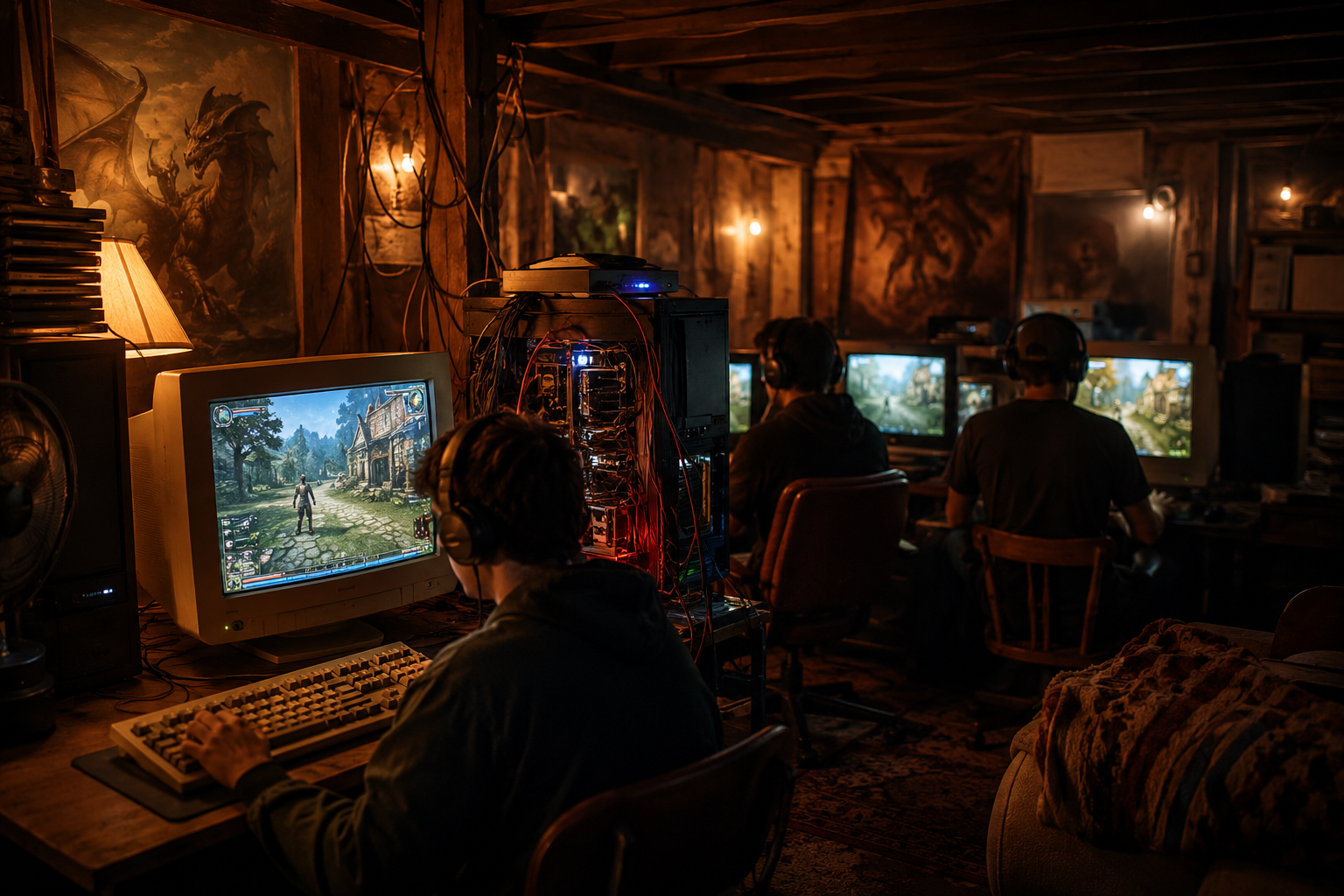
WoW private servers don’t exist by accident. They answer a very specific need: replaying versions of the game that Blizzard has shut down or never officially offered. The most sought-after remains « Vanilla, » patch 1.12 released around 2006. Other older expansions also find an audience on this kind of platform.
Three drivers fuel this phenomenon. Nostalgia first, from players who want to rediscover the game as it was back then. Then the desire for content Blizzard never created: the famous « Vanilla+ » or « Classic+, » versions expanded by fan communities. Finally, an openly acknowledged dissatisfaction with the direction current retail WoW has taken.
Technically, everything rests on emulation. Volunteer developers analyzed World of Warcraft’s client-server protocol to understand how the client talks to Blizzard’s machines. Building on that work, they built open-source « server cores » able to reproduce that behavior. The player installs a copy of the original client, usually pirated, then edits the realmlist file to point to the private server instead of the official ones.
These cores have a genuine technical lineage.
- MaNGOS (Massive Network Game Object Server): the historic foundation of WoW emulation, largely inactive today but the origin of everything that followed.
- CMaNGOS: extends MaNGOS with a focus on stability and fidelity to older expansions, Vanilla above all.
- TrinityCore: a fork of MaNGOS that became the dominant core, the most established one, capable of handling multiple expansions.
- AzerothCore: created in late 2016 by former developers of the Italian private server AzerothShard, inherited from the MaNGOS → TrinityCore → SunwellCore lineage. It targets Wrath of the Lich King (patch 3.3.5a), runs on a modular architecture, and remains the most active core on GitHub today. Licensed under GNU AGPL 3.0 / GPL 2.0.
On the financial side, most of these servers present themselves as free and live off donations. Those donations often convert into an in-house premium currency, spendable in a cosmetic or convenience store. This setup isn’t accidental: it’s designed to avoid the appearance of directly selling content protected by Blizzard’s copyright. The distinction between donation and sale carries real legal weight, since courts treat the direct sale of protected content as a more obvious infringement to sanction.
On the legal front, the verdict is clear: running a WoW private server constitutes copyright infringement under U.S. law. This point isn’t really up for debate.
2005-2010: bnetd and the $88 million judgment
The first major legal clash dates back to 2002. Blizzard, then under the Vivendi banner, sent a cease-and-desist to the internet service provider hosting bnetd, an open-source Battle.net emulator. The lawsuit followed shortly after: Davidson & Associates v. Jung.

The district court ruled in 2004, and the 8th Circuit Court of Appeals upheld the decision in 2005. The judges found that the « secret handshake » between Blizzard’s games and the Battle.net servers effectively controlled access to the service. Reverse-engineering that mechanism to emulate the servers therefore constituted a violation of the DMCA’s anti-circumvention provisions (the U.S. digital copyright law). Another key point: the end-user license agreement (EULA) was ruled fully enforceable, which nullified any reverse-engineering right the law might otherwise have granted. The EFF was defending the accused. It lost. This judgment set the legal framework Blizzard still reuses today against WoW private servers.
Meanwhile, World of Warcraft emulation was getting off the ground slowly. Between 2004 and 2006, during the game’s alpha and launch period, projects like Team Python, WoWEmu (developed by « WAD »), and Stormcraft laid the first foundations. These cores were buggy and incomplete. The goal later shifted toward faithfully recreating older versions of the game, a pursuit that would eventually be dubbed « blizzlike ».
In October 2009, Blizzard sued Alyson Reeves, who ran the Scapegaming server (also known as WoWScape), which operated on a microtransaction model. On August 10, 2010, Judge Stephen V. Wilson of the U.S. District Court for the Central District of California entered a default judgment of $88,594,539. The breakdown: $3,053,339 in profits to be disgorged, $85,478,600 in statutory damages calculated from 427,000 community members multiplied by $200 per act of circumvention, and $63,600 in attorney’s fees. This judgment remains to this day the heaviest ever handed down against a World of Warcraft private server, and it still serves as a cautionary tale. Notable detail: this same Judge Wilson would also preside over the Turtle WoW case in 2025-2026.
Nostalrius: the shutdown that gave birth to WoW Classic

On February 28, 2015, a Vanilla private server called Nostalrius launched, built on patch 1.12. It quickly became the biggest private server ever launched. In its open letter, the team claimed 800,000 accounts created, including 150,000 active players. A massive number for an unofficial project.
In early April 2016, Blizzard went on the offensive. American and French lawyers sent a cease-and-desist to Nostalrius and its host OVH, with the threat of a lawsuit attached. On April 10 at 11 PM server time, the PvP, PvE, and TBC realms shut down for good. The team immediately announced it would open-source the project.
The community didn’t take it lying down. A Change.org petition passed 200,000 signatures within weeks, then topped 280,000. Mark Kern, a former WoW lead, delivered it in person to Blizzard president Mike Morhaime. In late April, J. Allen Brack responded publicly and floated the idea of « Pristine » realms. Blizzard’s official stance stayed firm: without clear protection of their intellectual property, no license could be granted to a pirate server. The Nostalrius team met with Blizzard at its headquarters and presented an 80-page post-mortem. Then came six months of radio silence.
The server’s data didn’t die, though. It resurfaced through the Elysium Project, which relaunched Vanilla realms as early as 2016. But in October 2017, Elysium imploded under the weight of an internal corruption scandal. Leader « Shenna » was accused of embezzling several thousand euros in donations for personal use, while admin « Crogge » allegedly ran a parallel gold and character trafficking operation on the side. About 80% of the staff walked out and founded Light’s Hope Chapel, which promised to shut its doors the day Blizzard released an official Classic. The WoW private server scene has sometimes hurt itself more than any lawyers ever did.
On November 3, 2017, at BlizzCon, Blizzard announced World of Warcraft Classic, explicitly citing the success of Nostalrius and Elysium as the trigger. The game would release on August 26, 2019.
Warmane and Kronos: the private server survivors
It’s impossible to talk about longevity without mentioning Warmane. The server has been running since the Molten-WoW days, around 2010, and remains the absolute reference among WoW private server players. Its core is Wrath of the Lich King version 3.3.5a, with the Icecrown realm at x7 rates and Lordaeron at x1, complemented by progressive Vanilla and TBC realms. The population hovers around 6,300 concurrent players, with claimed peaks of 19,000. The economic model relies on donations in exchange for in-game currency.
Warmane reportedly operates outside U.S. and European jurisdictions, with heavy anonymity around its administrators’ identities. That’s often cited as the reason for the total absence of lawsuits across fifteen years of public existence.
Kronos follows a similar logic but in pure Vanilla form, patch 1.12. The server is run by the Czech outfit TwinStar, known for the precision of its combat scripts. Donations earn Twinstars, a currency that only unlocks cosmetic rewards. The community credits its survival to low-key marketing, hosting out of reach of U.S. law, and a corporate structure based in the Czech Republic. The result: Kronos has weathered every wave of shutdowns since 2016 without a scratch.
The common thread between these two survivors is obvious: total discretion around hosting and identities, paired with strictly cosmetic monetization. By contrast, servers that sell copyrighted items or flaunt a highly visible premium currency almost always end up in court.
2025-2026: the great purge

Not every private server gets that lucky. Nothing in World of Warcraft’s history matches the intensity of this period. On August 29, 2025, Blizzard filed a federal lawsuit against Turtle WoW, a Vanilla+ server active since 2018, known for its fan-made expansion « Mysteries of Azeroth, » its original playable races (Fair Blood Elves, Goblins), and its custom transmog. The case, Blizzard Entertainment, Inc. v. Turtle Wow (No. 2:25-cv-08194, C.D. Cal.), landed before Judge Stephen V. Wilson, the very same judge who ruled on the Scapegaming case in 2010. AFKCraft Ltd. and Josiah Zimmer are named as defendants. Seven counts were filed, including a RICO claim that was withdrawn in November 2025. Blizzard is seeking up to $150,000 in damages per client download. In the middle of the lawsuit, Turtle WoW nonetheless peaked at over 44,000 concurrent players.
This isn’t unique to emulation: Blizzard defends its intellectual property on every front, far beyond just WoW private servers.
The wave of cease-and-desist letters hit the entire scene the same week. On September 8, 2025, Everlook announced the closure of its European servers for September 22. The next day, Project Epoch confirmed several team members had received a C&D and shut down its site and services. On October 17, 2025, Turtle WoW attempted a diplomatic move: an open letter proposed a licensing framework for fan-made servers to Blizzard, citing precedents like City of Heroes: Homecoming, Project 1999, and FiveM. Blizzard never responded publicly.
- April 15, 2026: final judgment and permanent injunction against AFKCraft Ltd., resulting from a confidential settlement. Lifetime ban from operating an emulated server or a modified client (including a UE5 remaster), soliciting donations, or transferring the code to a « successor » entity.
- April 2026: Stormforge, active for four years, announces it will end all its WoW activities on May 14, after a C&D and discussions with Blizzard’s lawyers.
- May 14-15, 2026: Turtle WoW shuts down after nearly eight years, Stormforge cuts services the same week. AFKCraft turns out to be the shared parent entity behind both projects.
- 2026: Dalaran WoW, a WotLK server launched in 2012, announces its own closure.
- June 1, 2026: former Turtle WoW developers found Moonwhisper Games to create an original MMORPG under their own license.
Project Ascension: the lawsuit playing out right now

On June 12, 2026, Blizzard filed a 51-page complaint with the federal court for the Central District of California. The case is numbered 8:26-cv-01506 and targets Project Ascension, one of the biggest WoW private servers still online, built on the Wrath of the Lich King client. The project has been running since 2016. It offers a « classless » system that removes traditional classes, 21 custom classes, and a mix of Vanilla, TBC, and WotLK content enriched with in-house additions. According to its own site, the Discord community exceeds 226,000 members, with an average of over 60,000 simultaneous connections. Blizzard even reports the project claims « over a million players. » These are figures put forward by Ascension or by the complaint, not facts validated by a court.
Unlike Turtle WoW, the defendants are mostly American: Derek S. Powell (Nashville) and Bryan Thomas Mannion (Akron), presented as co-owners, alongside other individuals and shell companies based in Nevada and New Mexico. Nine counts are invoked, from copyright infringement to RICO, including DMCA violations and contractual interference. A jury trial is being requested.
The financial angle is the most explosive part. Ascension was selling « Donation Points » at around $0.50 apiece, redeemable for mounts, pets, and cosmetics. Blizzard estimates the project generated « millions of dollars, » partly funneled through shell companies to dodge U.S. taxes. Another serious allegation: the servers were reportedly hosted at Aeza Group, a Russian host sanctioned by OFAC on July 1, 2025 for supporting cybercriminal activity. This link to Aeza remains a Blizzard allegation, unconfirmed at this stage.
Blizzard is seeking a permanent shutdown, the handover of the source code, a full revenue audit, and damages that could climb up to $150,000 per protected work. On the procedural side, summonses went out on June 25, an expedited discovery request followed the next day, and attorney Frederic M. Douglas represented several defendants on July 2. As of early July 2026, no formal response has been filed and the servers remain online.
Classic+ at BlizzCon 2026: the great cleanup theory
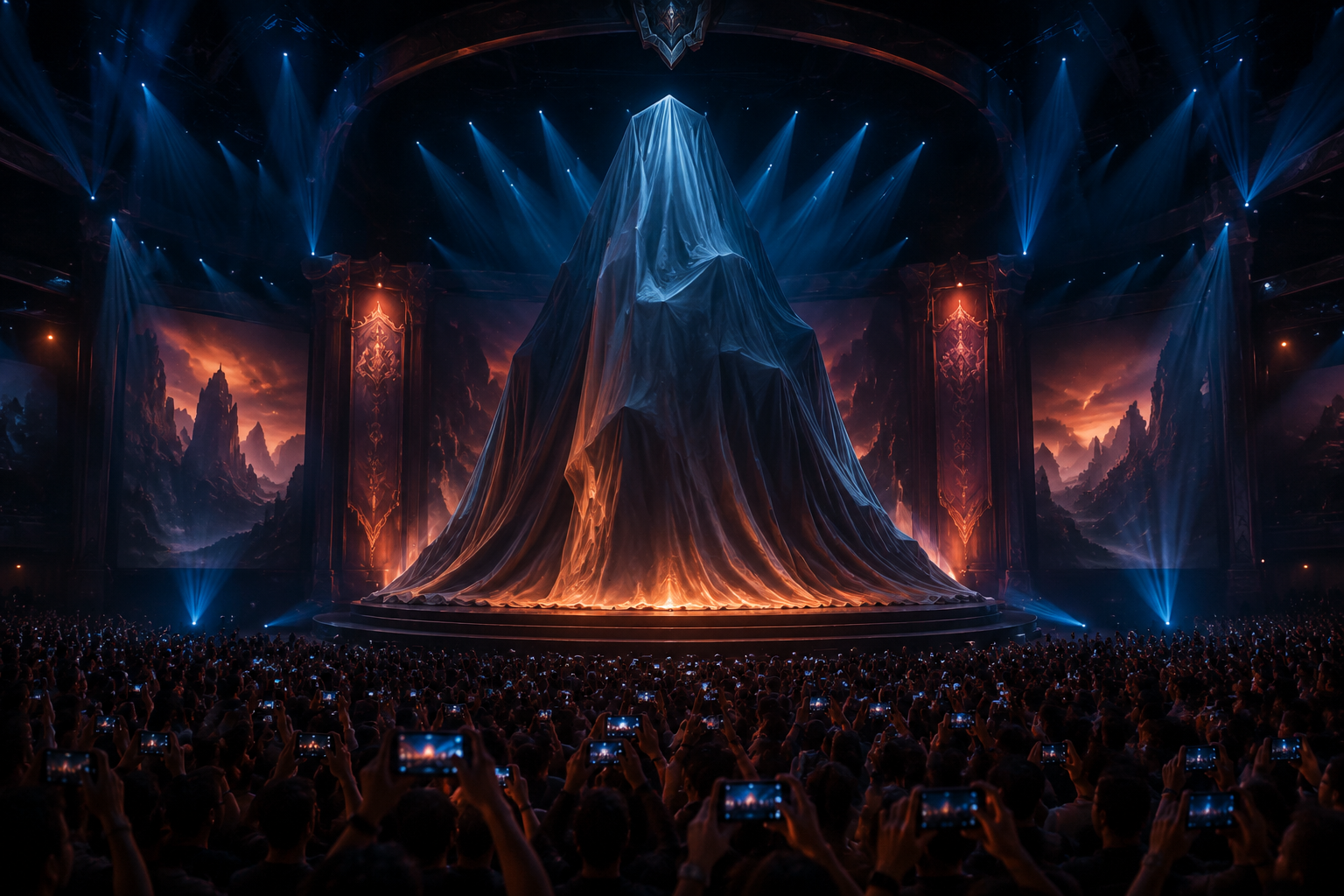
The theory circulating in gaming press and on forums is simple: Blizzard is cleaning up WoW private servers to pave the way for an official Classic+. The precedent already exists. Nostalrius shut down in 2016, and WoW Classic was announced a year later. A pattern many see repeating. The trend actually goes beyond Classic alone: the quiet return of Warcraft III legacy shows that Blizzard no longer hesitates to bring back its old catalog when community demand is strong.
Several signals feed this reading. On January 29, 2026, during the State of Azeroth, executive producer Holly Longdale launched into « I’m really excited to announce that… » before being cut off theatrically, with a « we’ll save that for later. » Blizzard then clarified that the next info on Classic’s future would arrive after Black Temple, at BlizzCon 2026. In May 2026, several Classic streamers (Xaryu, Sodapoppin, Esfand) were reportedly summoned to Blizzard’s headquarters under an NDA for a summit that stayed secret. Another puzzling detail: the 2026 roadmap wraps up MoP Classic around late May or June, continues with TBC Anniversary, but leaves a content gap right after BlizzCon.
BlizzCon 2026 is confirmed for September 12-13, at the Anaheim Convention Center. That’s the window everyone is watching for a possible announcement. A caveat, though: the link between the private server cleanup and a future Classic+ remains a community deduction, not a Blizzard confirmation. The most specific rumors, like a « Spellblade » class, a seasonal « Infinite Classic » model, battle-pass-style monetization, or the famous « Project Camelot, » remain unverified leaks.
Meanwhile, successors to Turtle WoW are emerging, all built on the leaked Turtle client (patches 1.17.2 to 1.18.1):
- OctoWoW, the most visible one, launched in beta in late April or early May 2026, with a « zero trust » model where contributors stay anonymous to each other (the « Knowledge Keepers, » a Money Heist-style approach), run in Russian.
- CapyCraft (Capybara WoW), set up by former Turtle SEA admins, which restored the original SEA characters.
- Sandworlds, launched in August 2025, driven by a Brazilian Portuguese-speaking community on a modified Turtle client.
No legal precedent protects these successors, and the anti-successor clause in the Turtle WoW judgment legally exposes OctoWoW if a link to the original team is proven, which the project denies. Three milestones to watch: a Classic+ announcement on September 12-13 followed by tighter enforcement, the outcome of the Ascension lawsuit in the U.S., and whether OctoWoW survives past 2026.









0 Commentaires
Aucun commentaire pour le moment. Soyez le premier à commenter !