
Glynn's Anvil Fixed: 4% Damage Reduction per Resolve Stack
One aspect had been bugged for a while, and Blizzard just fixed it. The result: it's now possible to make any class nearly unkillable in Season 13. The aspect in question is  Glynn's Anvil, and it's the one driving the entire system, as P4wnyhof shows in his video.
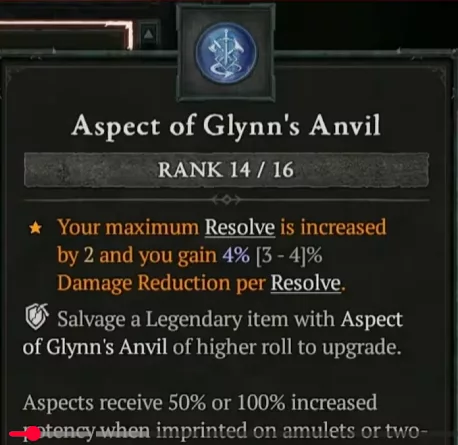
The principle is simple: every Resolve stack you accumulate gives you 4% Damage Reduction. At 51 stacks, you reach 200% Damage Reduction. On paper, that's pure invincibility. What changes with the fix is that the aspect finally works as intended, on every class and every build. If you want a concrete example of what this looks like in endgame, the Immortal Warlock build pushes this mechanic to its maximum.
Two things need to be handled for this to work: raise your Resolve cap through Tempering, then generate and maintain your stacks in combat. Both steps apply to the Barbarian, the Druid, the Necromancer, and every other class. The rest of this article covers each of them.
Step 1: Raise Your Resolve Cap Through Tempering
The first objective is to increase your Resolve cap. To do that, Tempering on defensive pieces is key. A properly crafted chest piece is enough to lay the foundation of the system, regardless of your class.
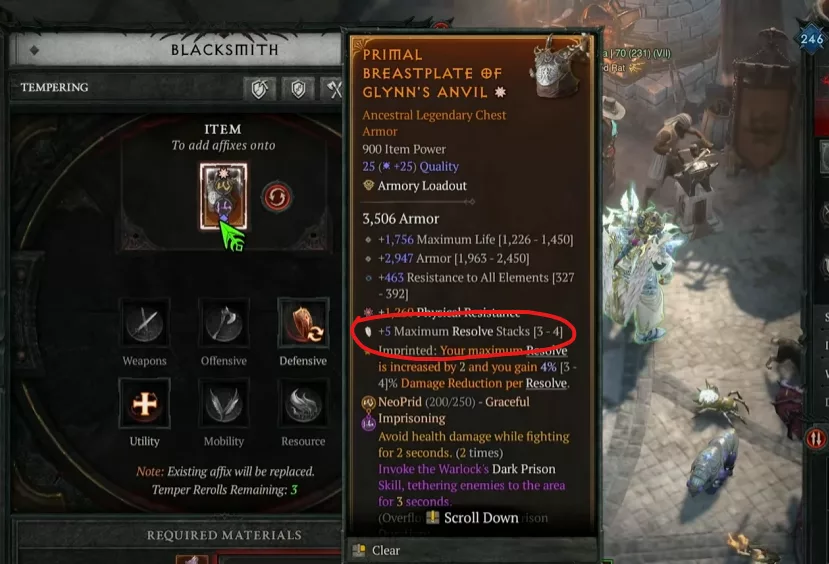
The target piece is a chest armor with Max Life, Armor, All Resistance, and Physical Resistance. These four affixes work on every class: Warlock, Druid, Barbarian, it doesn't matter. You can craft this piece at any point and it will remain effective. For Resolve, the goal is to reach +7 through Tempering. Once the item is fully Masterworked, you redirect the Masterwork affixes onto Resolve stacks. That pushes them from +7 to +12.
The math is quick: +12 stacks on your chest piece, +12 on your amulet if you apply the same method. That gives you 36 stacks from just those two slots, before even counting what the rest of your gear or skills can contribute. That's the foundation. Once this base is set, everything else in the system relies on your ability to generate and maintain those stacks in combat, which we cover right after.
Step 2: Stack Resolve Without Losing Your Stacks
Resolve stacks disappear when you take a direct hit. The challenge of this step is therefore twofold: generate them quickly, and generate enough to compensate for the ones consumed. The tools available vary by class, but the logic stays the same.
On the Druid, this is particularly accessible. The Might of the Ursine ring automatically grants one Resolve stack per second in Werebear form. On top of that, Obsidian Slam gives an additional one every time you use an Earth skill. If you're playing a Stormcaller variant, that Earth bonus doesn't apply, but you have other options to compensate.
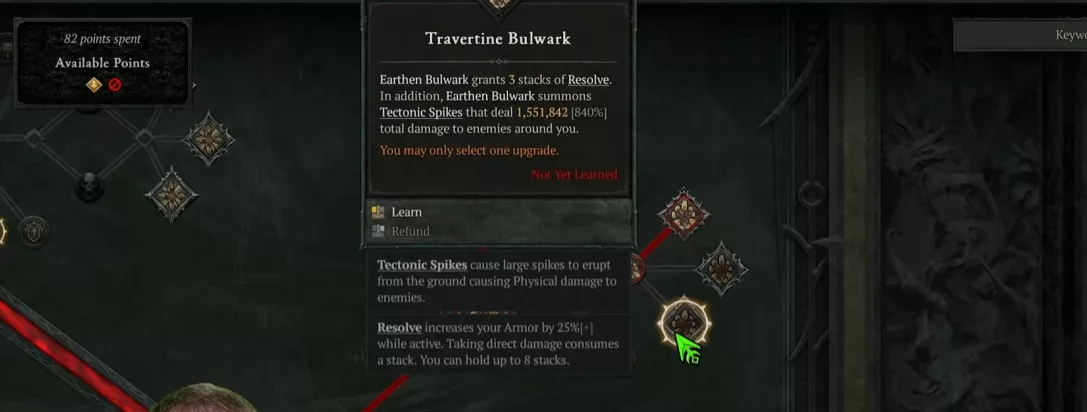
 Debilitating Roar generates stacks while active, and Bulwark grants one each time it triggers. Combine both and the climb is constant. In practice: you start from zero, activate your defensive skills, and stacks accumulate progressively up to the cap. Damage Reduction follows the curve and you hit 200% in a matter of seconds. The principle adapts to each class with its own Resolve sources, the following sections break it down class by class.
Barbarian: Spam Iron Skin to Stack Resolve Non-Stop
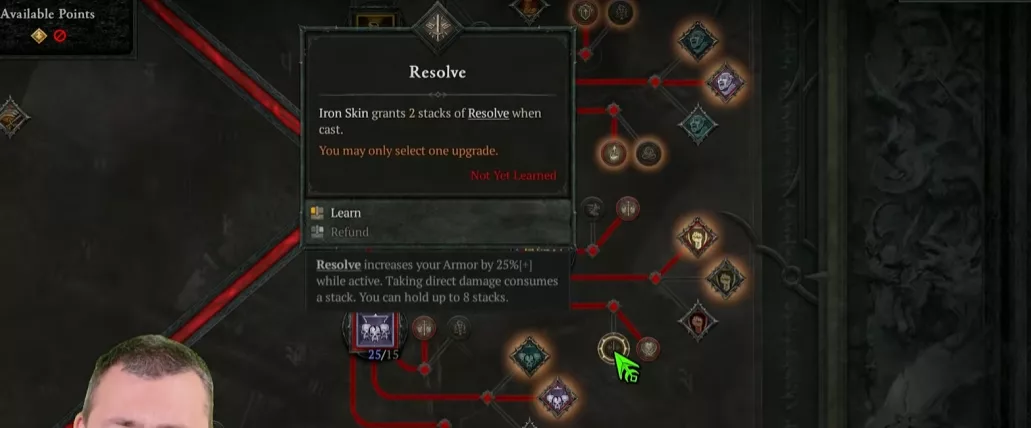
The Barbarian is probably the most comfortable class for generating Resolve quickly. The talent to pick:  Iron Skin, with a Temper that makes it grant two Resolve stacks per use. Two stacks sounds small. Except that the ancient Barbarian slashes cooldowns at an absurd speed.
In practice, you chain Iron Skin casts without stopping. Stacks climb: 13, 15, 23, 25, 27. Within seconds, you far exceed what the  Aspect of Heavenly Strength can offer, which caps at 32 stacks. With an Heir of Perdition helm already Tempered to 12 stacks, you start every fight with a base of 24 stacks.
The result: 120% bonus Damage Reduction, without even trying. You can dive headfirst into any fight without watching your health bar.
Necromancer: Resolve on Autopilot Thanks to Minions and Decrepify
With the Necromancer, you don't even need to press a button. Your skeletons apply the  Decrepify curse via Lucky Hit thanks to the Temper on your pants. Your minions handle everything: they curse enemies, they generate the procs, and Resolve stacks come in on their own.
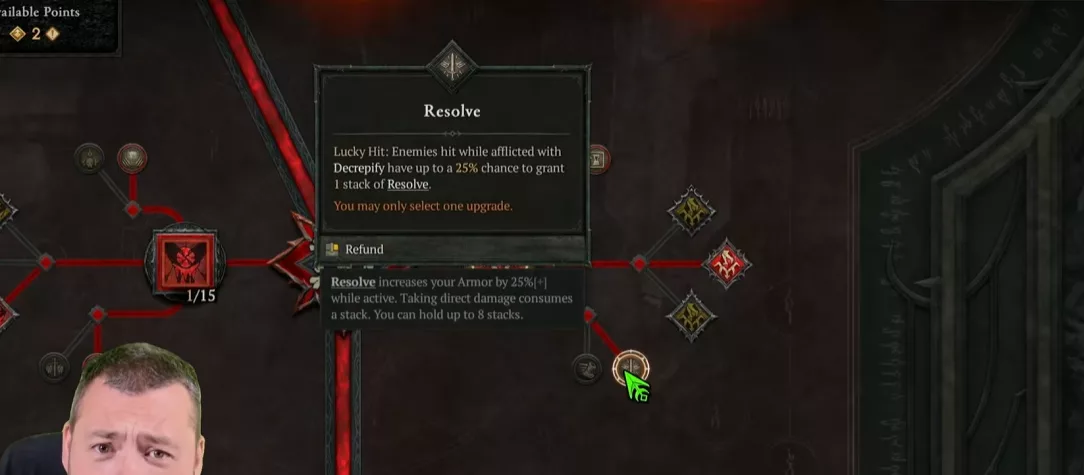
The test speaks for itself: equip the chest piece, stand still without doing anything, and watch stacks climb to six in a matter of moments. No Resolve Temper on that chest piece, no active skill, just existing. This is probably the most passive class for maintaining solid Damage Reduction at all times, including situations where you pull aggro without meaning to.
Warlock: No Native Resolve, Aspect of Dominance Is Mandatory
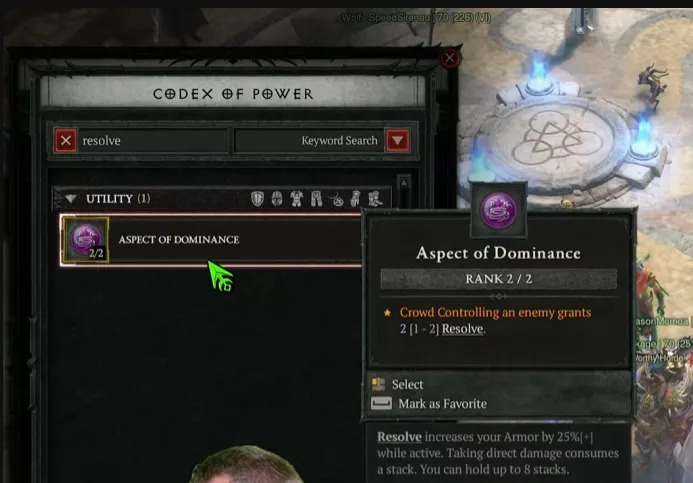
The Warlock has a real structural problem: searching for the keyword "Resolve" in the skill tree returns nothing. No native source. To access the mechanic, you have to go through the Occultist category and equip a dedicated aspect: the  Aspect of Dominance, which generates a Resolve stack with every application of Crowd Control.
This aspect can go on boots or, better yet, be transmogrified onto an amulet via a Tuning Stone. One crucial detail: the Tuning Stone bug is finally fixed. Before, even with a max-rank stone, the result was always stuck at the minimum rank (21% out of 30%, no matter what). Now, transmogrification actually rolls a true max rank, making it finally possible to get the  Undying Aspect or Aspect of Dominance at max value.
In practice, simply activating Dark Prison on training dummies is enough to reach eight Resolve stacks at once, thanks to the slow it applies. Then swap back in the Glynn's Anvil and the Warlock joins the ranks of the unkillable. If you're looking for an optimized setup to exploit this potential, the Immortal Warlock Season 13 build details how to maximize this synergy.
Paladin: Rite of Prayer and Aspect of Interdiction for a Block-Damage Combo
The Paladin accesses Resolve through two direct channels.  Rite of Prayer generates two stacks per second when you heal yourself or your allies. Casting
  Aegis adds eight at once. The Aspect of Dominance remains available as a complement, and most importantly, the
  Aspect of Interdiction converts each Resolve stack into additional Block Chance. Check out the Top 4 Paladin Builds Season 13 to see which setups exploit this mechanic best.
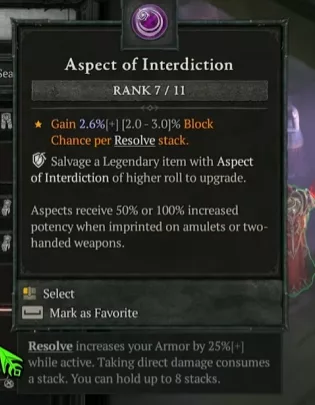
This combo opens up an interesting mechanic for the Necromancer as well: the Aspect of Interdiction works with the  Aspect of Redirected Force, which converts Block Chance into additional Critical Strike Damage. Blocking doubles this bonus for ten seconds. With 51 active Resolve stacks, the damage gain becomes significant, even if the Paladin remains the class best positioned to exploit both the block and survivability synergy simultaneously.
Spiritborn: Aspect of Kinetic Suppression for Rushing Claw
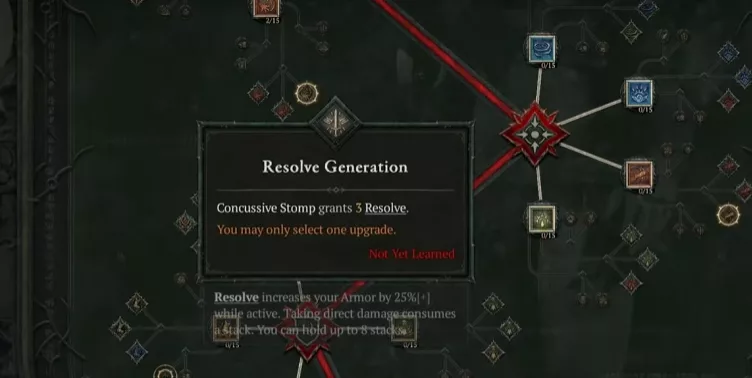
The Spiritborn has no trouble stacking Resolve, regardless of build. With a Gorilla build, Resolve generates almost passively:  Rock Splitter and Crushing Hands are enough to keep the counter full just by playing normally. You can also use
  Concussive Stomp, which also generates Resolve.
For builds centered on  Rushing Claw, the answer comes from the
  Aspect of Kinetic Suppression: every cast of a non-Basic mobility skill grants 3 Resolve. Rushing Claw meets exactly that condition, keeping you permanently at the cap.
If you want to push even further, the  Aspect of Tenacity rounds everything out by rewarding Vigor gained while your gauge is already full: every 15 Vigor received when the gauge is maxed generates additional Resolve, making you more resilient than the theoretical cap. Between Rushing Claw and these two aspects, the Spiritborn blows past the invincibility threshold without any effort.
Rogue: Resolve Sources Across Almost Every Skill
The Rogue surprises with the density of its options. Dash already opens the door to bonus stacks. Then  Concealment,
  Cold Imbuement, and
  Poison Trap each contribute in their own way, regardless of the build you choose. Few classes pack this many Resolve sources into a single skill tree.
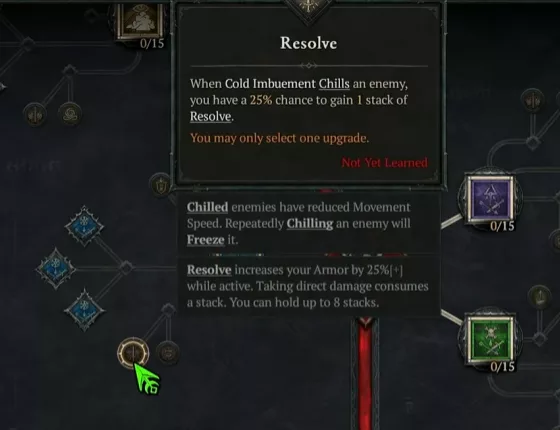
And if you want to maximize even further,  Shadow Clone can be configured to generate Resolve instead of reducing its Cooldown. In other words, building a fully Resolve-stacked Rogue in Season 13 is one of the easiest things you can do with any archetype of the class.
Sorcerer: Aspect of Dominance, Even Without Needing It
The Sorcerer has no Resolve node in its skill tree. For this class, the answer is always the Aspect of Dominance, already mentioned for the Warlock. It's not that the Sorcerer lacks durability, the skill tree simply doesn't provide it natively.
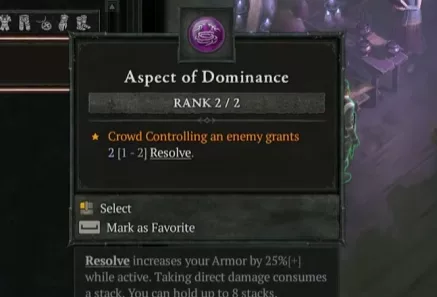
Overstacking never hurts, even when the need isn't obvious: surplus Resolve always means survivability beyond the displayed cap. If you want to pair this defensive comfort with a hard-hitting build, check out the Top 3 Sorcerer Season 13.









1 Commentaire
Aspect de l’enclume de Glynn en VF (je voulais intégrer une capture d’écran de l’aspect, mais apparemment on ne peut pas insérer une image extérieure)