

This week, the video game industry absorbs two heavy-consequence decisions. Sony is officially closing the book on physical discs for PlayStation. Xbox is about to go through a new wave of layoffs that will hit several historic studios. Amid these two stories, there’s also good news: Black Flag Remastered finally releases, PS5 Pro impresses, and Onimusha moves up its launch date. Here’s the full rundown of this week’s gaming news.
Sony halts physical PlayStation disc production
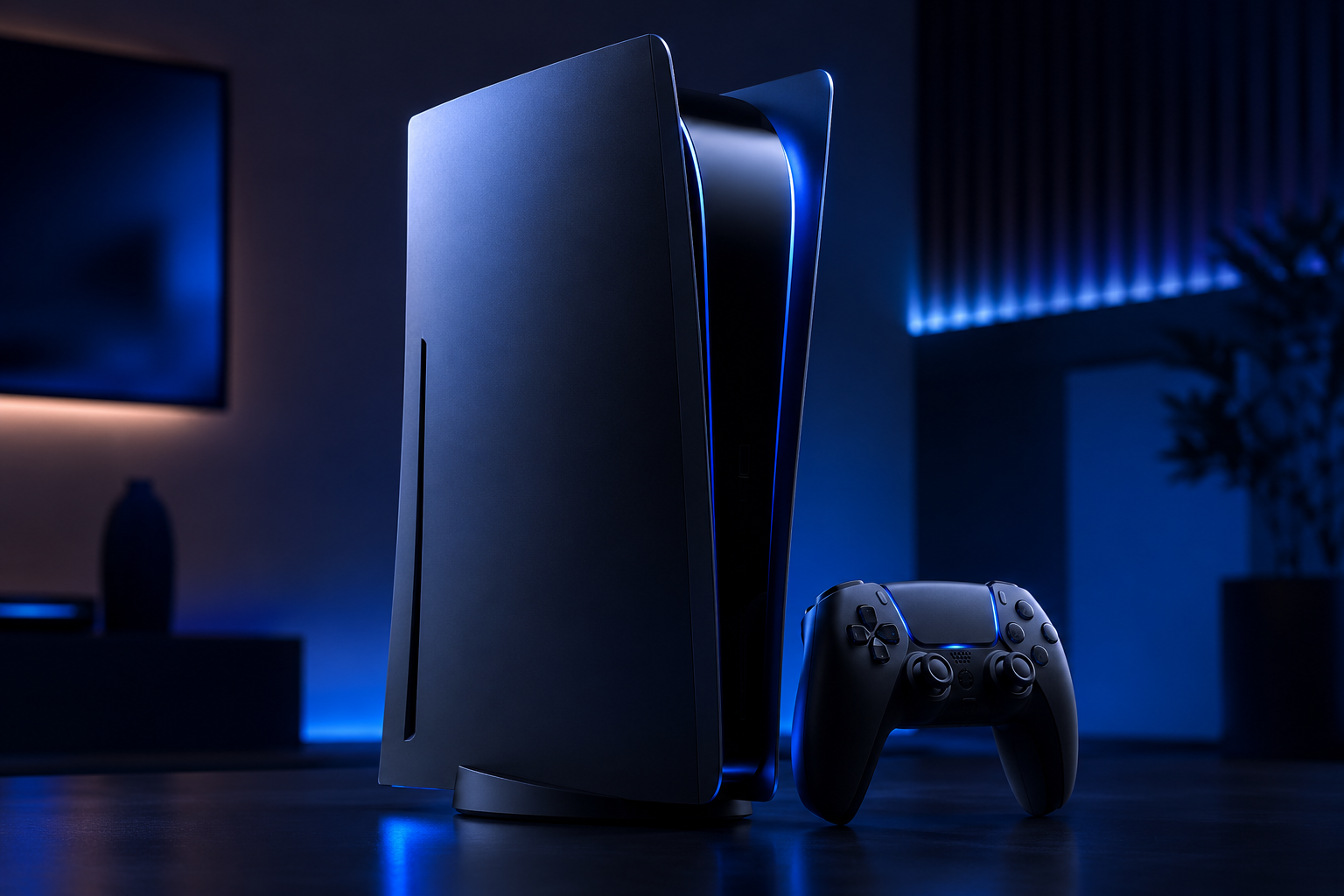
Sony has just made an announcement that will weigh heavily on the video game industry. Starting January 2028, the manufacturer is ending physical disc production for new PlayStation games.
In practice, all games released after 2027, whether internal Sony productions or third-party studio titles, will only be purchasable digitally. Either through the PlayStation Store or at regular retailers, but in a different format.
Sony has warned its publishing partners. From January 2028, they’ll still be able to sell their games in stores, but with a digital code instead of a disc. Two options are taking shape. The first resembles what GTA 6 already does, with a code slipped inside a classic game case. The second goes further, with a simple download card comparable to today’s PlayStation Store gift cards. In that case, the physical game box disappears entirely.
Games released before January 2028 will keep being burned onto discs throughout 2028 and beyond. Only future titles are affected by this change.
To justify its decision, Sony talks about a natural evolution of Sony Interactive Entertainment in response to consumption habits. Digital would far outpace physical in players’ preferences. A vague explanation, since the company is removing an option rather than actually improving the digital experience.
A massive impact on players and the used game market
For some players, this shift to all-digital comes with a concrete cost. Many resell their physical games to fund future purchases, or rely almost exclusively on used copies. Starting in 2027, new Sony releases will never be able to join that market again.
Physical games also often benefit from big discounts. Retailers eventually need to clear their stock, which drives prices down. This mechanism nearly disappears entirely with digital codes.
Another advantage that fades away: a physical box often works without an internet connection. You can pull out a game years later and play it again without a problem. A fully digital library offers far fewer guarantees on that front.
Just last week, Sony pulled more than 550 purchased films from users’ libraries, with no refund whatsoever. A useful reminder. These companies actually retain full control over digital purchases. Nobody knows what will happen to them in ten or twenty years.
This decision is bad news for video game preservation. The last stores specializing in physical media will also feel the direct consequences.
Why Sony is making this move now: the real financial reason
Behind the announcement lies a cold calculation. TweakTown has documented the decline in physical sales over the years, accelerated during COVID. Despite that, Sony still sold 70 million physical games in its last fiscal year. The boxed format is far from dead, especially for single-player games.
Alumia Analytics figures (2020-2026 estimates on PS5) confirm this. Resident Evil Requiem sold 27.8% physical copies. 007 First Light, 21%. Crimson Desert, 19.9%. And Ghost of Tsushima even climbs to 35.4% physical sales. These percentages aren’t trivial, they carry real weight in revenue.
Analysis firm Katan Games broke down the margin mechanics, and that’s where it all becomes clear. For a $70 physical game sold by a third-party publisher, the retailer takes 30%, Sony collects 15%, and the publisher still has to pay manufacturing costs. It’s left with around $35.
When Sony sells its own game physically, the equation changes.
- Third-party physical game at $70: the publisher keeps around $35
- Sony physical game at $70: Sony keeps around $45
- Third-party digital game at $70: the publisher pays a 30% platform fee and keeps around $49, roughly 40% more revenue than physical
- Sony digital game at $70: Sony keeps the entire $70, about 53.8% more than a physical sale of its own game
The Ghost of Tsushima case illustrates the stakes well. Out of 6 million copies sold, the 35.4% that were physical generated $367 million. If all sales had been digital, that figure would have risen to $420 million. That’s $50 million in lost revenue on this game alone.
Sony’s stock actually rose after the announcement. Hardware components keep getting more expensive, development budgets keep exploding, and the company is looking for every possible lever to boost its margins. This move is clearly part of that.
What happens now for players and for Xbox?
On paper, Sony’s decision is easily explained by the numbers. And in practice, nothing seems able to stop it.
Xbox isn’t really a competitor in the console market anymore, as confirmed by the broader crisis the brand has been going through in recent weeks. The commercial pressure that could have held Sony back barely exists anymore.
According to several rumors, Microsoft’s next platform would also go without a disc drive. Some reports mention a system allowing players to convert their physical discs into digital copies.
Sony will likely have to offer a similar solution. Without it, players with large physical PS4 and PS5 collections risk losing access to them on future hardware.
Last year, reports mentioned a PS6 equipped with a removable disc drive, designed to ensure backward compatibility with PS4 and PS5 games.
This transition will have a particularly strong impact in Japan. In that country, physical copies still account for nearly half the market.
The clearest signal comes from the industry itself. Sony’s largest PlayStation disc factory is already reassigning part of its staff to other products. Today, PlayStation disc manufacturing still accounts for 50% of its activity. By 2028, that figure is expected to drop to just 10%.
Xbox: major layoffs take shape

The layoff waves at Xbox are being confirmed, continuing the trust crisis currently shaking the video game industry. According to The Verge and several other sources, they are set to begin this Monday, July 6, and affect nearly every team.
Rumors point to at least a thousand jobs cut. If Microsoft does confirm five studio closures, that alone would already represent around 500 employees affected, before even counting the rest of the cuts. This isn’t an isolated case: Epic Games had followed a comparable path a few months earlier.
The five studios named are the following:
- Double Fine
- Compulsion Games
- Ninja Theory
- Undead Labs, creator of State of Decay
- Arkane Lyon, currently working on Blade
The Blade case illustrates the situation well. The game was supposed to release this year, but the internal date has slipped to late 2027. The budget exploded along the way, and Microsoft doesn’t seem ready to fund it to the finish line.
Rare, the studio behind Sea of Thieves, wouldn’t be safe either. At least that’s what a journalist from The Edge newsletter indicates.
By contrast, Obsidian comes out unscathed. The studio behind The Outer Worlds 2 and Avowed should survive, and would even be redirected toward a new Fallout game.
This logic seems to guide all the cuts. Microsoft would be concentrating its resources on franchises with strong long-term potential: Fallout, The Elder Scrolls and Halo leading the way.
Assassin’s Creed Black Flag Remastered and the new PS5 Pro specs

Assassin’s Creed Black Flag Remastered releases this week. Ubisoft has shared the technical specifications for each console.
The 60 FPS mode is available on all consoles, with one exception: the Xbox Series S is left without it.
On PS5 Pro, the game combines the best of both worlds. Players get 60 FPS with the most advanced ray tracing, while keeping the same 4K upscaled resolution as the fidelity and balanced modes. A technical feat that confirms the promises Sony made around the console’s PSSR2 update.
Ubisoft has also unveiled a new preview of the digital deluxe edition’s content.
Onimusha Warlords moves up its release date
Onimusha Warlords is changing its schedule. The game will no longer release on September 25 but three weeks earlier, on September 4.
This move also benefits other September and October releases. Players will no longer have to choose between Onimusha and Control on the same day.
Ubisoft in trouble: Ghost Recon and Far Cry caught in the storm
Insider Gaming published an unflattering report on the new Ghost Recon, developed under the code name Project Over. This spring, the game failed its alpha test, a setback that forced Ubisoft to rethink the entire project.
According to the cited sources, the game would be in a worrying state, with significant technical instability. Faced with this, Ubisoft scaled back the title’s scope. Many features originally planned were dropped to meet deadlines.
The studio is still aiming for a beta in November, with a release planned after March 2027. A large Ubisoft Paris team is working on this project, the same one that spent several years fixing Breakpoint after its botched 2019 launch. This time, it’s struggling to get the game off the ground, an issue that reportedly stems from internal leadership problems.
The next Far Cry isn’t doing any better. Its development is facing similar difficulties. For Ubisoft, both franchises absolutely need to get back to their former level if the publisher wants to turn things around.
The picture isn’t uniformly bleak. Assassin’s Creed benefits from a solid roadmap, with a Black Flag re-sync, another remake expected in 2028, and a possible new RPG in the franchise. Rainbow Six Siege also continues to perform very well. As for The Division, a third installment is reportedly already well into development.
What’s coming next week
Black Flag’s launch keeps making waves and will stay closely watched in the coming days. On the Xbox side, several reports about layoffs are already circulating and official confirmations are expected. This story will be worth following closely next week.








0 Commentaires
Aucun commentaire pour le moment. Soyez le premier à commenter !