
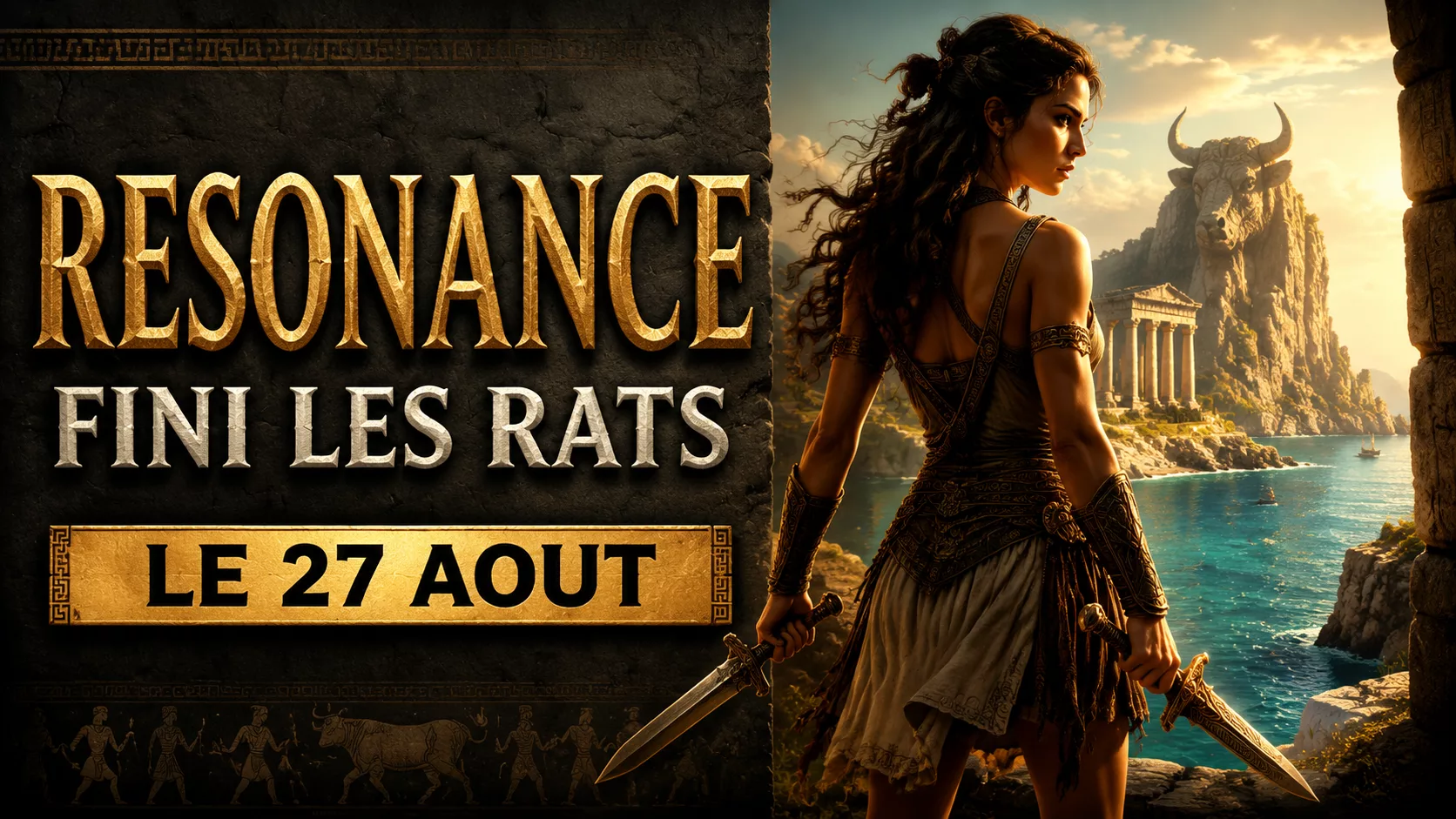
On 27 August, Asobo Studio delivers the third instalment of A Plague Tale. Sophia carries a short sword and a dagger, the adventure unfolds in Crete under a blazing sun, and the swarms of rats that were the series’ signature are gone. Three breaks at once, from a Bordeaux studio that made its name on the exact opposite.
Journalists got to play in June. Their write-ups are the best the series has ever received, and they single out something Asobo had barely mentioned.
Fifteen years before Requiem, a world away from France
The story is set in 1333, some fifteen years before the events of A Plague Tale: Requiem. Anyone who played the second Plague Tale already knows Sophia: she is the smuggler who joins Amicia on the island of La Cuna. Resonance tells you where she came from.
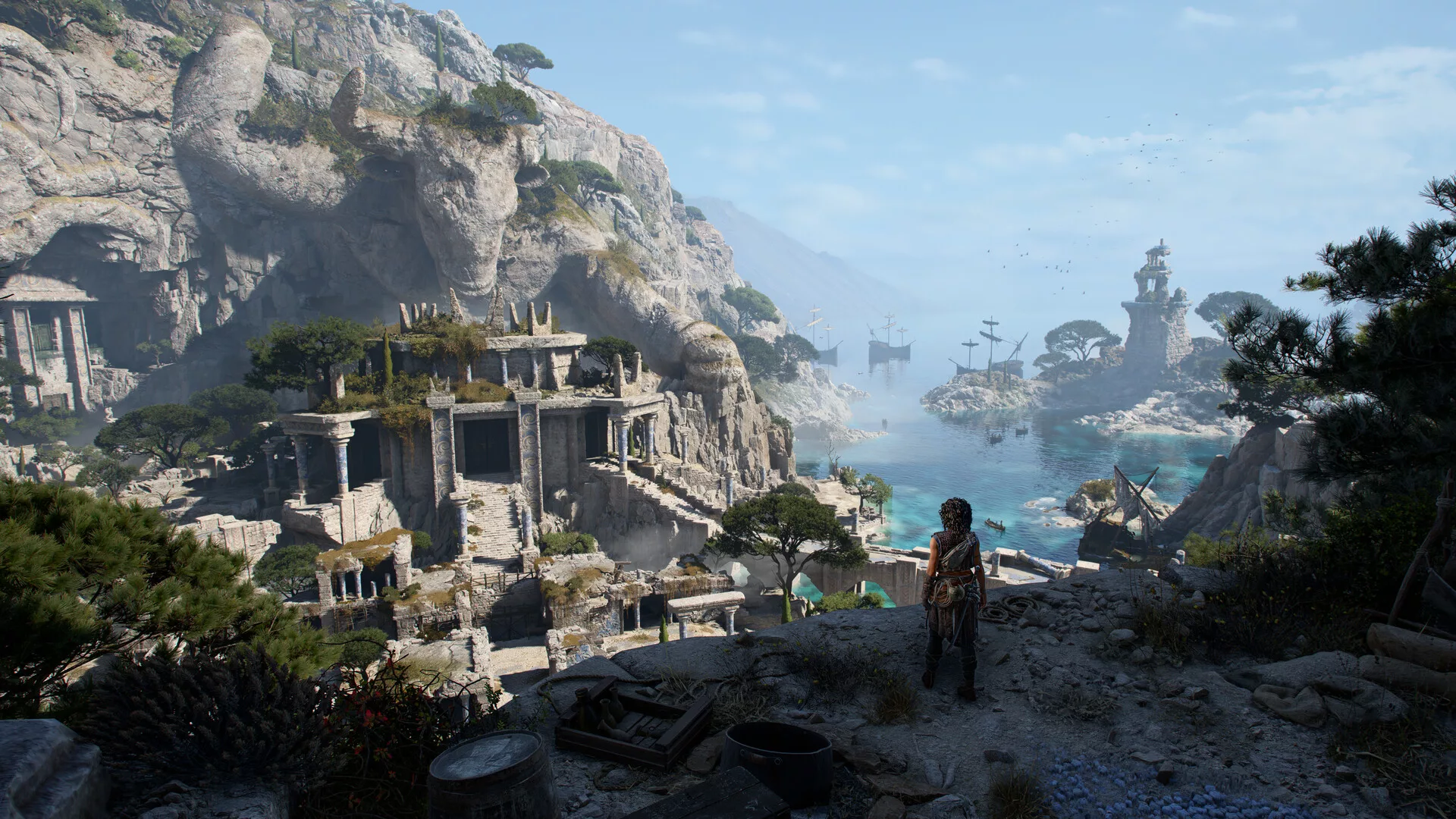
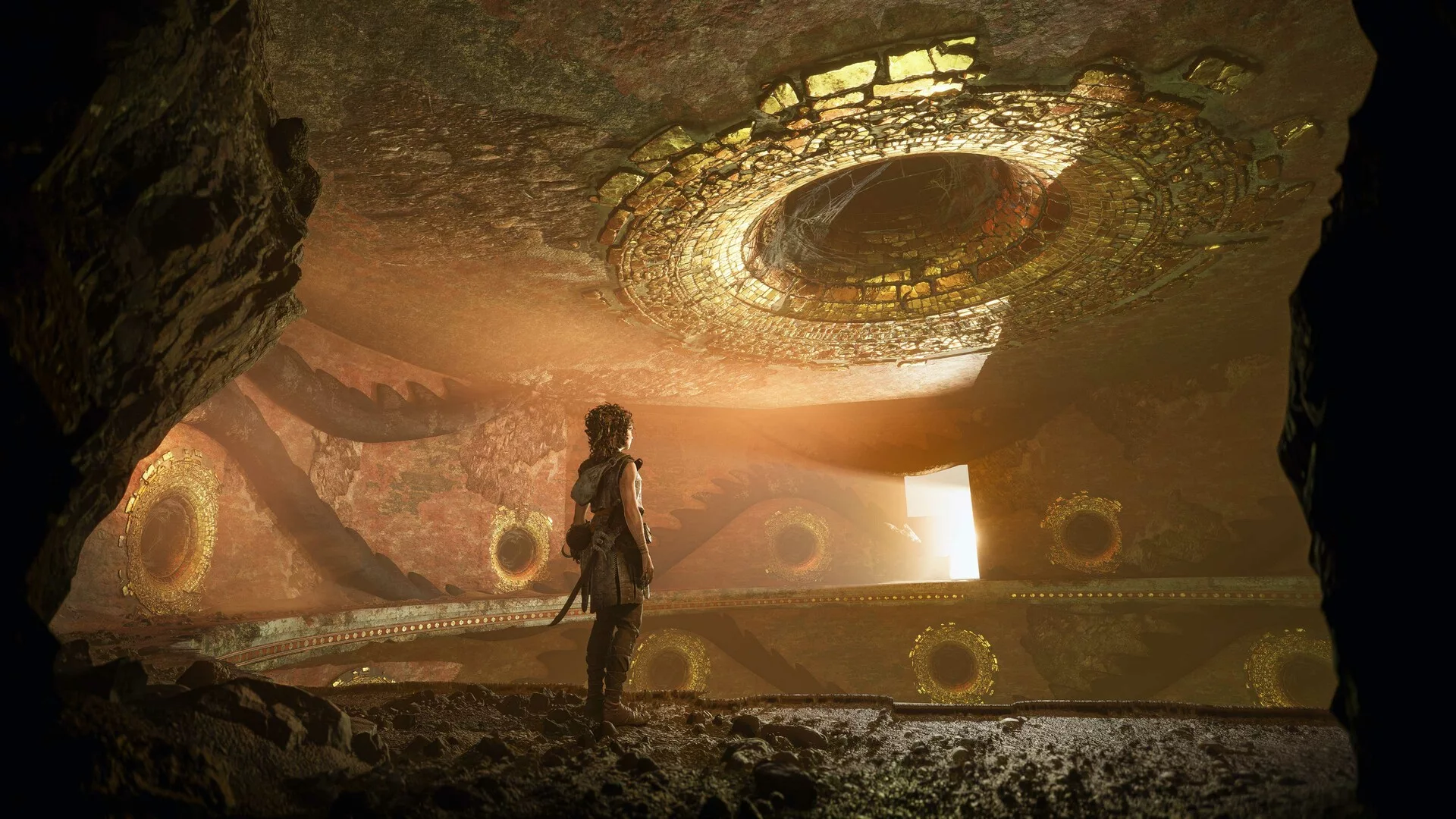
A raid goes wrong. Her own crew turns on her, and Sophia flees to an island off Crete: the one legend calls the Minotaur’s Island. The setting borrows from Minoan civilisation: the palace of Knossos, salt-bleached ruins, a labyrinth, and freezing cisterns beneath the rock.
The contrast with the first two games hits you in the opening shots. Where Innocence et Requiem painted a grey, muddy France crushed by the Hundred Years’ War, Resonance opens on a turquoise sea and painted columns.
The sword replaces the escape
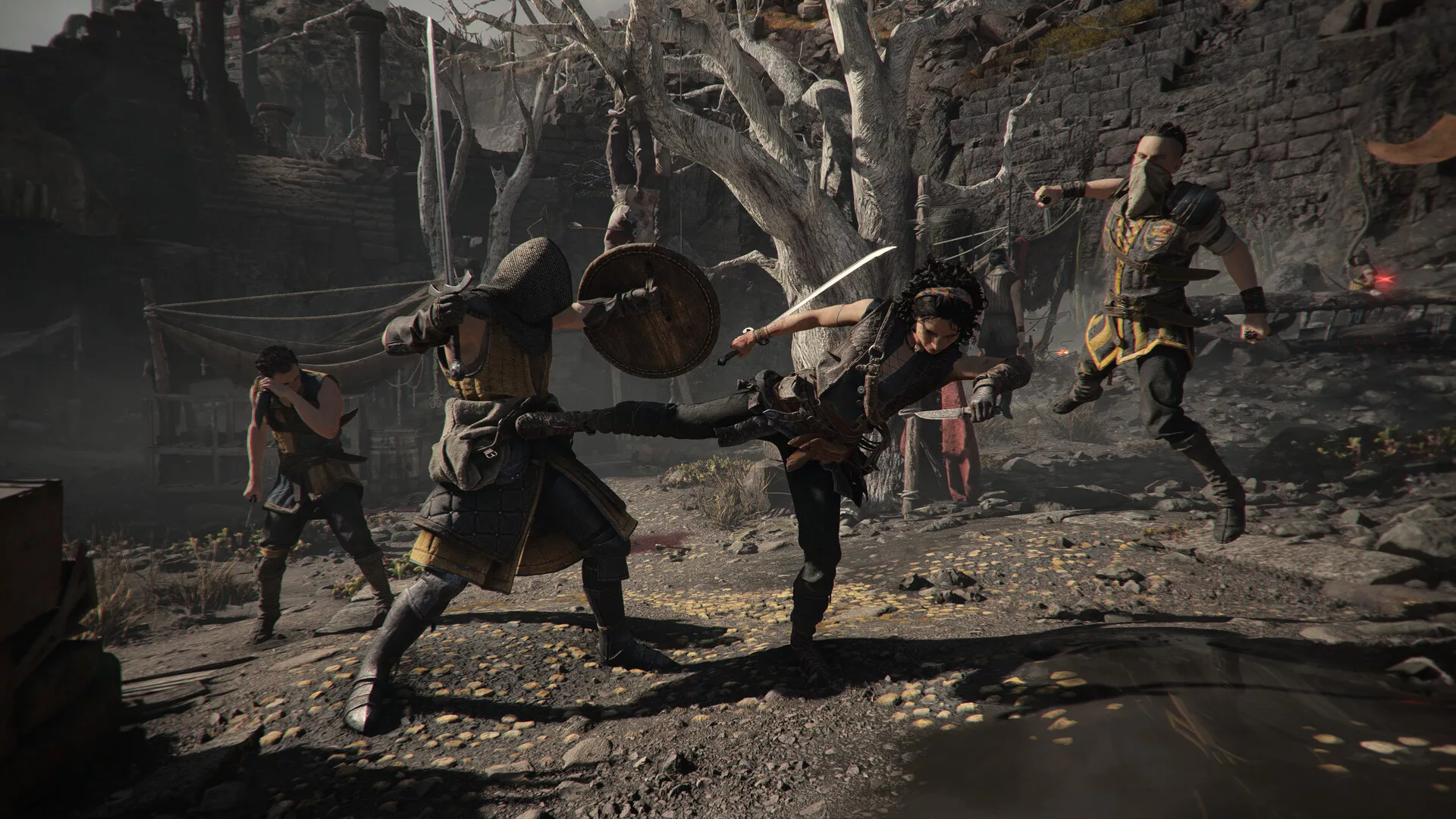
This is the change that made the most noise. Amicia hid, created distractions, lit braziers to push back the rats and ran. Sophia fights.
She holds a sword in one hand, a dagger in the other. The sword blocks and parries, the dagger finishes. Three parries in a row fill a stagger meter under the enemy’s health bar; once it is full, they open up. Seven swords can be unlocked along the way, each with its own perk, and none of them is mandatory.
The reference the developers openly claim is Ghost of Tsushima. The journalists who played in June describe a system that reads clearly and feels good on the parry. Few weapons, few skills, no sprawling progression tree.
Simple, and deliberately so
Asobo has never made an action game. Rather than stacking mechanics, the studio narrowed things down: one stance, two weapons, one meter. Difficulty comes from how many enemies there are and where they stand, not from a list of moves to memorise.
The puzzles stole the show
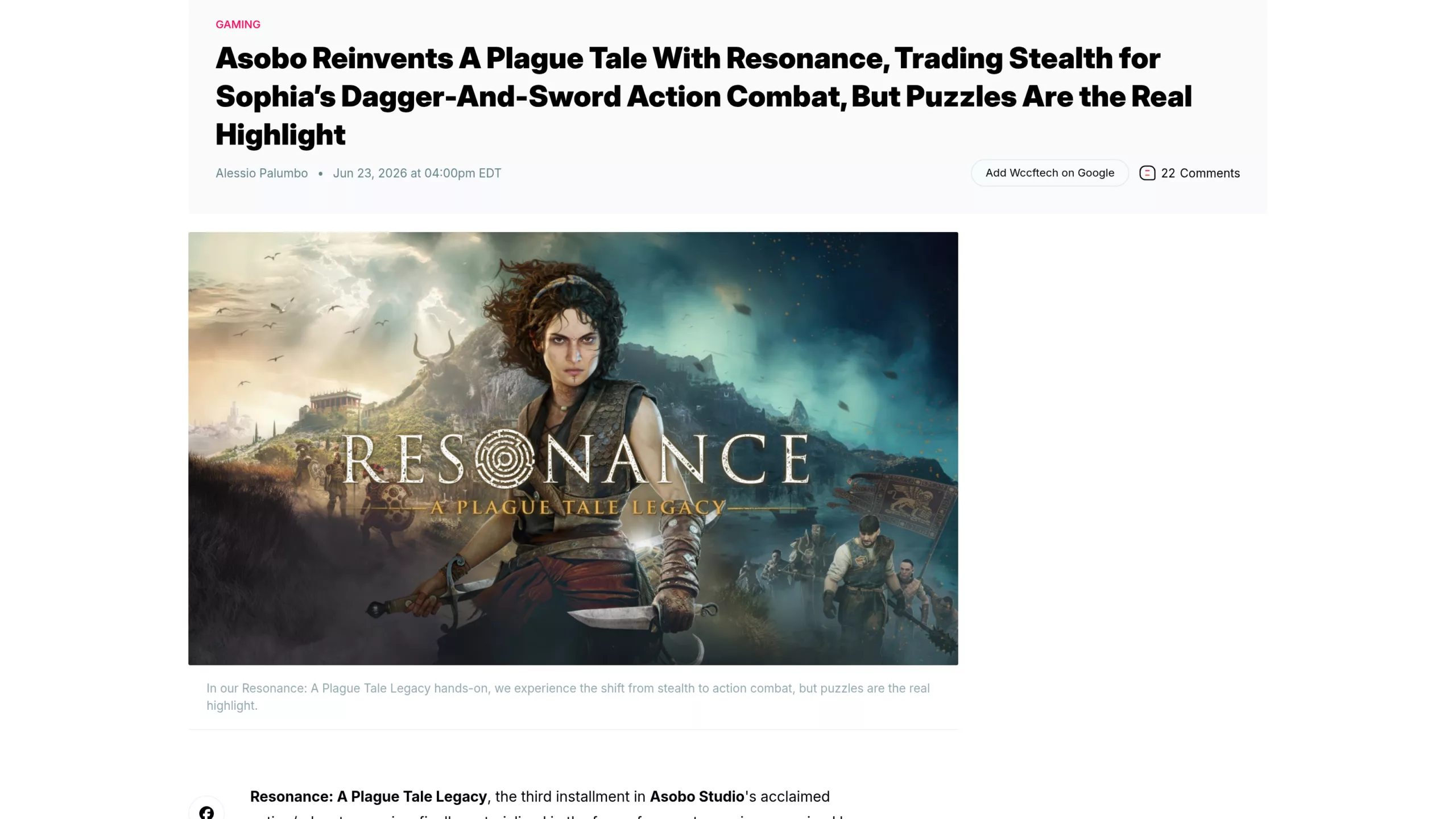
Asobo built its messaging around the sword. The journalists came back talking about the puzzles. Wccftech put it in the headline: combat has changed, « but puzzles are the real highlight ». IGN wrote that Resonance is « plainly the best A Plague Tale has ever played », and describes a third entry that reinvents its formula instead of nudging it.
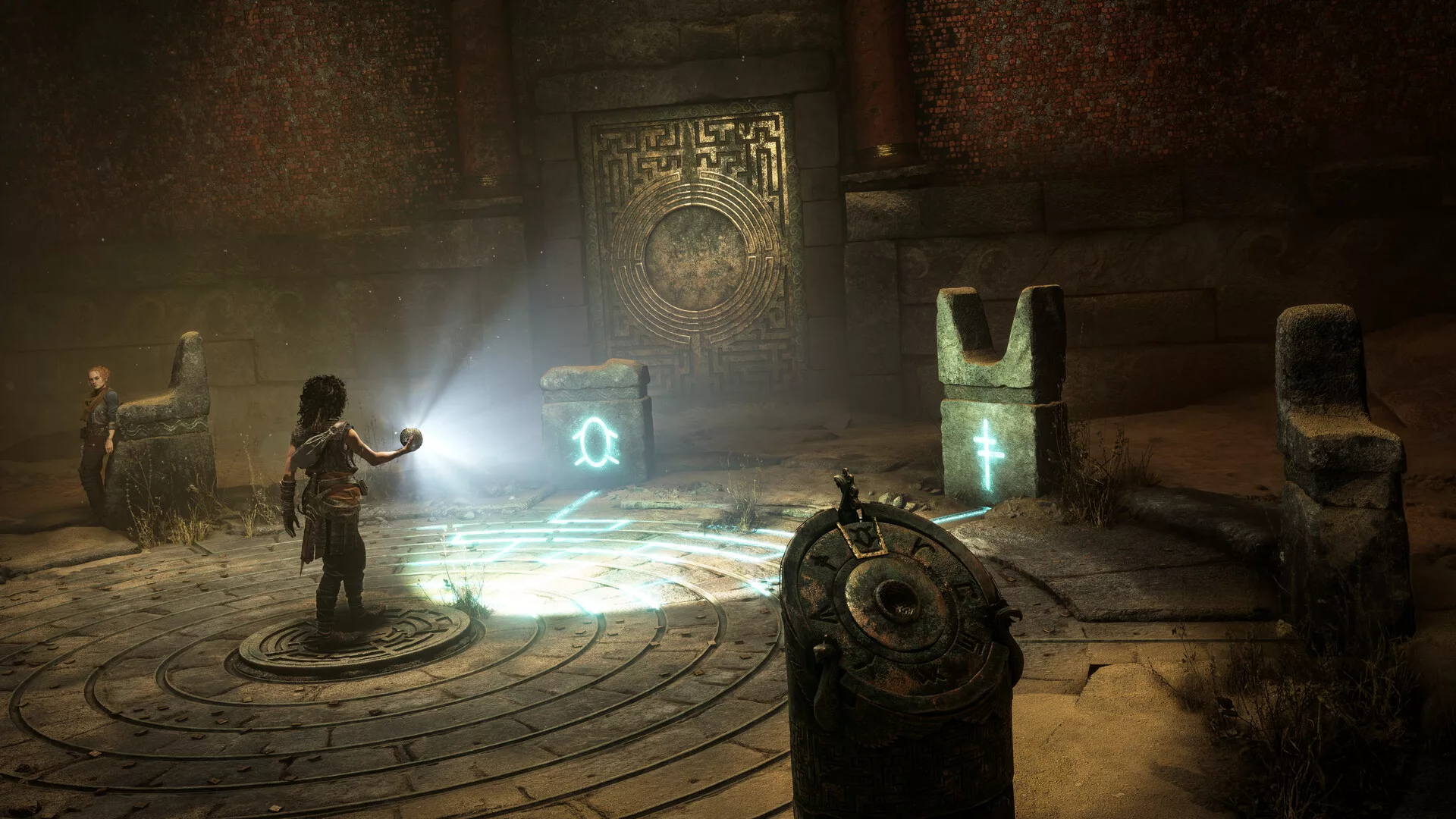
Those puzzles carry the game’s name. Sophia handles objects that emit light and sound, and you have to bring those waves into resonance with carved stones to open the Minoan doors. Light already had a job in the first two games, but it was pushing rats away. Here it becomes a thinking tool.
A Plague Tale without rats
The rats are missing. Asobo hinted at it without ever announcing it. The explanation is as much geography as calendar: the rats in Innocence et de Requiem are the Black Death made flesh, the plague that tore through France from 1348 onwards. A story set in 1333 on a Greek island has no reason to summon them.
The curse Sophia runs into is of another kind. It comes from a Minoan resonance, a frequency of light and sound said to have brought the island down long before she was born. The word « Plague » in the title now names a scourge with no fur on it.
One question is left for the reviews to settle after launch: whether the Macula, the illness that ate away at Hugo and bound him to the rats, resurfaces at all. The studio stayed vague.
Price, platforms, and one catch on Game Pass
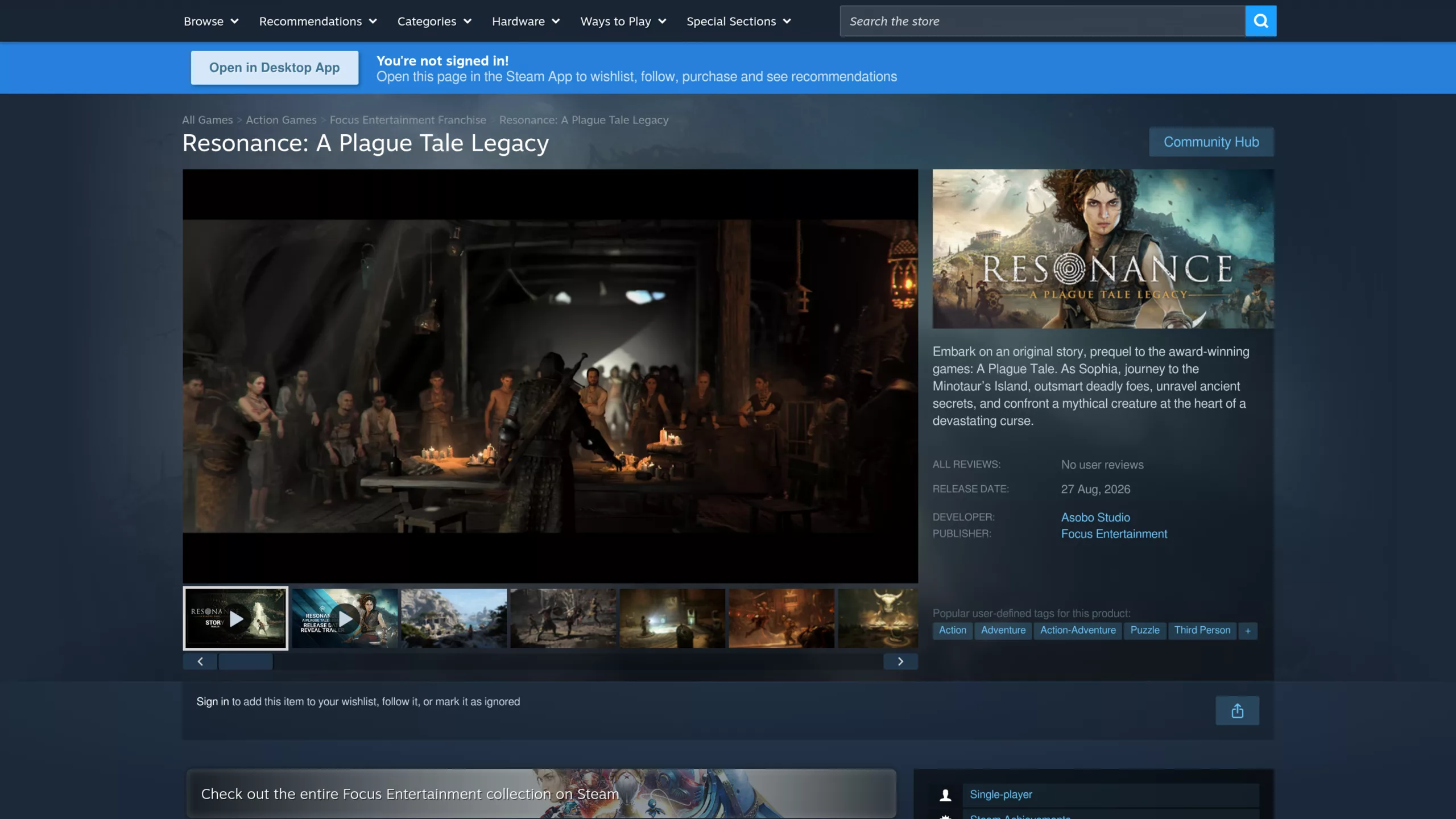
Resonance launches on 27 August on PS5, Xbox Series and PC, priced at 49.99 euros. It is a single-player adventure, fully voiced in French, published by Focus Entertainment as with the two previous entries.
The game lands on Game Pass on day one, with one caveat that matters: only Ultimate and PC Game Pass subscribers get it. The Essential and Premium tiers are left out at launch.
On PC, the spec sheet asks for an SSD, 16 GB of RAM and 75 GB of free space. A GTX 1060 or an RX 5500 XT will do for 30 frames per second; the recommended setup climbs to an RTX 3060 Ti or an RX 6700 XT.
The date falls two days after the gamescom Opening Night Live, où The Witcher 3 : Songs of the Past is due to show itself. A month later, Silent Hill: Townfall opens the autumn rush proper. Asobo chose to go before the crowd.




0 Commentaires
Aucun commentaire pour le moment. Soyez le premier à commenter !