Insomniac Games built its reputation on open cities you swing through from building to building. Its next game arrives in eleven days, and it has none.
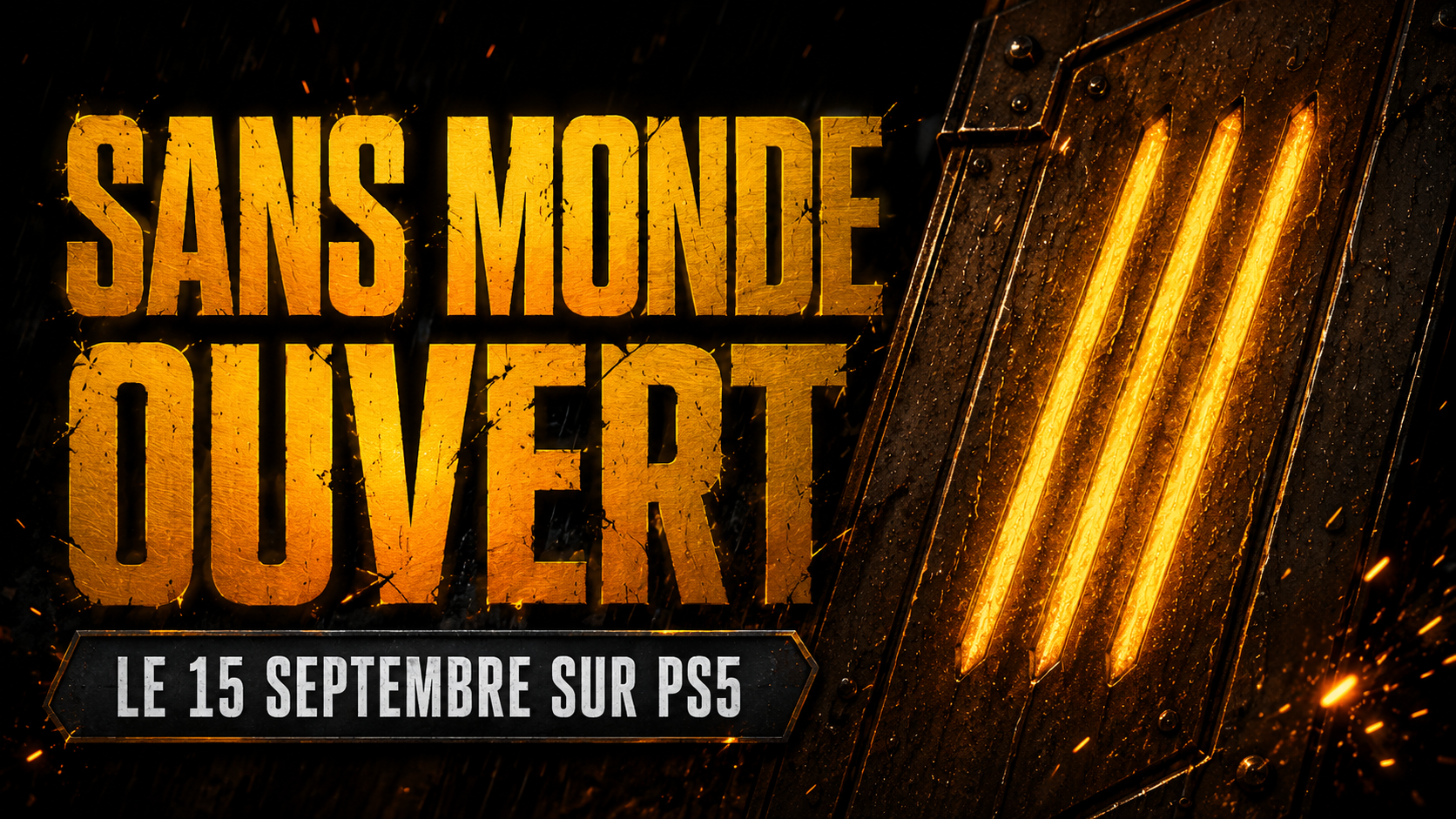
Marvel’s Wolverine arrives on PS5 on September 15. Linear adventure, close camera, unapologetic violence: the studio shelves the formula that made it famous to try something else. The first independent reviews won’t land until three days before release.
September 15, on PS5 and nowhere else
According to the official PlayStation product page, checked on September 4, 2026, Marvel’s Wolverine releases on September 15, 2026, exclusively on PlayStation 5. Insomniac Games develops this solo action-adventure game, and Sony Interactive Entertainment publishes it. The page states the title won’t come to PS4, and that it benefits from PS5 Pro-specific optimizations.
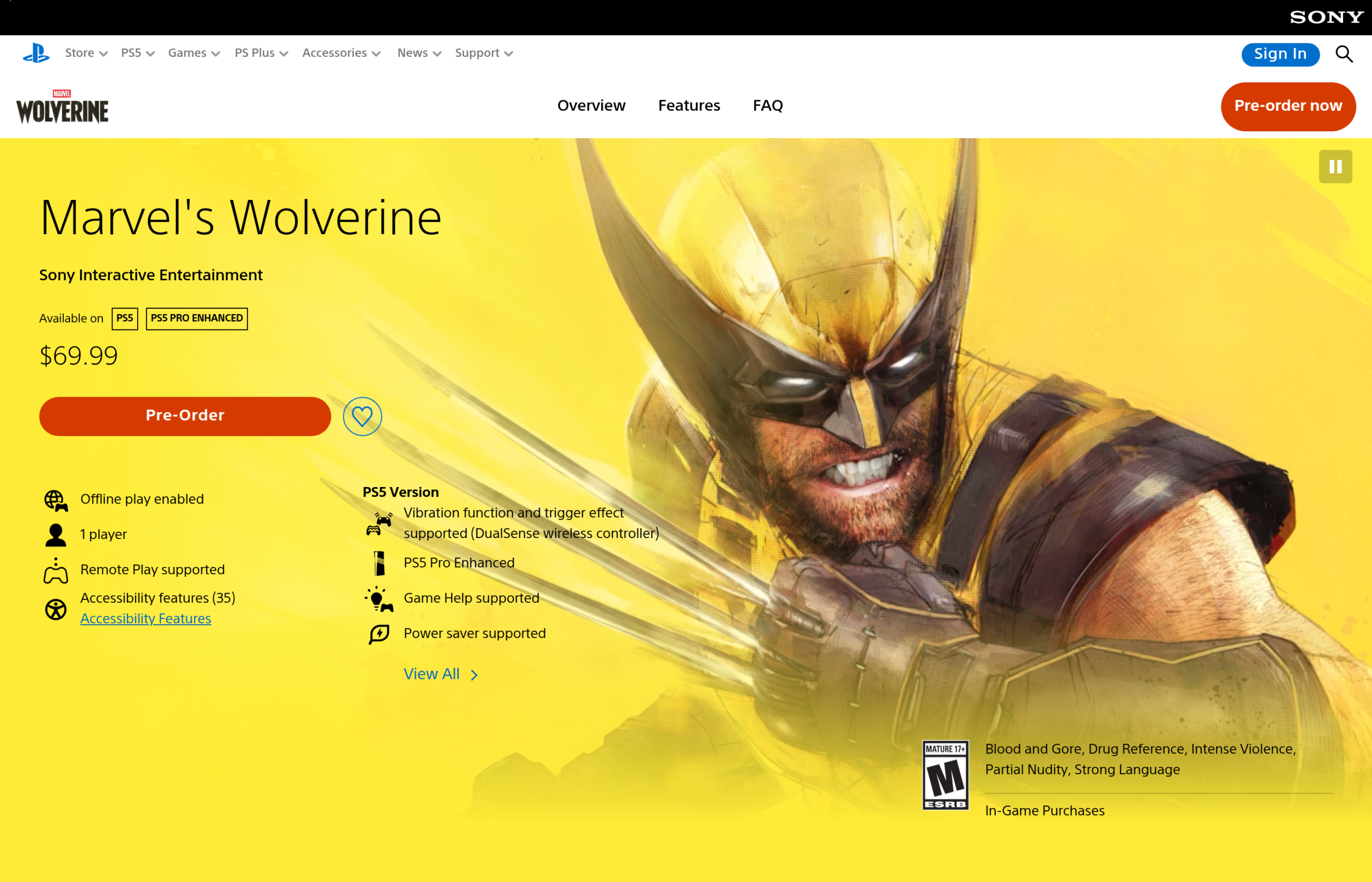
The game remains a solo experience, playable offline, with Remote Play support. The DualSense controller brings haptic feedback and adaptive triggers, and the page lists 35 accessibility features.
Sony’s US store lists the game at $69.99. That price applies only to the United States, and regional pricing varies from one storefront to the next.
ESRB has rated the game Mature 17+, with content descriptors for blood and gore, drug reference, intense violence, partial nudity, and strong language. These descriptors appear exactly as listed on the official page.
In-Game Purchases also appear on the page, with no detail on what they involve. Costumes, progression shortcuts, or something else: the question stays open until Insomniac says more. On a full-price solo game, it’s worth asking.
Marvel’s Wolverine has no open world, and that’s the whole point
Marvel’s Wolverine won’t be an open world. Insomniac breaks from the formula of the two Spider-Man games: the adventure moves from location to location rather than opening a single map to explore. The opening mission, previewed by the press and covered notably by PowerUp!, takes place in Telambang, a contained setting built for staging rather than traversal.
The shift shows in the camera, closer than in Spider-Man, and in enemy density, packed tighter around the player. Movement loses the fluidity of the web-slinger’s aerial moves, but combat gains in intensity. The story takes a darker tone, and the violence is noticeably more raw.
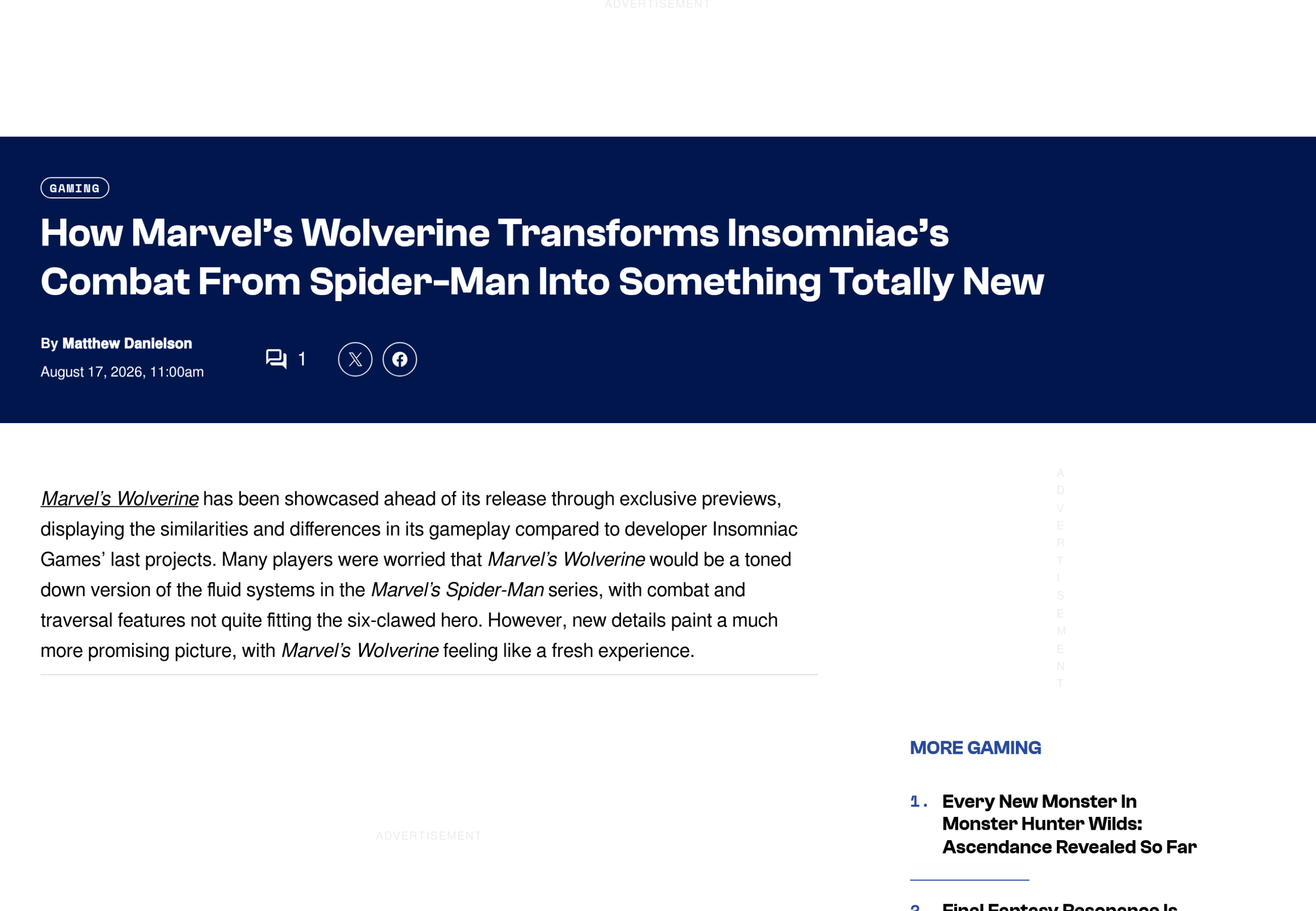
Before these previews, players worried the studio might deliver a watered-down version of Spider-Man’s fluid systems, with combat and movement poorly suited to a clawed character. That’s the subject ComicBook tackles, in an article by Matthew Danielson published August 17, 2026: the details shown were reassuring.
Giving up the open world isn’t a step backward. Wolverine doesn’t swing between skyscrapers, doesn’t cross a city in thirty seconds of acrobatics. His appeal lies in close brutality, not in the journey. An open map would have forced Insomniac to invent spectacular movement this character doesn’t need.
A linear game is judged on its pacing and staging, never on its length. If the staging falls short, the format won’t make up for it. Insomniac hasn’t shipped a linear action game in a long time, and nothing is guaranteed before the reviews land.
Combat built around rage
The combat system builds on the base Insomniac set in the Spider-Man games, reworked to fit Logan: quick strikes, parries, and a three-tier rage meter that changes how you fight as the encounter unfolds.

The fuller the meter, the more powerful Logan’s attacks become. At the higher tiers, two effects unlock: finishing moves, and the ability to regenerate after taking a critical hit. Combat is described as fast, intense, barely leaving time to breathe.
This regeneration detail says something about the character being adapted. Taking hits is part of the attack: the more punishment Logan absorbs, the more he can dish out, and the faster he heals. A standard health bar would have told a story about survival alone. Here, the system gives a playable shape to rage itself, and to the healing factor that makes the character nearly indestructible in the comics.
These demos stay controlled by the publisher, never open hands-on sessions. The first independent reviews won’t land until around September 12 or 14, just days before release. A good system idea says nothing about how a game holds up over ten or fifteen hours: combat that shines in a demo can wear thin if it doesn’t evolve fast enough.
And in a packed fall lineup, a game doesn’t have much time to win people over.









0 Commentaires
Aucun commentaire pour le moment. Soyez le premier à commenter !