Project Ascension is going to close. Almost the entire community is convinced of it, and yet the server hasn’t died from a lawsuit. Not yet. That changes how to read what’s happening to it, because the history of the big private WoW servers rarely tells a story of a shutdown triggered by Blizzard. Most of them collapsed from the inside, over cash scandals or teams that fell apart.
Elysium collapsed in October 2017 over a gold-selling and embezzled-donations scandal, not over a cease and desist. Feenix disappeared by desertion, its team and its players left before anyone closed the door. Until 2024, lawsuits directly responsible for a shutdown stayed rare. Internal stories did the job instead of the courts.
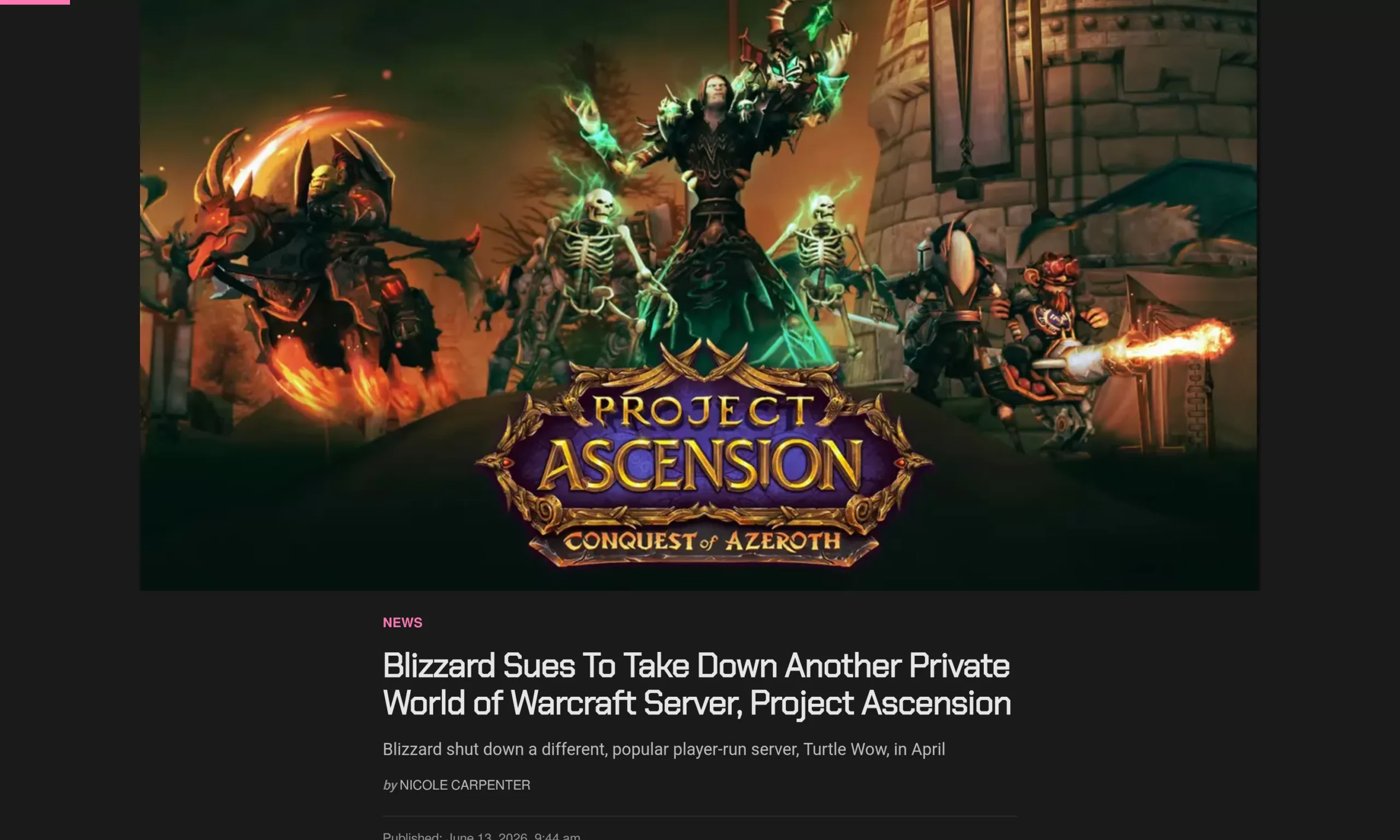
Since 2025, the pattern has reversed. Everlook went down. Project Epoch too. Turtle WoW closed. Stormforge followed. Project Ascension is the last big name still online, and it has been targeted by a federal lawsuit since June 12, 2026. Saying that Project Ascension is going to close is no longer just one hypothesis among others. It’s written in black and white in a court filing.
The question is no longer whether it’s going to happen. It’s when. And this question has dated, public answers that anyone can check. The method is simple: read the federal case timeline, time the Turtle WoW precedent, and see what that gives once applied to Project Ascension.
The Date Everyone Missed: September 8, 2026
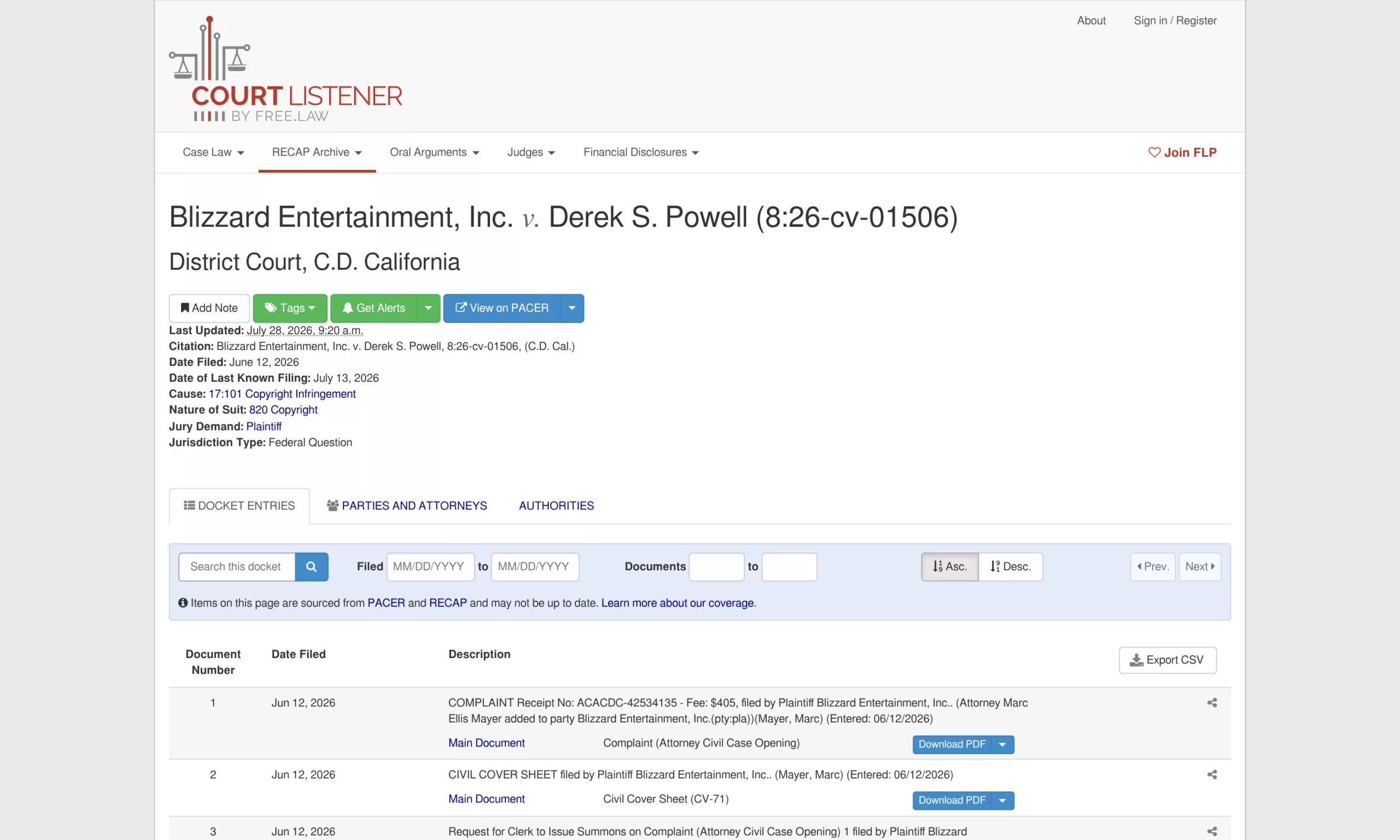
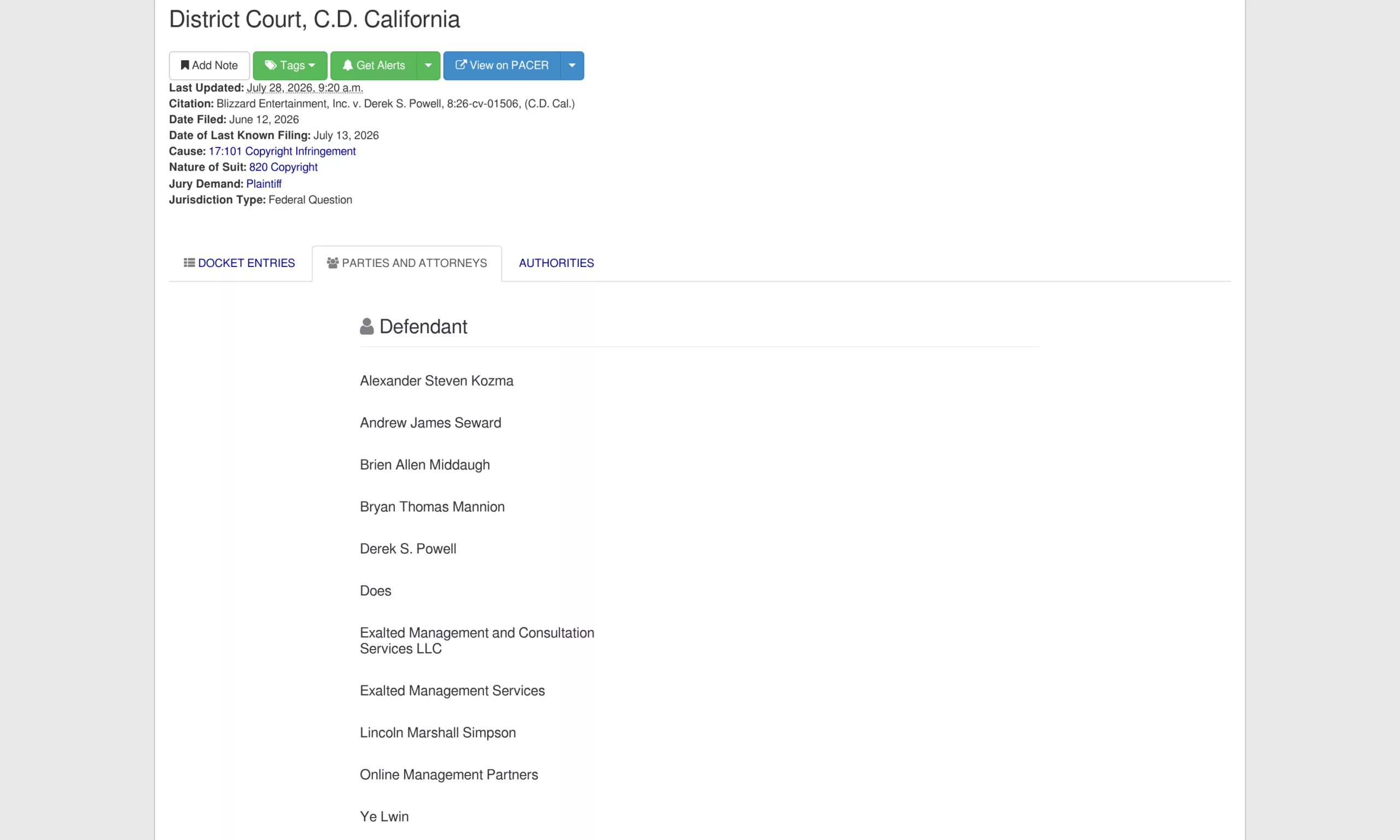
On June 12, 2026, Blizzard files its complaint against the operators of Project Ascension. The case carries the number 8:26-cv-01506, before the federal court for the Central District of California. The judge in charge is John W. Holcomb. Fifty-one pages, nine counts, including RICO, the American anti-racketeering law, sections 1962(c) and 1962(d). The reason logged with the court clerk fits in one line: 17:101 Copyright Infringement. Blizzard is requesting a jury trial. The reach of this filing goes well beyond the fate of a single server.
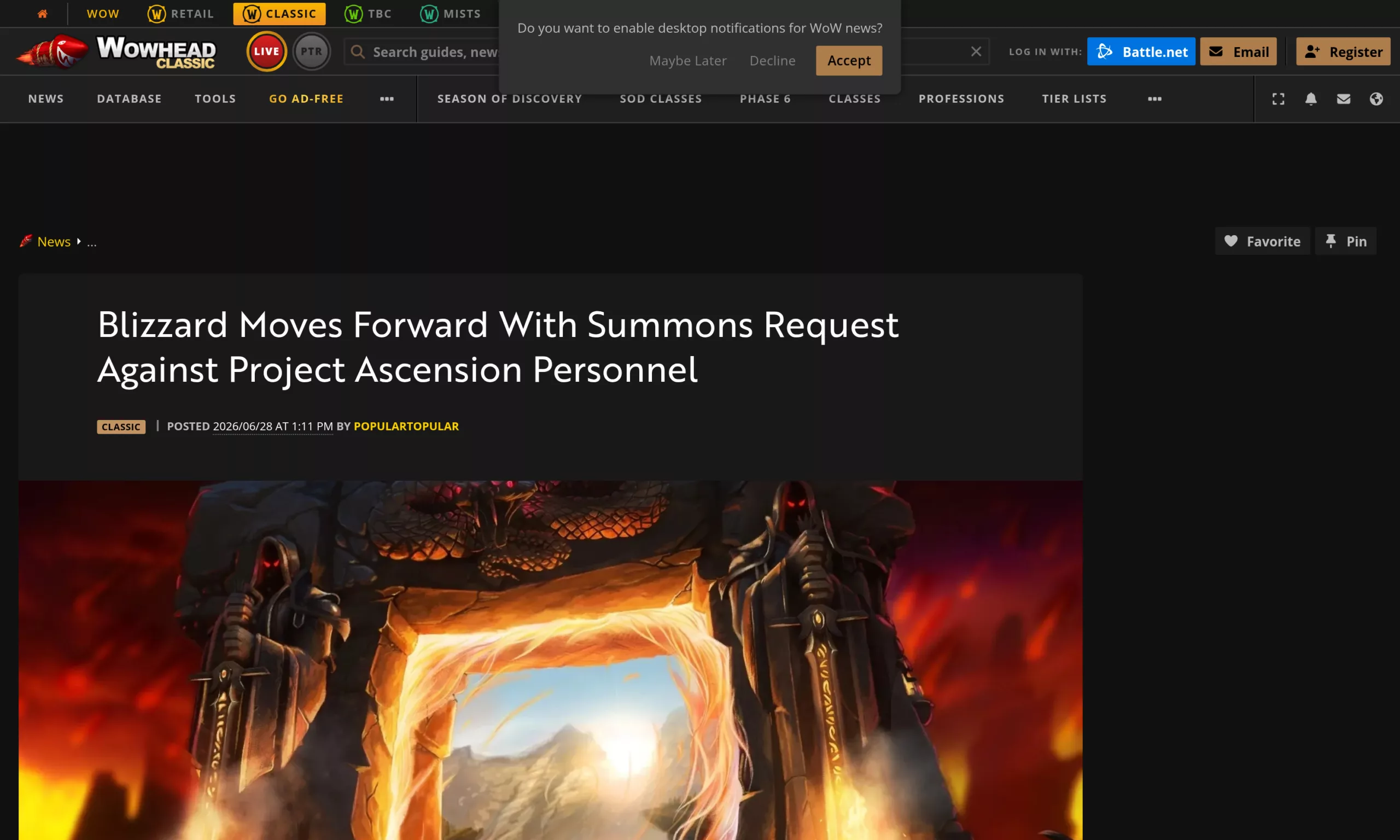
What follows moves fast. On June 13, the cease and desist becomes public. On June 28, Blizzard files the summons requests. From that filing, the defendants have 21 days to respond, with a brief or a motion. Without a response within that window, a default judgment can be entered, granting everything Blizzard asks for in its injunction. On July 2 and 10, attorneys enter appearances in the case. The defendants have therefore retained counsel. Last known filing: July 13. Last update to the public docket: July 28. Nothing since.
One detail changes the whole timeline. Derek S. Powell, Bryan Thomas Mannion, Exalted Management Services, and Online Management Partners waived formal service of process. In practice, that means they agree to be officially notified without going through a process server or a binding delivery. In exchange, they gain time on their response. This waiver sets their deadline at September 8, 2026. It isn’t an admission. It’s a routine calendar move, often a sign that a negotiation is underway, or that a defense is being prepared behind the scenes.
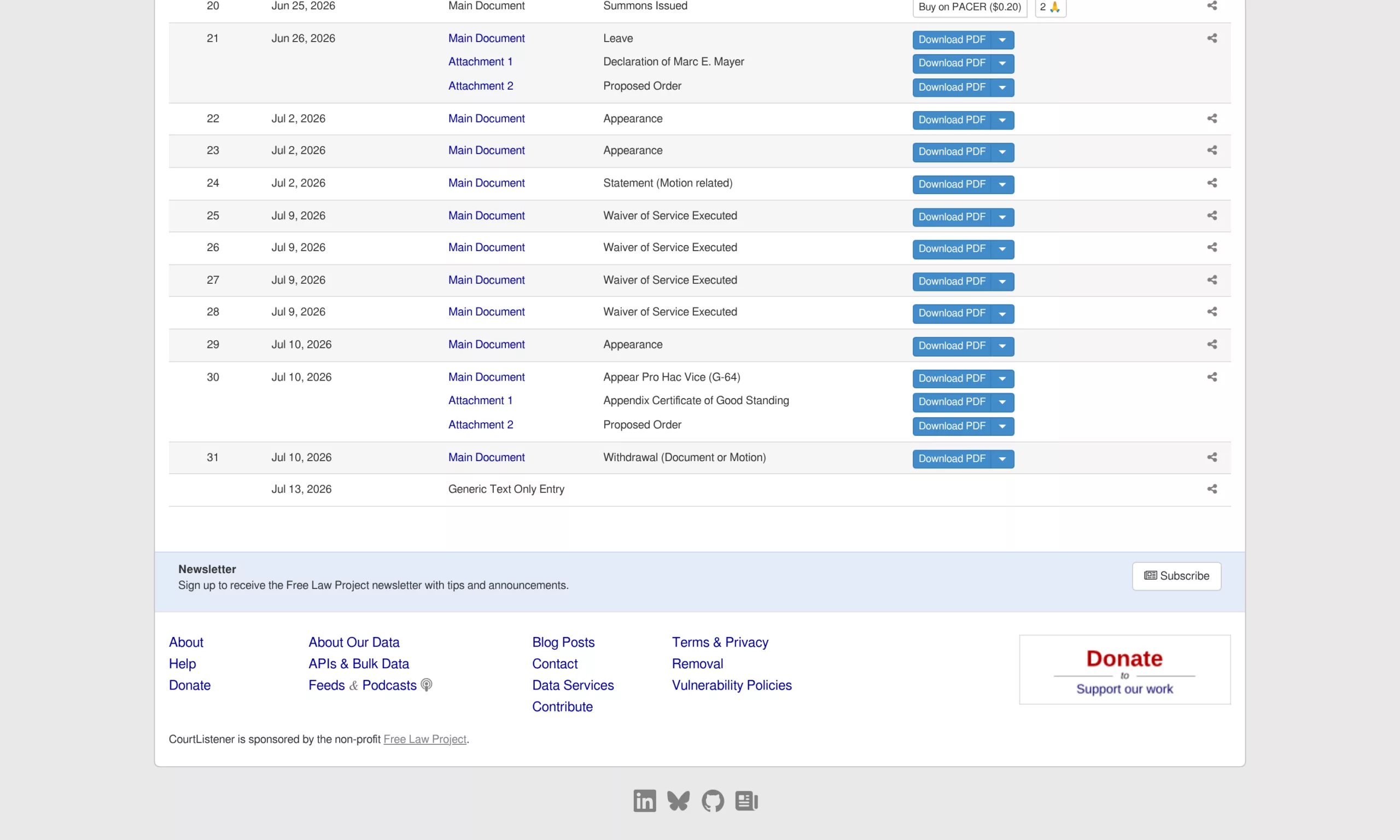
The rest of the case reads like a timeline with no fireworks. Seven summonses issued on June 25. Two attorneys entering appearances on July 2, the same day as a motion-related statement. Four waivers of service recorded on July 9, the ones that set the September deadline. One more appearance and a document withdrawal on July 10. Then a final entry on July 13, and nothing since.
As of today, no substantive response appears on the public docket. No ruling. No injunction. September 8 is therefore not the shutdown date for Project Ascension. It’s the date when we’ll know which shutdown is coming. Three doors open that day.
- They file a defense and contest the accusations.
- They negotiate a settlement with Blizzard, either amicably or as a consent judgment.
- They don’t respond, and a default judgment can be requested.
Project Ascension Is Still Running Today, and That Means Nothing
Open the Project Ascension homepage on this August 13, 2026, and you’ll see seven green lines. The login server, Vol’jin and Rexxar on Conquest of Azeroth, Darkmoon on Season 10 Wildcard, Dawnrise on Season 10 Freepick, Bronzebeard, Area 52. Seven realms, all marked Online. The Discord counter shows 54,286 connected at the time of the capture. The PLAY NOW button sits under the logo of the current campaign, Destiny’s Dawn, and a SHOP tab appears in the navigation bar, the very one Blizzard’s complaint directly targets. Project Ascension claims more than a million players. That’s a claim from the operator, not an independent measurement. If you want to see what this world actually offers before it changes face, we tested the server in depth, realms and shop included.
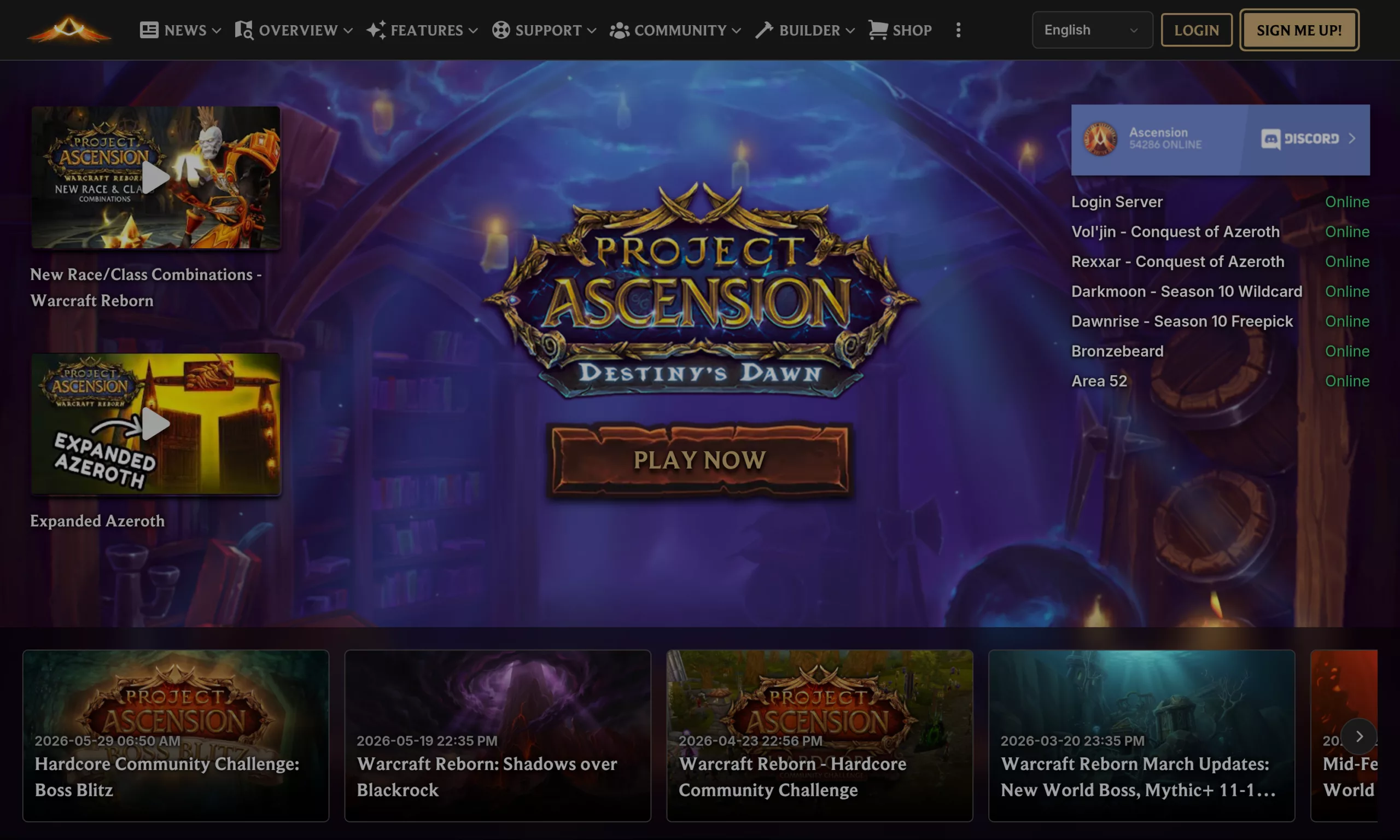
Nothing in this picture proves anything about the outcome of the lawsuit. No ruling on the merits has been issued, no injunction exists to date. Legally, nobody is forcing Project Ascension to pull the plug now. The Turtle WoW case gives a sense of the real gap between a ruling and its enforcement. The permanent injunction was entered on April 15, 2026. The servers went dark on May 15, 2026, a month later, once the legal battle was already closed. By contrast, Felmyst shut down within hours on July 21, 2017, on a mere cease and desist, with no lawsuit at all. Execution speed depends on the operators’ choice, not on some fixed clock written into the law.
And there is a precise reason for that, one worth more than luck. Across all thirty-one entries on the docket, Blizzard has filed no request for emergency relief. No temporary restraining order, no preliminary injunction, the procedures that secure a ban within days or weeks without waiting for judgment. As long as no such request exists, no judge has the power to order the shutdown. The penalties demanded in the complaint are heavy, but they will only land at the end of the case. That is the real explanation for the server still running, and it is also what could change overnight: nothing stops Blizzard from filing that request whenever it decides to.
The consequence runs against intuition. September 8 is not a date on which the server risks going dark, and it is no guarantee it survives until then either. It is the date the defendants have to show their hand.
One nuance deserves to be stated plainly. Most of the notable private servers didn’t die from a blow struck by Blizzard. Elysium collapsed over an internal affair, not a legal action. Feenix faded away for lack of players, slowly, with no lawsuit and no cease and desist. Many players still believe today that Blizzard killed these projects. That’s often false. A server running today guarantees nothing for tomorrow, and if it goes dark, that can just as easily come from its own internal failures as from an American court.
Turtle WoW Sets the Benchmark: Eight and a Half Months
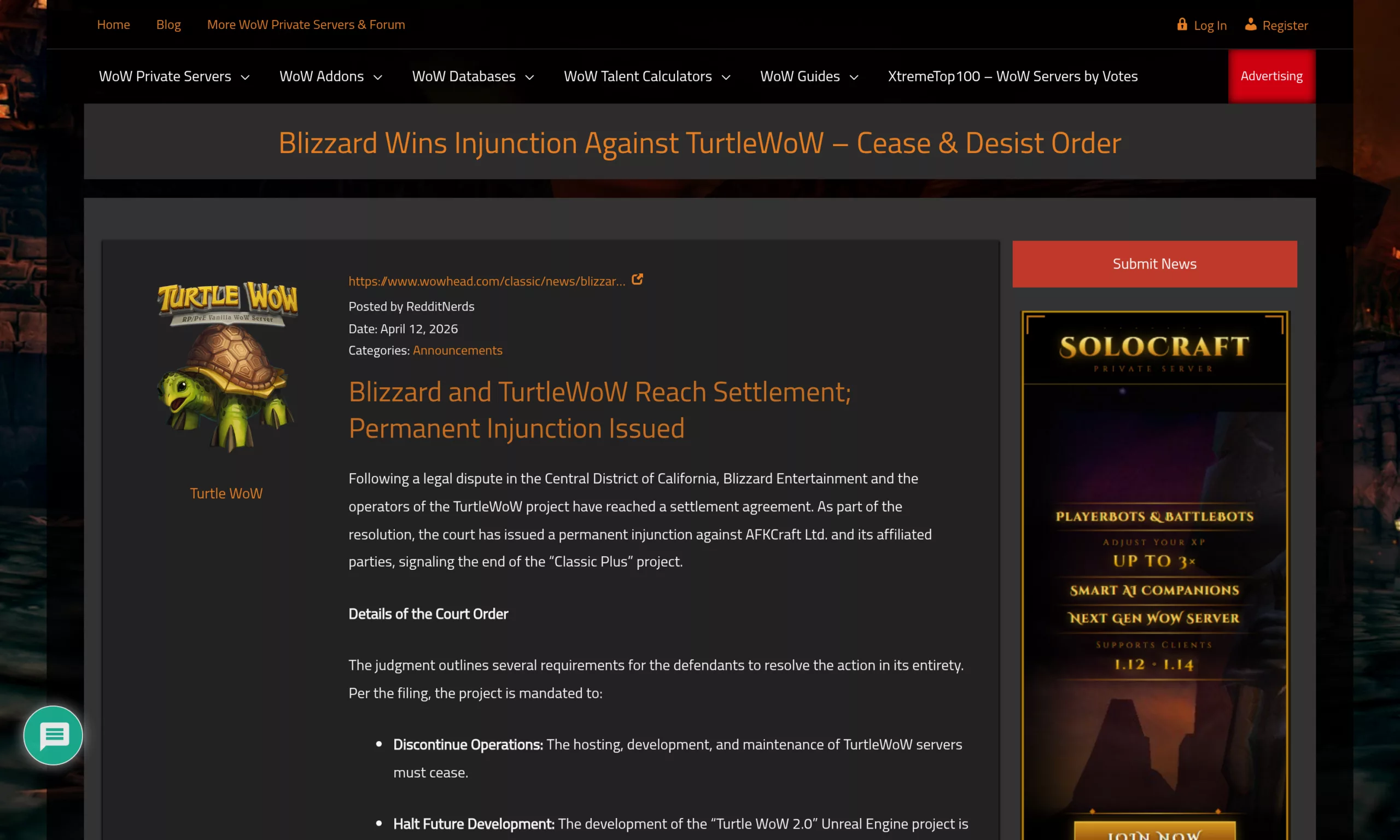
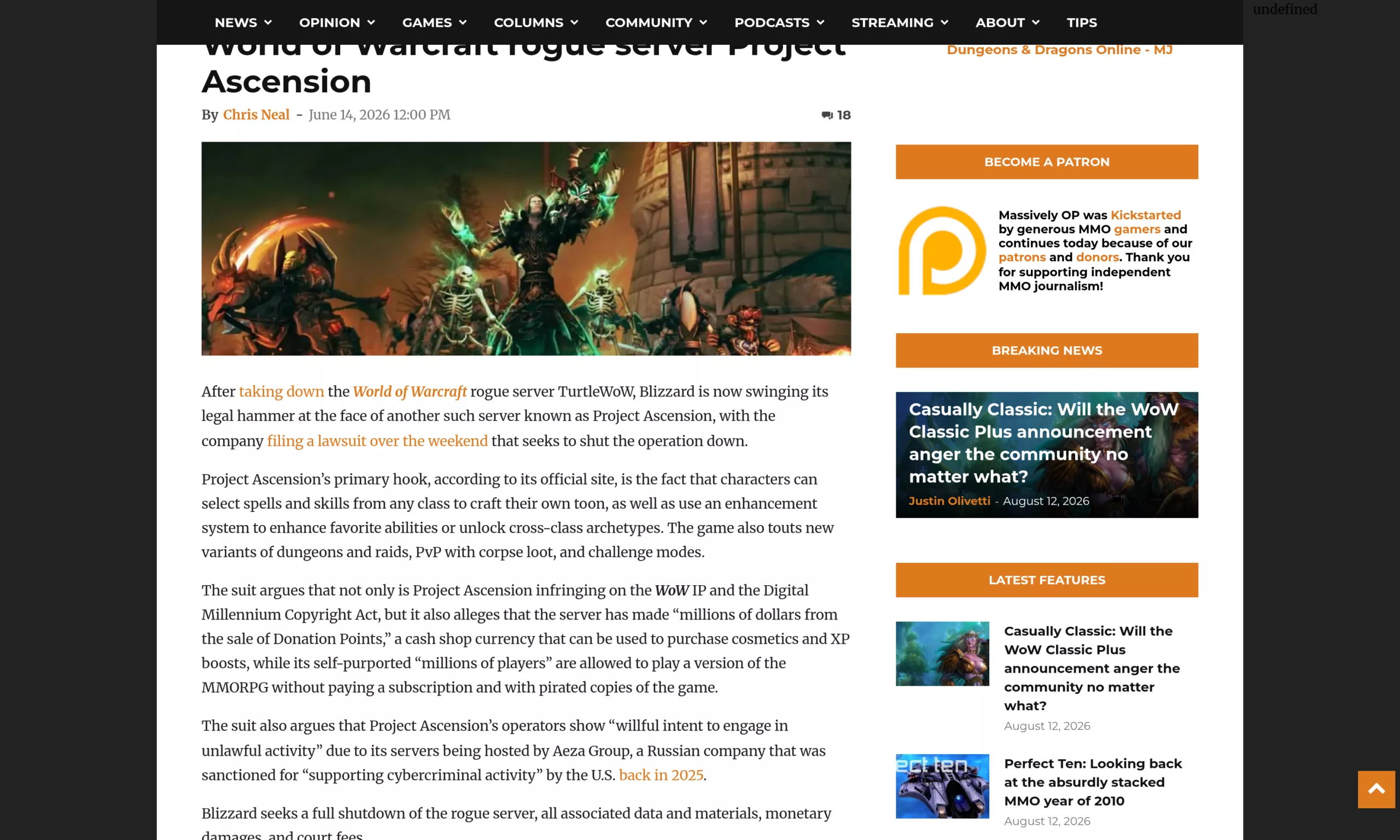
Turtle WoW lasted nearly eight years. Blizzard took eight and a half months to shut it down once the proceedings started. The complaint lands on August 29, 2025, case 2:25-cv-08194, Central District of California. In October, the Turtle team publicly asks for a licensing framework for community servers. Blizzard doesn’t respond, at least not publicly. The history of clashes between Blizzard and private servers shows that this silence is nothing unusual.
On April 12, 2026, a settlement between the parties is made public. Three days later, on April 15, Judge Stephen V. Wilson enters a consent judgment and a permanent injunction on all seven counts. Ban on hosting, developing, or maintaining Blizzard private servers, ban on soliciting donations for that activity, ban on transferring the code or social media accounts to a successor. The Turtle WoW 2.0 project on Unreal Engine 5 dies along with everything else. A month later, on May 15, 2026, the servers go dark. From complaint to black screen: eight and a half months.
Project Ascension received its complaint on June 12, 2026. Applying the same duration, eight and a half months would put the shutdown around late February or early March 2027. That’s an estimate built by analogy, not a prediction. A single precedent doesn’t make a rule, even when it’s timed down to the day.
Two factors could speed things up. A default judgment, if the defendants don’t respond in time, moves faster than a negotiated settlement. And a settlement could land early: the defendants already retained attorneys in July 2026, a sign they’re preparing a response rather than silence.
Two other factors could slow everything down. Turtle WoW rested on a single shell company, AFKCraft Ltd. The Project Ascension case counts eleven named defendants. Eleven parties, eleven attorney calendars, eleven chances to file a motion that buys weeks. If the merits of the case are genuinely contested, the proceedings can stretch out over eighteen to thirty months.
The range of recent precedents illustrates the gap. Everlook Europe closed on September 22, 2025, on a mere cease and desist. Project Epoch stopped its services in September 2025, same method. Stormforge closed on May 14, 2026, again on a cease and desist. Felmyst holds the opposite record: shut down on July 21, 2017, just hours after its launch. Ascension, for its part, received the complaint on June 12, 2026, and saw the cease and desist go public the next day. It hasn’t caved on either one.
| Case | Date | Milestone |
|---|---|---|
| Turtle WoW | August 29, 2025 | Complaint filed, case 2:25-cv-08194 |
| Turtle WoW | Octobre 2025 | Public request for a licensing framework, no response |
| Turtle WoW | 12 avril 2026 | Settlement made public |
| Turtle WoW | 15 avril 2026 | Consent judgment and permanent injunction (Judge Wilson) |
| Turtle WoW | May 15, 2026 | Servers shut down |
| Turtle WoW | Total duration | Eight and a half months, from complaint to black screen |
| Ascension | 12 juin 2026 | Complaint filed |
| Ascension (projected) | Late February, early March 2027 | Estimate by analogy with Turtle WoW (+8.5 months), not a confirmed date |
Eleven Names on a Public Document
Open Blizzard’s court filing against Project Ascension and you land on a list. Alexander Steven Kozma, Andrew James Seward, Brien Allen Middaugh, Bryan Thomas Mannion, Derek S. Powell, Lincoln Marshall Simpson, Ye Lwin. Two companies, Exalted Management Services and Exalted Management and Consultation Services LLC. One entity, Online Management Partners. And some « Does », defendants still anonymous whom Blizzard may name later in the proceedings. Nothing secret about it: case 8:26-cv-01506 is public, anyone can read it.
According to the complaint, Derek Powell and Bryan Thomas Mannion are presented as the owners and operators of the project. They allegedly handle operations, development, management, recruitment, team supervision, marketing, and the upkeep of the client and the servers. These are only allegations at this stage, nobody has been judged. But the mere fact that these names exist, tied to actual American individuals, changes everything in a civil lawsuit.
Why has Warmane been running for about ten years without any court getting involved, while Ascension goes straight there? The answer has nothing to do with server size or how long they’ve been around. Warmane, Kronos, TwinStar, Whitemane: their operators remain anonymous, or are hosted outside the United States, notably in Czechia. None of these projects has ever received a license from Blizzard, there isn’t even a legal framework for that. It’s tolerance, not permission. But as long as nobody can drop a summons in a mailbox, the balance of power stays in the server’s favor.
Project Ascension breaks this pattern. The majority of the names cited in the details of the complaint filed by Blizzard are actual individuals, residing in the United States, identified by their full name. Once that exists on paper, the case becomes enforceable. A process server can serve a summons. A federal court can order a seizure. The risk calculation changes completely, both for the defendants and for their attorneys.
Watch out for a red herring: money alone explains nothing. Nostalrius wasn’t monetized, zero donations, zero subscriptions, and it still closed in 2016 under the pressure of a cease and desist. What monetization changes is the amount claimed in damages, not what triggers the proceedings. The real variable remains how traceable the operators are.
| Server | Operators’ situation | Fate |
|---|---|---|
| Nostalrius | French team identified, OVH host that could be served | Closed April 10, 2016 |
| Felmyst | Identifiable creator, in the United States | Closed July 21, 2017 |
| Turtle WoW | Defendants spread across several countries, shell company AFKCraft Ltd | Closed after eight and a half months of proceedings |
| Ascension | American defendants named individually | Proceedings ongoing |
| Warmane, Kronos, TwinStar, Whitemane | Anonymous operators or based outside the United States | Never sued |
What Won’t Protect Them: Homemade Content, Russia, Silence
Three ideas reassure the Project Ascension community. The content is homemade, so it’s not Warcraft. The servers are in Russia, so they’re out of reach. Blizzard is quiet, so the case is running out of steam. None of them holds up against the facts.
Homemade Content Protects Nothing
Project Ascension runs several modes under the same banner. The best known, Warcraft Reborn, removes classes: you pick spells and talents wherever you want to build your character. Conquest of Azeroth goes the other way, with 21 homemade classes, from the Venomancer to the Knight of Xoroth. In both cases, the content is very largely invented, with dungeon and raid variants, a hardcore mode, and seasons. Blizzard sued anyway, on June 12, 2026.
What’s being targeted isn’t that invented content. It’s the game client and the server code obtained through reverse engineering, meaning taking a piece of software apart to reproduce it, plus the use of the trademarks. Ascension runs on a base derived from the Wrath of the Lich King client.
A precedent has settled this question since 2005. In Davidson & Associates v. Jung, the Eighth Circuit Court of Appeals (422 F.3d 630) ruled that reverse engineering violates the DMCA, the American law that protects a piece of software’s locks, and that terms of service form an enforceable contract. Turtle WoW mixed a faithful replica with homemade content, closed. Project Epoch, homemade too, received a cease and desist in September 2025 and cut its services. What let Ascension last wasn’t its content, it’s that it didn’t directly compete with Blizzard, until it became too visible to ignore.
Russia Doesn’t Put Them Out of Reach
Project Ascension’s servers are hosted at Aeza Group, a Russian company sanctioned by the US Treasury in 2025 for supporting cybercriminal activities. You might think this hosting choice is protective. It’s the opposite. Blizzard doesn’t present it as an obstacle, but as evidence of intent: choosing a sanctioned host that’s hard to reach shows the operators knew what they were doing. And it’s not machines that answer before an American court, it’s people. The defendants named in the complaint are mostly American. The location of the servers changes nothing about their situation.
Silence Is the Worst of the Three Strategies
According to the complaint, Project Ascension sells « Donation Points », around $0.50 each, with bonuses starting at $15 in purchases, to unlock cosmetics and experience boosters. The complaint cites millions of dollars drawn from these sales, a figure that feeds the racketeering angle of the case, the accusation that the operation amounts to an organized criminal enterprise. Ascension, for its part, claims more than a million players, but that’s a statement from the operator, not an independent measurement.
The real risk shows up in an older precedent. In 2010, in Blizzard v. Scapegaming (case 2:09-cv-07621, Central District of California), Judge Stephen V. Wilson entered, on August 11, a default judgment of $88,594,539 against Alyson Reeves. A default judgment is entered when the party being sued doesn’t show up to defend itself. The calculation breaks down as follows: $3,052,339 in disgorged profits, an amount confirmed by PayPal records, plus $85,478,600 in statutory damages, plus $63,600 in attorney fees.
Another case offers a comparable order of magnitude. In MDY Industries v. Blizzard, decided on December 14, 2010 by the Ninth Circuit (citation 629 F.3d 928), the publisher of the Glider bot posted $3.5 million in gross revenue in September 2008, for 120,000 licenses sold. The case ended in an agreed judgment of $6 million.
Not responding to a complaint doesn’t make it go away. The opposing side then gets everything it asks for, with nobody on the other side to argue the numbers. One nuance is needed: Nostalrius wasn’t making a single cent and still closed in April 2016. Money isn’t what triggers Blizzard’s action, it only determines the size of the bill that follows.
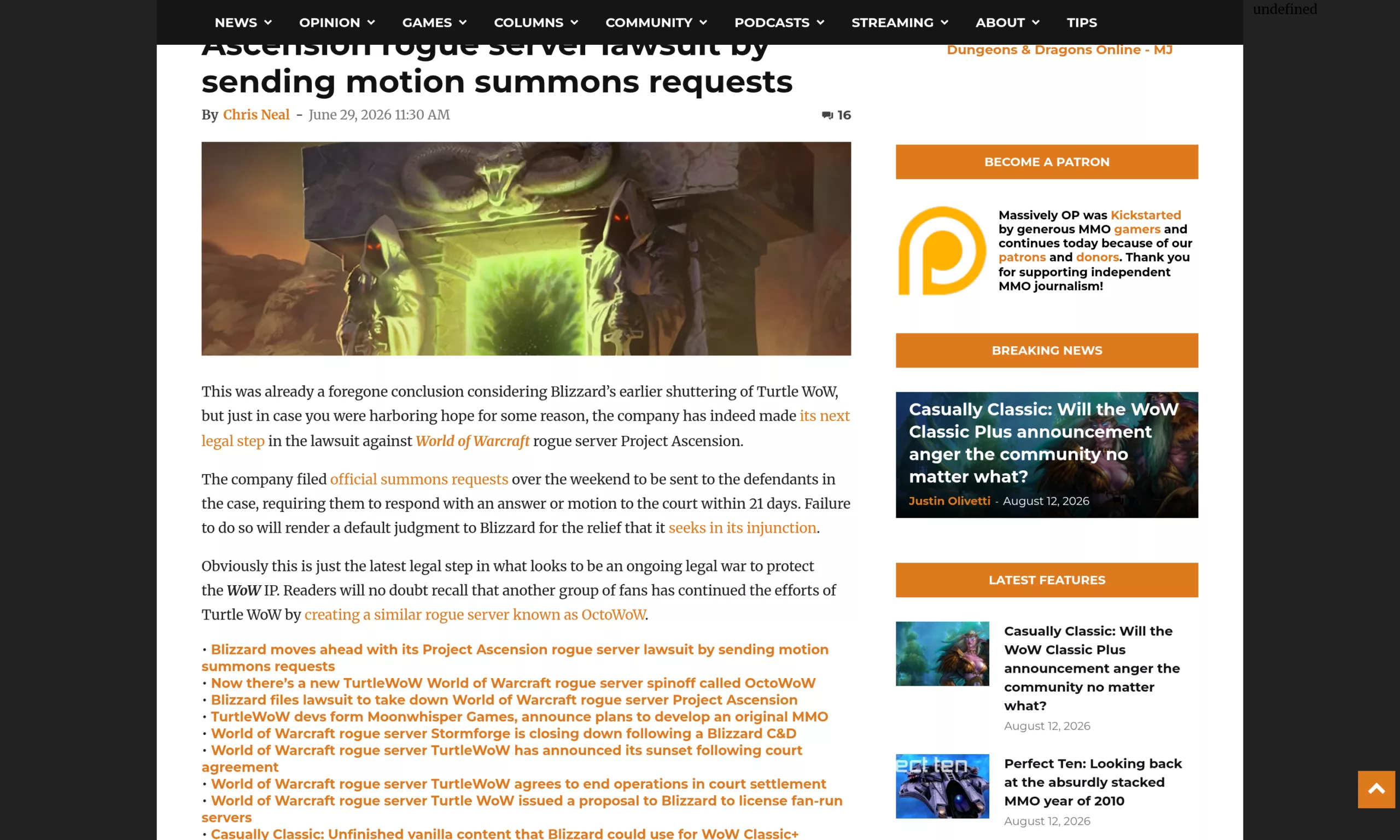
September 12, Four Days Later, There’s BlizzCon
The response deadline for the main defendants falls on September 8, 2026. Four days later, on September 12 and 13, Blizzard opens BlizzCon 2026 in Anaheim, California. All passes are already sold out. The closeness of these two dates is probably nothing more than a procedural coincidence. But Blizzard’s history with community servers gives this proximity a weight it wouldn’t carry on its own.
Blizzard hits hardest when a server competes with a product it sells, or is about to sell. Nostalrius paid the price on April 10, 2016. Its closure triggered a petition with several hundred thousand signatures, then a meeting in Irvine in June 2016 between its team and Blizzard’s leadership. Planned for two hours, the meeting ran nearly five. The Nostalrius team presented a roughly 80-page report there. Blizzard then stopped responding for six months.
WoW Classic was announced at the November 2017 BlizzCon, released on August 27, 2019. Between the two dates, Felmyst, a Burning Crusade replica, closed on July 21, 2017, while Blizzard was preparing its Classic lineup. Northdale, a vanilla server, closed on its own on August 24, 2019, the day before the official launch. Every Classic product has been preceded by a wave of shutdowns. The one in 2025 and 2026 is the harshest ever observed: Everlook, Project Epoch, Turtle WoW, Stormforge, and now Project Ascension.
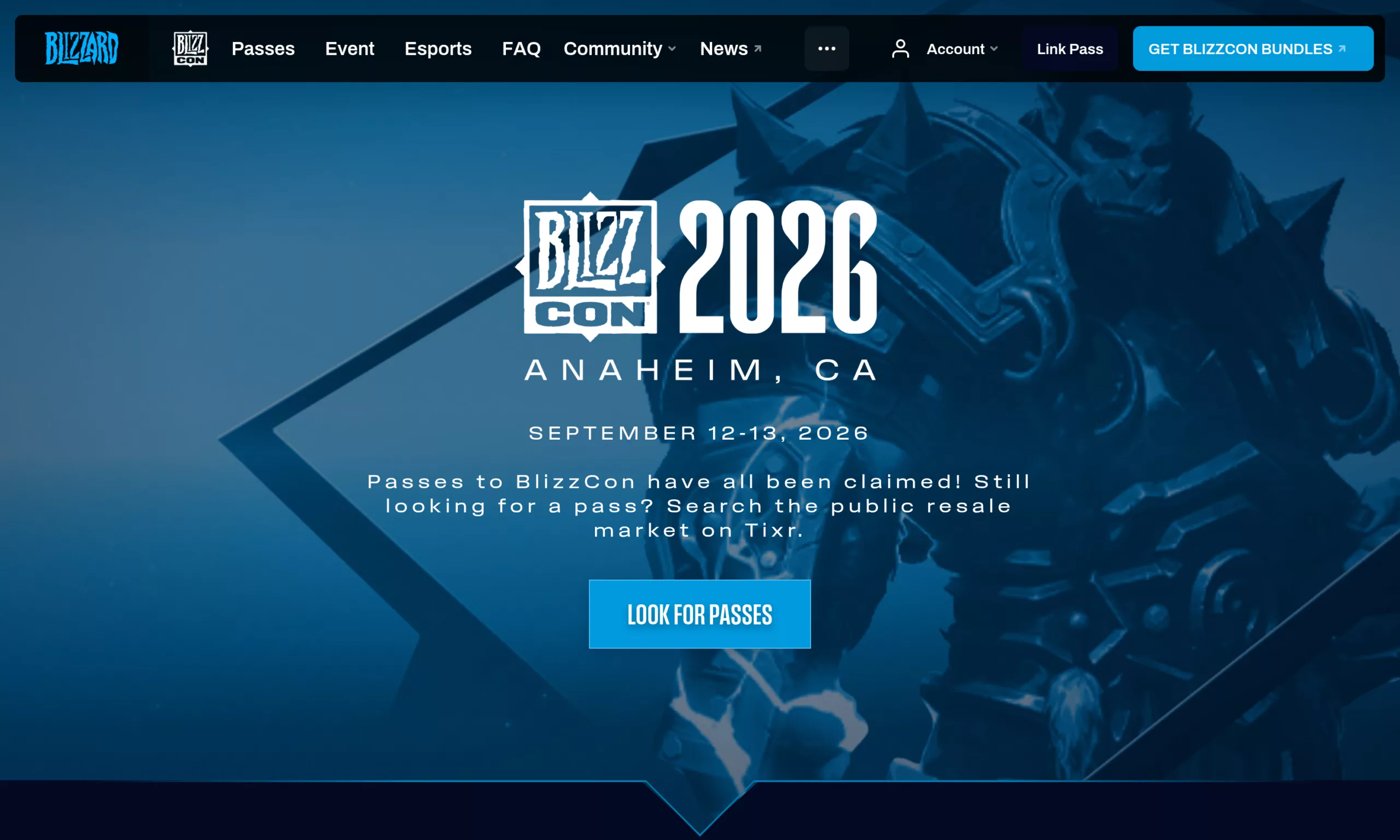
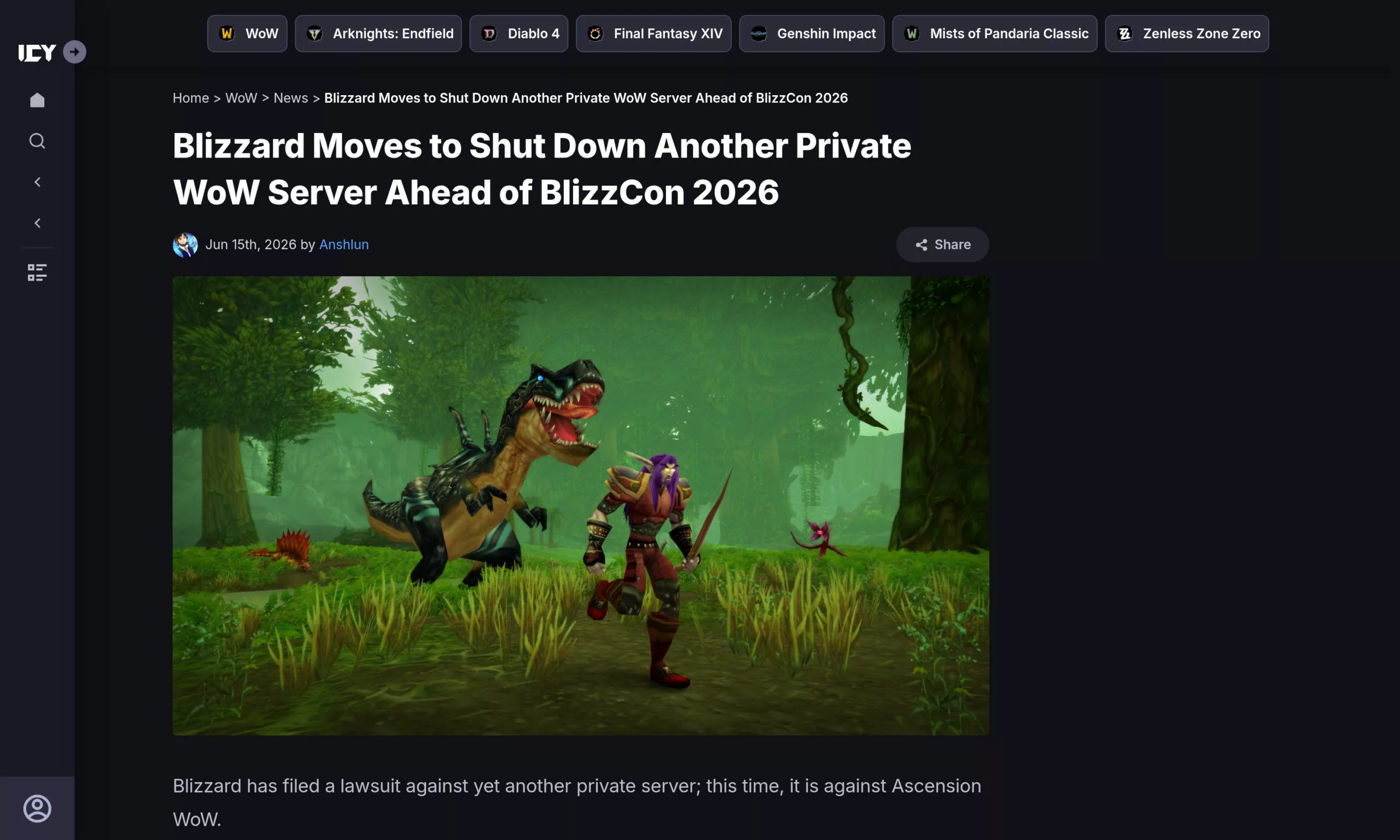
Nothing is officially confirmed about a possible Classic+. The only public element remains the State of Azeroth stream from January 29, 2026, where Holly Longdale announced that the future of Classic would be detailed at BlizzCon 2026. The rest, project names, patch numbers, new races, comes from unconfirmed leaks and community rumors. An article on the site looks back at what we really know about Classic+ before BlizzCon, separating what’s confirmed from what’s rumor.
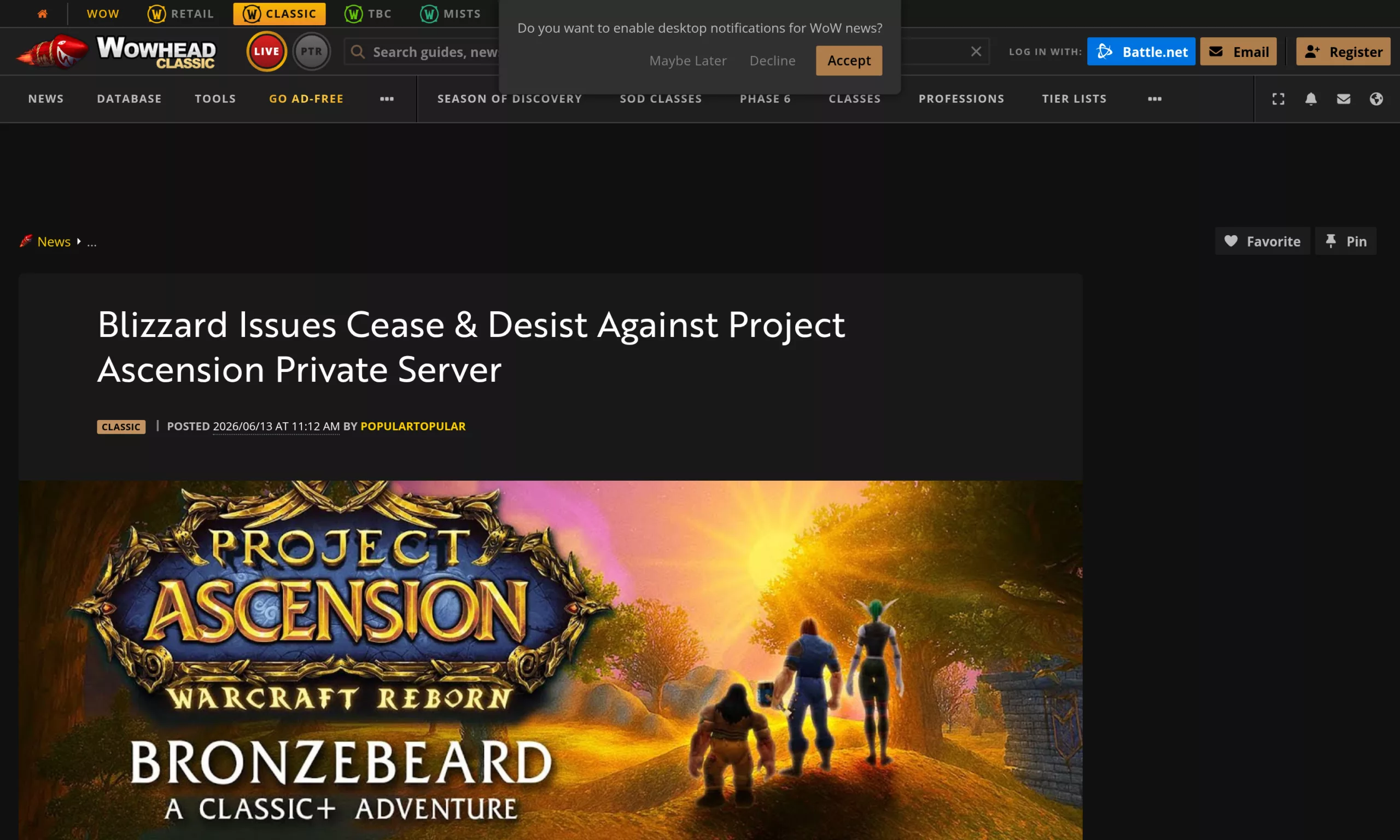
One detail still stings. The cease and desist targeting Project Ascension aimed at a server whose official artwork billed itself as « A Classic+ Adventure ». That server was selling a word that Blizzard itself has never officially uttered.
The proximity of the dates proves no strategy. A court calendar depends on procedural deadlines and service waivers, not on a trade show. But if Blizzard announces a Classic product at BlizzCon, history shows that the pressure on the remaining servers goes up, it never comes back down. The reverse scenario still exists and would change everything. A licensing framework for community servers would collapse the balance of power. Turtle WoW asked for it publicly in October 2025. No public answer came. Nothing indicates today that this is happening.
Three Possible Endings, and the Most Likely One
A federal case doesn’t end with a fade to black. It ends through one of three paths that American procedure knows well: the settlement, the default, or the trial. Each has its own mechanics and its own timeline.
The date of September 8, 2026 doesn’t shut anything down by itself. It opens three different doors depending on what the defendants file, or don’t file, with the court clerk. That choice determines which of the three scenarios takes over.
| Scenario | Mechanics | Estimated timeline | Likelihood |
|---|---|---|---|
| The settlement | Negotiation, consent judgment, permanent injunction, server shutdown | Late February or early March 2027 (projection by analogy) | Most likely |
| The default judgment | Defendants’ silence, injunction granted without a hearing | A few months after September 8, 2026 | Now unlikely |
| The fight on the merits | Contestation, discovery, possible jury trial | 18 to 30 months, outcome pushed to 2028 | Unlikely |
The Settlement, the Most Likely Scenario
In this scenario, the parties negotiate behind the scenes. The judge then enters a consent judgment, a ruling that formalizes what both sides agreed to without a trial, followed by a permanent injunction. The server goes dark a few weeks later.
This is exactly the path Turtle WoW followed, timed above: eight and a half months between the complaint being filed and the black screen. Applied to Project Ascension by analogy, this timeline would place the shutdown around late February or early March 2027. That’s a projection, not a prediction. Project Ascension’s case isn’t the Turtle case, and nothing guarantees the same tempo.
Why this scenario remains the most likely: the defendants retained attorneys in July 2026, and waiving service mostly let them buy time. The injunction obtained against Turtle shows that Blizzard secures most of what it asks for without having to argue the merits. Ban on operating, developing, hosting, or maintaining servers, ban on soliciting donations, ban on transferring the code or the accounts to a successor. The Turtle WoW 2.0 project on Unreal Engine 5 was stopped along the way.
The Default Judgment, Faster but Now Unlikely
Here, the defendants don’t respond within the set deadline. Blizzard then requests a default judgment, and the court grants the injunction as well as the damages, without an adversarial hearing. The Scapegaming precedent, detailed above, gives a sense of what this path costs: more than $88 million, obtained precisely because nobody showed up on the other side.
This scenario has become less likely since attorneys entered appearances on July 2 and 10, 2026. It stays open for any defendant who chose not to show up on September 8. The timeline, in that case, would be much shorter: only a few months after the deadline.
The Fight on the Merits, the Longest Path
The defendants contest the accusations. The case then moves toward discovery, preliminary motions, and possibly a jury trial, since Blizzard requested one in its complaint. This path takes eighteen to thirty months, which would push the outcome to 2028.
Two appellate rulings make this scenario unlikely, both cited above: Davidson & Associates v. Jung on reverse engineering the client and the code, MDY Industries v. Blizzard on DMCA liability. The second comes from the Ninth Circuit, the very one California falls under. Fighting on the merits costs money and takes months, for an outcome that case law already makes very unfavorable to the defendants.
One detail tempers that forecast all the same. On July 2, a motion-related statement was filed opposing a Blizzard request that sought to obtain evidence early. Eight days later, a withdrawal was recorded on the docket, and the specialist press identifies it as that request being pulled. The defendants therefore scored a first procedural point. It overturns no case law, but it sketches a defense that is working rather than a team waiting for the end.
The title of this article announces a shutdown. It has to be said with the caution that’s warranted: no ruling has come down, and nobody can guarantee a precise date. What’s verifiable is a timeline and a precedent. Among servers of this size, with operators identified in the United States, none has survived a federal lawsuit from Blizzard.
The next date to watch is therefore September 8, 2026. That day, the public docket for case 8:26-cv-01506 will reveal which of these three scenarios has just begun.







0 Commentaires
Aucun commentaire pour le moment. Soyez le premier à commenter !