
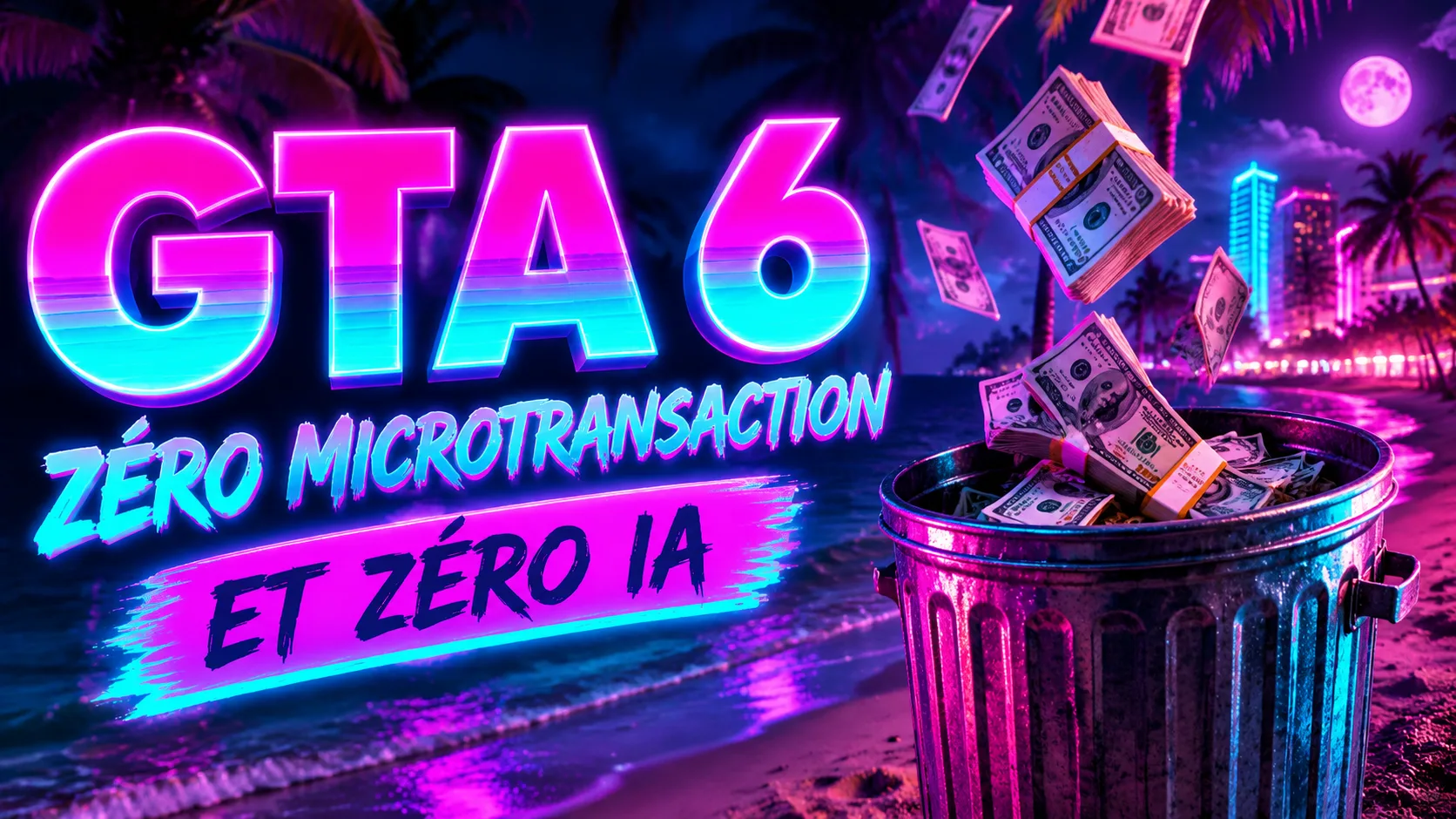
Edinburgh, Rockstar North studio. Andy Cortez and Greg Miller, hosts of the Kinda Funny Games podcast, have just finished a GTA 6 hands-on session when Cortez turns to Rob Nelson, the studio’s co-director. Will players be able to spend real money in the game? The answer comes in two words, “no monetisations.”
Miller then moves on to a second touchy subject, generative AI (a system capable of producing text, an image or an animation from a simple description). Does Rockstar use it in development? Nelson answers in one word, “No.” The exchange, filmed during this studio visit, can be seen on the Kinda Funny Gamescast.
Two short answers, two strong guarantees. Yet they don’t cover the whole game, and they aren’t dropping by chance in 2026. What they protect, what they leave out, and what they cost in animation work all deserve a closer look.
What the “no” to microtransactions really covers in GTA 6
The British outlet Push Square was the first to put the statement in writing, on August 28, 2026, in an article by Stephen Tailby. His piece confirms the absence of microtransactions (a small in-game purchase, for example to buy virtual currency) and of generative AI, but immediately notes the limit of that promise, it only applies to the single-player mode of GTA 6, due out on November 19, 2026 on PlayStation 5 and Xbox Series X|S.
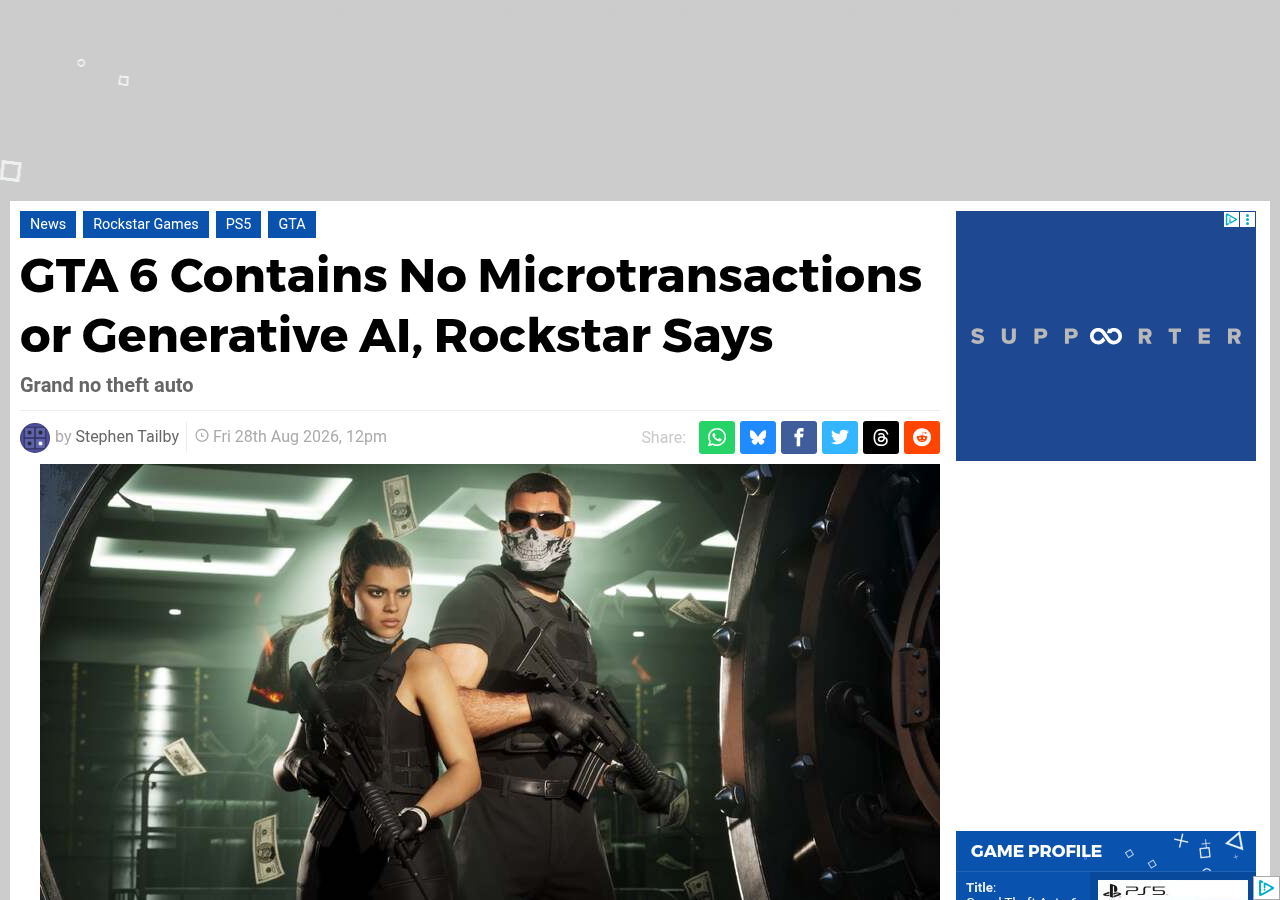
GTA Online, the multiplayer mode that has generated most of GTA V’s revenue since 2013 through Shark Cards (cards that let players buy virtual money with real money), isn’t covered by this promise. Tailby quotes Rockstar on this exact point, the new GTA Online “will be a different case.” The current version of the mode already sells in-game purchases, and nothing suggests the upcoming one will give that up.
That nuance changes how the announcement should be read. The promise covers single-player, not the whole game. The distinction matters, since the series’ recent history rests on the opposite model, a game sold once and then monetized for years through its online component.
Why turning down generative AI has become a selling point
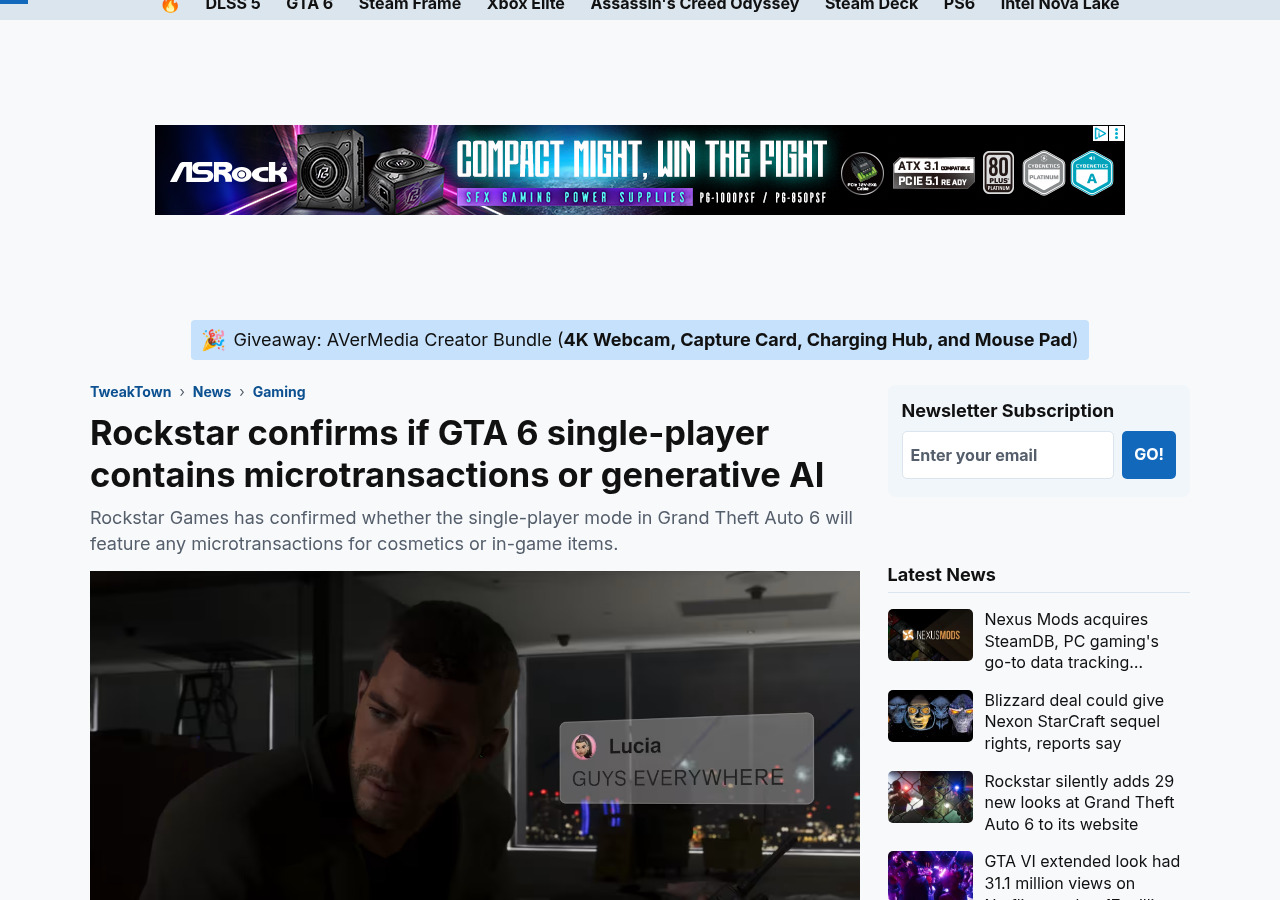
The same day, the American outlet TweakTown put Nelson’s statement in a broader context, in an article by Jak Connor. Strauss Zelnick, CEO of Take-Two, Rockstar’s parent company, has already said generative AI plays “no role” in the development of GTA 6.
For Zelnick, generative AI is “backward-facing,” since it recombines content that already exists, while Rockstar aims for experiences that aren’t “derivative of something else.” The example given by TweakTown illustrates that choice, a team was sent to Miami to observe the city firsthand, and a local stylist was hired to dress the non-player characters (NPCs, the game’s residents and extras, not controlled by players).
In 2026, a studio publicly rejecting generative AI sends a signal. The industry has been experimenting with these tools for several years, from generating textures to dialogue to objects, and part of the audience sees them as a threat to creative jobs. Rockstar turns that rejection into a selling point, a way of saying that every street, every face and every line of dialogue in the game was made by hand.
600,000 animations, the number that gives the promise its weight
The German outlet Notebookcheck, in an article by Antony Muchiri, added a number on August 31, 2026 that gives the statement some substance. Citing a New York Times investigation, the article claims the game packs in more than 600,000 animations (the movements and gestures of each character, drawn one by one to avoid repetition), compared with roughly 55,000 in GTA V and roughly 300,000 in Red Dead Redemption 2.
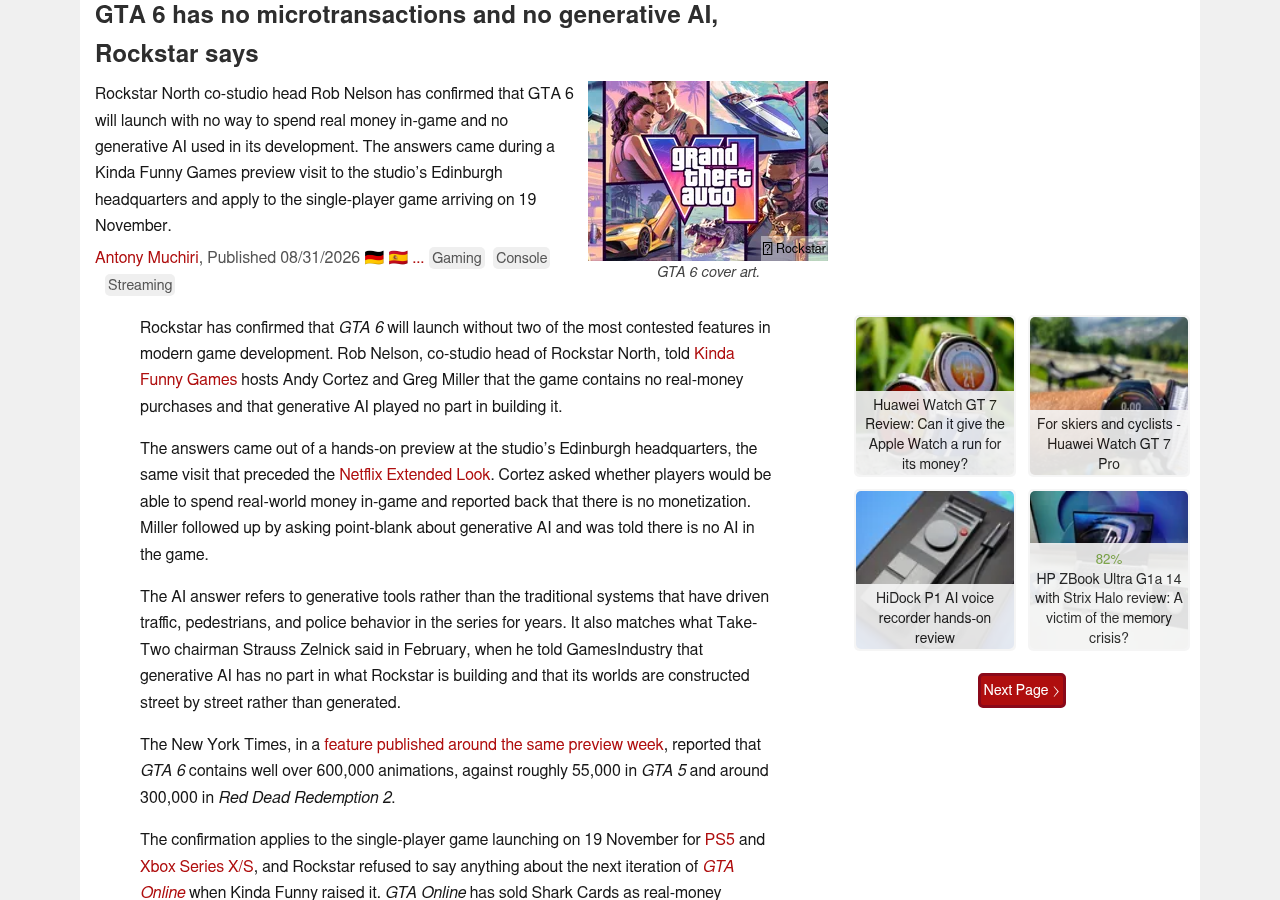
The gap shows the scale of the work. Eleven times more animations than GTA V, released in 2013, twice as many as Red Dead Redemption 2, released in 2018. Every gesture, every reaction and every step a pedestrian takes on the game’s streets was animated by hand by a human team, with no generative algorithm involved.
Zelnick sums up the method in the same terms as Notebookcheck, Rockstar’s worlds are “constructed street by street rather than generated.” That choice carries a direct cost, in development time as much as in headcount, and it partly explains why Grand Theft Auto 6 will have taken more than a decade to come out after GTA V.
What this double refusal doesn’t change
The rejection of generative AI in GTA 6 doesn’t apply to the series’ classic systems. Traffic management, pedestrian simulation and police behavior have always relied on hand-coded rules, not generative models, and nothing in Nelson’s or Zelnick’s statements calls that into question. The “no” applies to content, textures, dialogue and animations, not to artificial intelligence in general.
Rockstar doles out its answers a drop at a time, and always through intermediaries. Rob Nelson had already confirmed to Davy Jones that GTA 6 will run at 30 FPS on PS5 and Xbox at launch, the very same day as an Extended Look that said nothing about it. The cast itself shifted along the way, a fourth playable character was dropped, while Take-Two hunts down the leaker under seal from the 2022 leaks.
One number is still missing from the equation, the price Rockstar will ask for the game itself on November 19. Single-player won’t have microtransactions. It will still have a price tag.








0 Commentaires
Aucun commentaire pour le moment. Soyez le premier à commenter !