
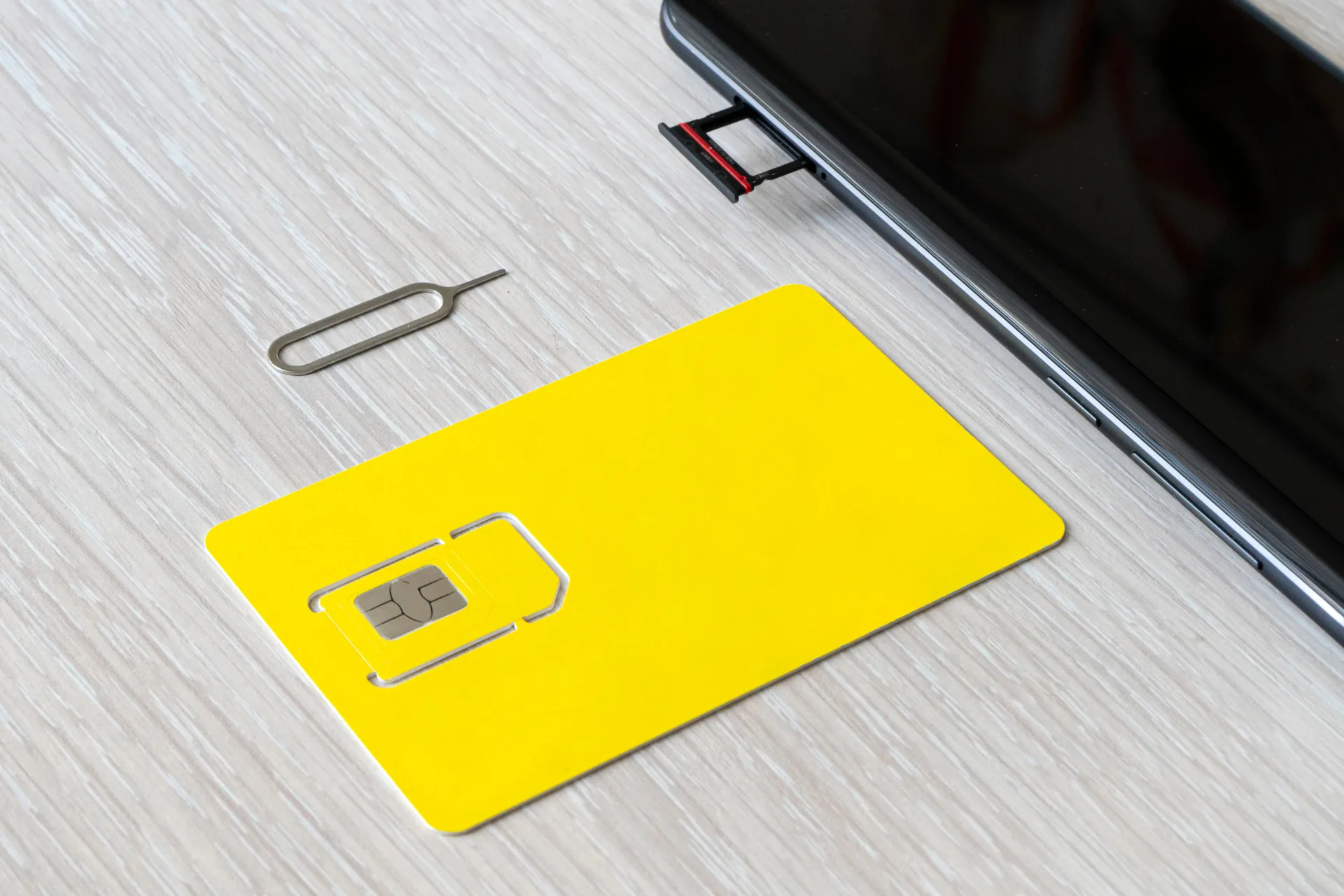
An eSIM is a SIM card built into the phone at the factory: a soldered chip that plays the role of the plastic card, but whose content is written remotely. According to the GSMA’s Remote SIM Provisioning standard (the GSMA is the global association of mobile operators), a plan can be activated or removed without ever opening the device. No more pin to open the tray.
How is an eSIM installed, and what does it change in daily use?
Setting up an eSIM card such as the one from holafly takes three steps: the provider sends you a QR code, you scan it from the phone’s settings, and the line activates. Some also offer codes to type in by hand, or even automatic activation from their app. A QR code only works once, so a failed installation means asking the operator for a new one.
On the network side, nothing changes. The eSIM connects to the same antennas as the plastic card, so coverage and speed depend on the operator, not on the chip. For gaming on the go, the choice of network matters more than the SIM format. Don’t expect a stronger signal.
Dual lines, on the other hand, become practical. An iPhone stores several plans, up to eight, even though only two eSIMs can be active at the same time. You keep a physical card for your usual plan, add an eSIM for a separate data plan, and a single setting switches from one to the other. Two numbers, one phone in your pocket.
Which smartphones support eSIM in 2026?
Apple launched eSIM with the iPhone XS in 2018, and most of the following iPhones support it. In the United States, models lost their tray as early as the iPhone 14. In France, the iPhone Air is the exception: it only handles eSIM. The iPhone 18 Pro, on sale since September 18, 2026, keeps a nano-SIM tray next to the eSIM, while the foldable iPhone Duo, on sale since October 23, 2026, works with eSIM only, everywhere in the world.
Apple justifies this choice by the battery: without a tray, the freed-up space holds a larger battery. On the iPhone 18 Pro, the announced difference in battery life reaches one hour in standard use.
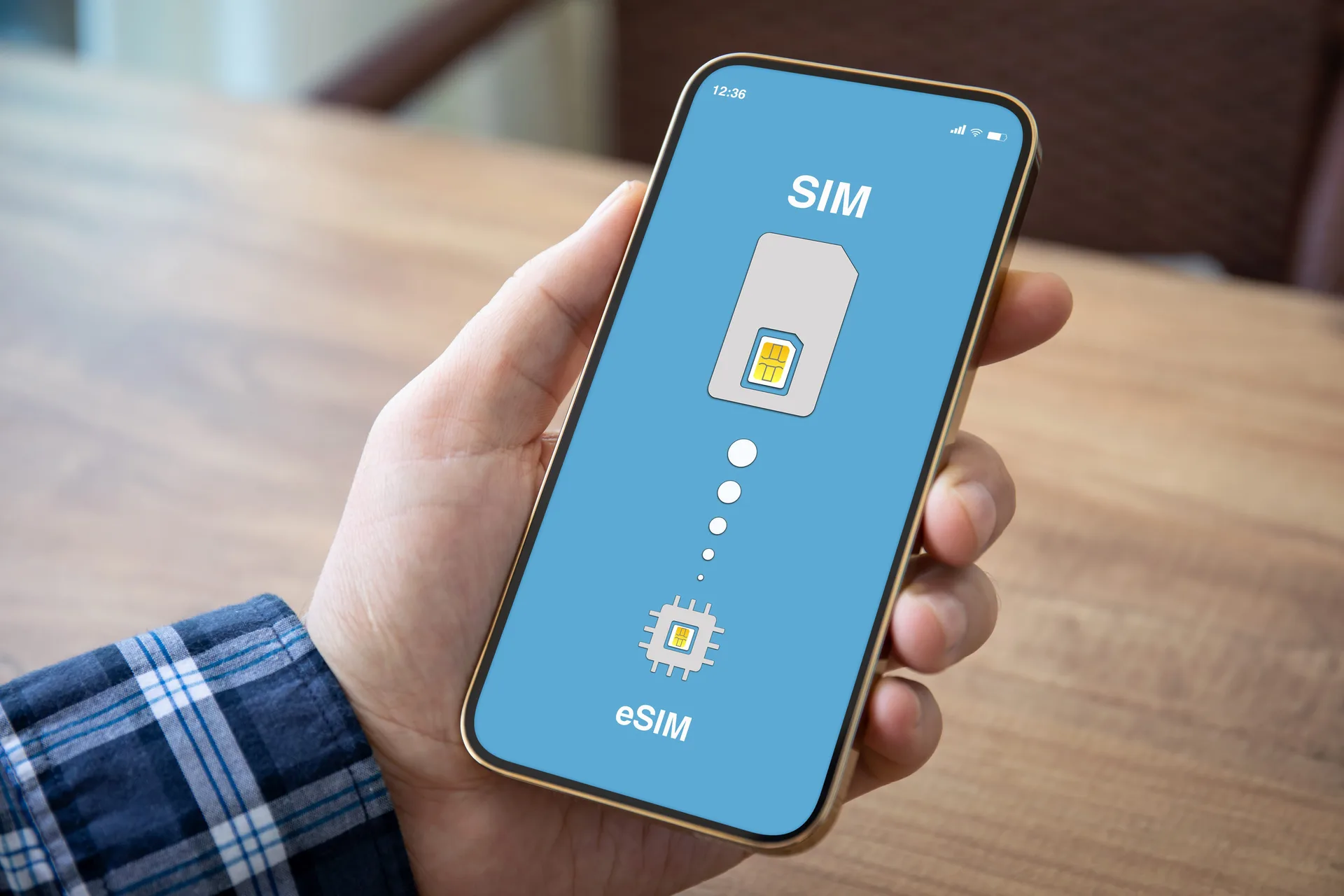
On Android, support varies by brand and model, including at Samsung, Google Pixel, Motorola and Xiaomi. Google even sold its Pixel 10 as eSIM-only in the United States. High-end models pair an eSIM with a physical card, and some even accept two active eSIMs at the same time. Before buying, check the device’s spec sheet.
What are the limits before giving up the physical SIM card?
The weak point shows up when you change phones. An eSIM cannot be slipped from one device to another: the line is reactivated on the new one, and the procedure depends on the operator. SFR handles the transfer between iPhone and Android since iOS 26.3 and the March 2026 Pixel update. Bouygues Telecom, on the other hand, rules it out between iOS and Android. At Free, outside iOS, you have to delete the old eSIM and then create a new one from the subscriber area. A direct consequence: an old backup phone without eSIM no longer works as a spare, since it needs a physical card.
Orange, SFR, Bouygues Telecom and Free Mobile all offer eSIM, which leaves a real choice. Two points remain to check before taking the plunge: whether your model is compatible, and your operator’s transfer method.
Partner article – this content was published as part of a paid commercial partnership. It does not reflect the views of the Kami-Labs editorial team.









0 Commentaires
Aucun commentaire pour le moment. Soyez le premier à commenter !