
The « World of Warcraft: Forever Deep Dive » panel ran 51 minutes at BlizzCon 2026. Four Blizzard developers took the stage in turn: Clay Stone, associate production director on WoW Classic and WoW Forever, who hosted the session, Josh Greenfield (aka Aggrend), senior designer and narrative lead, Ana Resendez, lead software engineer, and Kris Zierhut, a 21-year Blizzard veteran specializing in combat, items and classes. Beta opens Thursday, September 17, 2026, through a Skyborne Epic Pack or Warcraft Forever Collection pre-order, and launch is set for November 4, 2026.
This WoW Forever deep dive recap goes category by category through what was shown and confirmed. It draws on the panel’s official video and on the written recap Blizzard published on September 13, which takes precedence over the video’s auto-generated captions whenever the two disagree. It builds on our recap of the opening ceremony announcements and our full BlizzCon 2026 roundup.
Campfire and professions: the camp becomes a living space
The cooking fire becomes the Basic Campfire, designed as a meeting point for players of the same faction. Around it, professions gain camp items and more than 600 recipes.
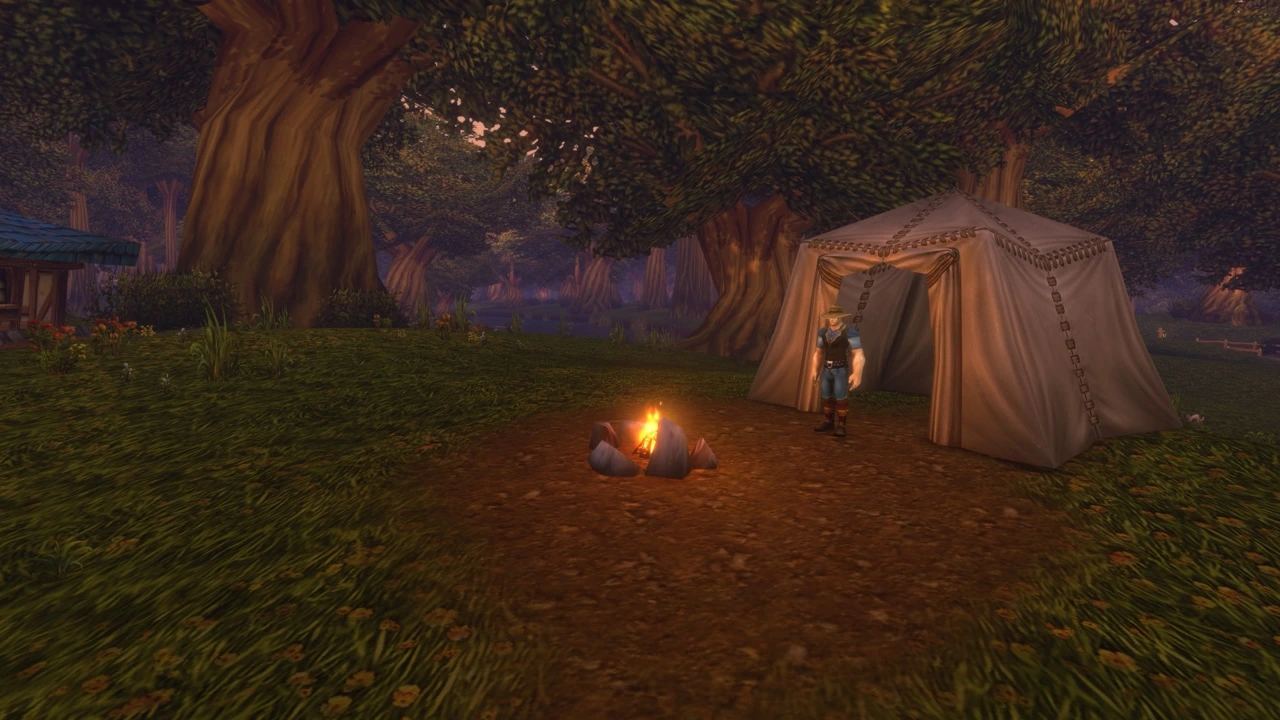
- A shared camp: setting down the fire creates a rest spot where other players can settle in too.
- Camp perks: vendors, repairs, crafting stations, and above all one-hour buffs.
- How to get them: sit down (/sit) near the fire for a few moments.
- Basic campfire capacity: up to 3 crafted items, one per player, sharing a one-hour cooldown. Examples given: the blacksmith’s Sharpening Wheel grants attack power, the tailor’s banner grants Spirit, the herbalist’s incense candle grants Intellect. These buffs are variants of class buffs (Blessing of Might, Arcane Intellect): they don’t stack with them.
- Other professions represented: an alchemy lab, a leatherworking tanning rack for advanced recipes, upgraded cooking fires accepting 5 or 10 items.
- Progression: first items learned at 20 skill points, advanced items via blueprints found in the game, notably from dungeon bosses.
- Over 600 new recipes, spread across every level range, with many existing recipes reworked.
- Crafted food: a stat bonus and an experience bonus on nearly every recipe.
- Stated goal: make professions a full part of progression, with regular additions of recipes, materials and items.
Transmogrification: optional, and no dice roll for the look
Blizzard knows transmogrification divides Classic players. WoW Forever builds it in with several ways to opt out.
- Can be turned off: a dedicated NPC lets you disable the system at any time.
- Mode selector: presets offered on first login, changeable later. Classic mode automatically hides other players’ transmogrification.
- Uncommon or rare dungeon loot: bound on pickup, the appearance is granted to every eligible player present at the moment of the loot. No more rolling for looks, an example given with the Mask of the Unforgiven at Stratholme.
- Raid epics: the appearance stays reserved for whoever picks up and binds the item, to preserve prestige.
- Type restrictions: plate on plate, cloth on cloth. A saved outfit can still combine several armor types depending on the slot.
- Level restrictions: no high-level look on a low-level character, the limit lifted at level 60. Exception: PvP items that require a specific rank.
- System turned off: everyone still controls their own transmogrification (hiding helm or cloak), and other players’ helm/cloak display works just like in the original game.
- More to come: further details will arrive in blogs and communications before launch.
Legacy System: reliving leveling in a new way
WoW Forever’s Legacy System borrows the spirit of Hardcore, minus the permanent death: replaying the leveling journey earns something for all of your characters. The 45 slides shown during the panel are collected on MMO-Champion.
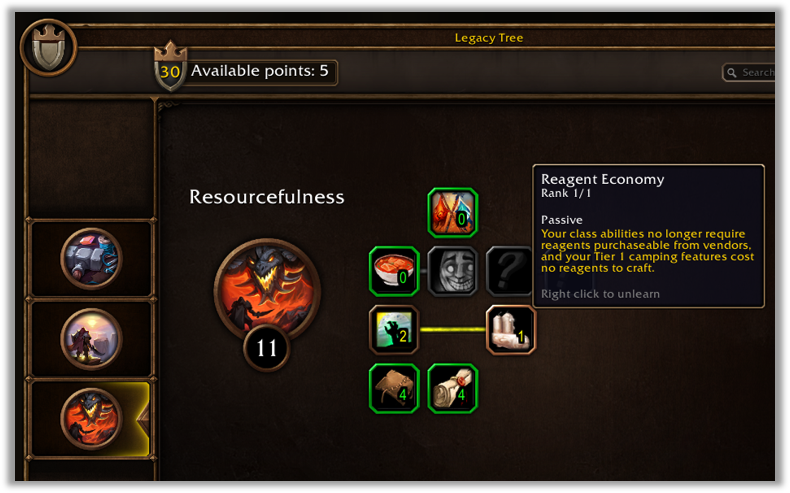
- Legacy Challenges split into categories: Classes, Tradeskills, PvP, Adventure, Dungeons, Raids. Examples given: leveling a class to tiers 25, 45 and 60, or reaching a tier in a profession like engineering.
- Points earned account-wide, but each character spends the same number of points in its own trees.
- Three trees at launch: Professions, Adventure, Resourcefulness.
- Talent examples: Well Rested (Adventure tree) speeds up rested experience gain and raises its cap; Bountiful Harvest (Professions) increases rare materials from mining, herbalism and skinning; Reagent Economy (Resourcefulness) removes the reagent cost of certain class abilities and of rank 1 camp items.
- Tough choices: the strongest perks sit at the bottom of the trees.
- Cap at launch: 16 spendable points, up to 65 earnable. Beyond that, points feed a cosmetic or prestige Legacy Reward Track with no competitive edge: an Ironforge air rifle replica at 15 points, a Spectral Bear Cub at 25, a tabard at 40, Spectral Bear reins at 55.
- Next steps: new challenges, new perks, possibly new trees down the line.
- Mounts: as in Burning Crusade, the mount’s entry cost moves into the training cost.
WoW Forever with no realms: you pick a ruleset instead
On WoW Forever, you no longer pick a realm: you pick a ruleset. Each ruleset works as one large shared space, with its own grouping and transfer constraints.
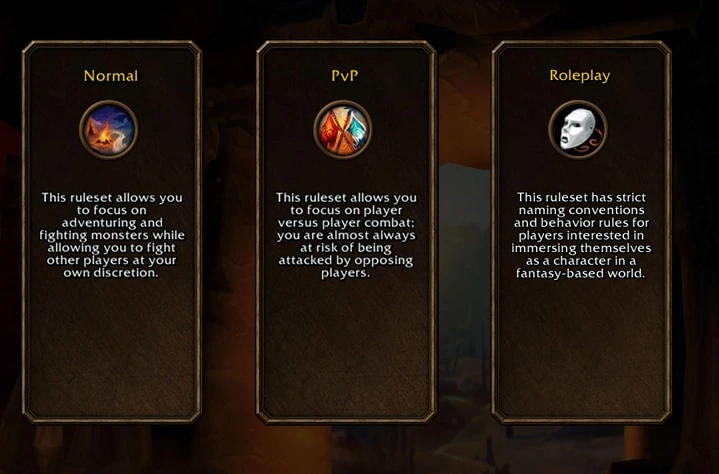
- Four rulesets: Normal (PvE, with optional PvP), PvP, Roleplay, and Hardcore, the latter available after launch.
- How it works: each ruleset is designed as a mega-realm. The team notes that this doesn’t mean every player gets dumped into one single giant realm.
- Groups and instances: factions stay separate, and groups, dungeons and raids only bring together players on the same ruleset.
- Hardcore: a closed circuit, separate from the other rulesets. On death, the character can be transferred to another ruleset, including to PvP for the first time.
- Collections and Legacy are shared across rulesets, except for Hardcore: what’s earned there carries over elsewhere, never the other way around.
- Stated goal: avoid forcing a choice between long launch queues and a realm you don’t actually want to stay on.
Name, language, factions: bringing back the realm feel
Character name, language and faction balance all serve one purpose: recreate the feel of a realm, even without picking one. The stated idea is to keep running into the same players from one session to the next.
- Two-part names (first and last), unique per region: the example shown on stage was « Ana Forever ».
- Community feel: the infrastructure targets the perks of a big realm, a living world and an active economy, while recreating the vibe of a classic realm, running into the same players and spotting your guildmates out in the world before even forming a group.
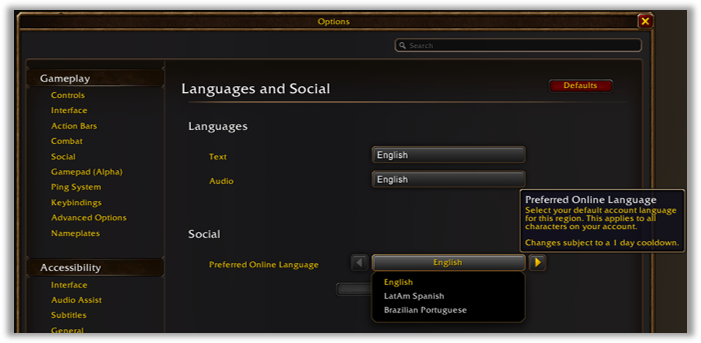
- Preferred language: the game prioritizes matching players who share the same preference. The screen shown for the US region listed English, LatAm Spanish and Brazilian Portuguese, changeable with a one-day delay.
- Faction balance on the PvP ruleset, with mechanisms close to those from Season of Discovery.
Combat keeps its Classic pace
The WoW Forever team comes out of two years of work since Season of Discovery wrapped up. The brief stays the same: don’t change the feel of Classic combat, with classes that are simple but deep.
- No homogenization: every class keeps its own strengths and weaknesses.
- Combat pace: roughly 10 to 15 seconds to solo-kill a creature.
- Dungeon control: Polymorph, Banish, roots and traps keep their place in tactical groups.
- Threat kept in check: tanks hold 3 or 4 targets at a time, it’s impossible to pull a whole dungeon in one go.
Stats and items: gear worth rediscovering
Twenty-two years after the original release, players know Classic’s gear paths by heart. WoW Forever reworks stats and items to bring back the unknown, without touching the foundations: every Classic stat stays, with a few additions from later expansions, but no resilience.
- Unified hit: a single hit roll for melee, ranged and spells, which benefits Retribution, Enhancement, taunts, poisons and traps; the same rule applies to critical strikes.
- Weapon skill: kept but rebalanced, less of a bonus per item but still useful; it had been removed in Burning Crusade.
- Healing bonus: now includes a third of that value as a damage bonus, which lets healers quest solo.
- New stats: reduced chance to be parried and dodged, useful for tanks on both fronts; spellcaster weapons grant spell damage and healing starting at level 10.
- Trinkets: more specialized and situational, like the Worgenbane Talisman; two new effect families, tied to a zone (mountains, deserts, cities, caverns, woods) or to a creature type, like X’caliboar against undead and boars.
- Dungeon loot: fully reworked, unique dungeon boss items move up to rare quality (blue), hundreds of new items arrive, iconic items stay, and set bonuses are improved.
- Mor’Ladim quest (Duskwood): now also grants a family heirloom ring for spellcasters.
- Hemet Nesingwary quest (Stranglethorn Vale): adds a master hunter’s wand and a master hunter’s spellblade, the latter with strength and spell power for Retribution Paladin.
- World epics: all revamped and strengthened, with new additions, including a thrown weapon.
Races: six new combinations and reworked racials
Six new race-class combinations arrive with WoW Forever, and every race moves up to four racials. Dwarf and Undead served as examples, since they unlock Shaman and Paladin.
- Six new combinations: gnome priest, human hunter, dwarf shaman, orc mage, troll warlock, undead paladin, with more planned.
- Shared structure: two active abilities and two passives per race, equivalent offensive power across every race, and a signature utility unique to each.
- Stoneform: for dwarves, now reduces physical damage taken instead of increasing armor.
- Find Treasure: dwarves can now run it alongside another tracking ability.
- Big Game Hunter: new dwarf ability, +5% damage against beasts.
- Mace Specialization: wielding a mace, dwarves gain +1% critical strike with spells, melee and ranged.
- Will of the Forsaken: for Undead, still dispels charm, fear and sleep, but no longer grants immunity to them.
- Cannibalize: Undead now also recover mana from it.
- Touch of the Grave: new Undead ability, a chance to drain life, dealing damage and healing in a single effect.
WoW Forever talents: what’s changing for every class
The three-tree, seven-row structure doesn’t change, but its content shifts a lot, as shown by the first Mage talent changes spotted in the demo. Talents that only used to upgrade a buff now free up room for new effects.
- Structure: still three trees, seven rows, one-point talents at tiers 11, 21 and 31, plus a new 16-point tier in each tree.
- Unchanged talents: many talents stay unchanged since the 2006 patch 1.12, others are reworked, and brand-new talents show up.
- Baseline buffs: buff-upgrade talents disappear, their bonuses become permanent, like Improved Battle Shout, Divine Spirit, Blessing of Kings and Improved Mark of the Wild.
- Balancing goal: all 27 specializations must stay viable in dungeons and raids, without being strictly equal to one another, each keeping its own strengths and weaknesses.
Paladin: changes shared across all three specs
Kris Zierhut picked the Paladin to show how WoW Forever reworks a whole class, and Holy, Protection and Retribution start from a shared foundation. Blizzard breaks down these changes in its official panel recap.
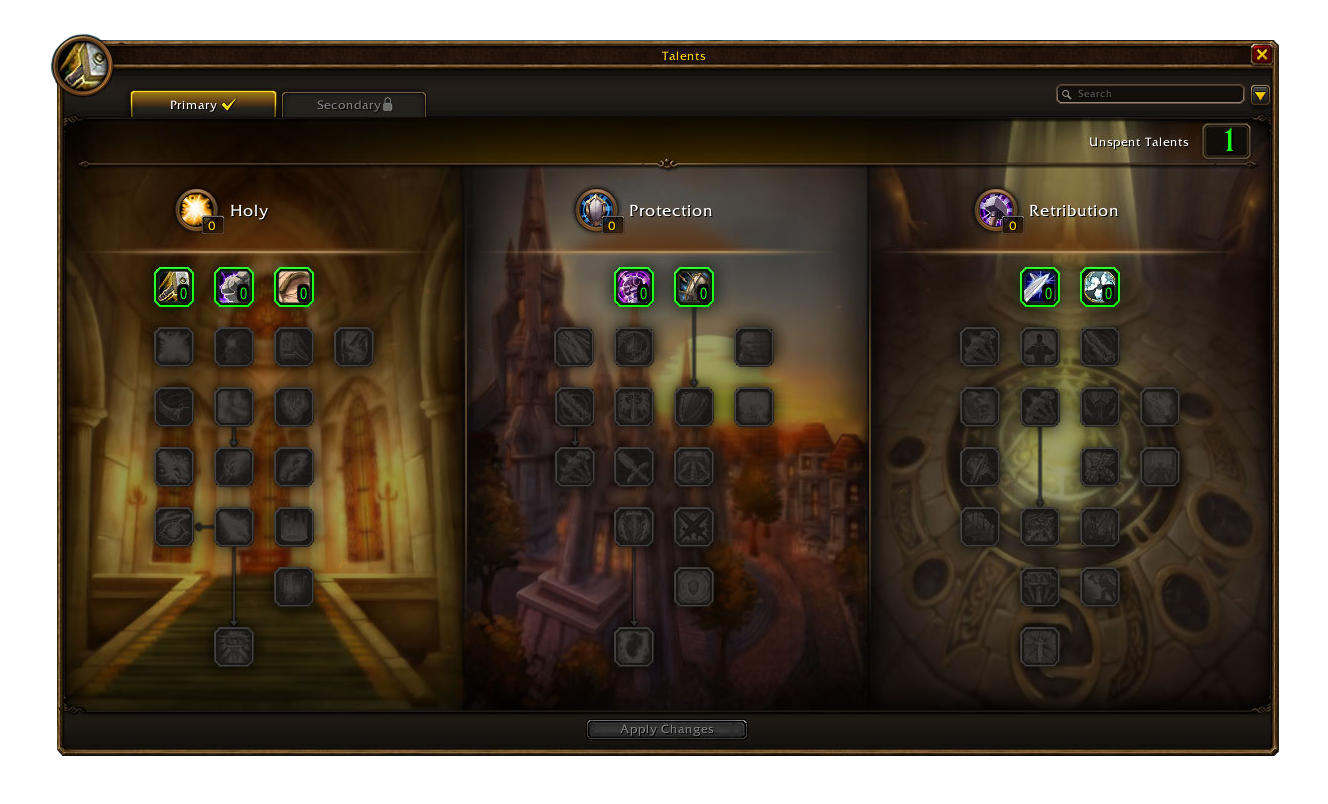
- Holy Strike: cut from the 2004 beta, it returns at level 6 as an instant weapon strike dealing Holy damage, with a 12-second cooldown; all three trees improve it.
- Judgement: no longer consumes the seal in place.
- Seal of Fury: a new seal built for tanking, damage on every swing regardless of weapon speed (fast weapons benefit from it), a small absorption shield, and a Judgement that taunts the target at 10 yards versus 5 for Growl and Taunt.
- Consecration: baseline at level 20, heavy damage and threat on the first four targets, a weak effect beyond that, to stop players from pulling a whole dungeon like in Burning Crusade.
Holy Paladin
Holy now revolves around Holy Shock, earlier in the tree and available more often. It also gets, for the first time, a way to heal an entire group.
- Improved Holy Strike (row 1): reduced cooldown.
- Voice of Truth (11-point talent): temporary immunity to silence and interrupts.
- Reverence: regenerates mana through Spirit while casting; every mana-using class that deals damage and heals will get a talent or ability like this one, Spirit becomes a stat worth keeping again.
- Divine Favor: moves down from tier 21 to tier 16.
- Infusion of Light: Holy Shock and Flash of Light critical strikes reduce Holy Light’s cast time.
- Holy Shock: moves from 31 to 21 points, cooldown down to 10 seconds, accessible to hybrid PvP builds.
- Consecrated Ground: enemies standing in Consecration take extra Holy damage.
- Light’s Vigil: a costly cooldown; cast on an ally, the next Holy Shock heals the whole group and resets itself; cast on an enemy, it deals extra damage and also resets; cast across several groups, it lets you chain Holy Shocks to heal an entire raid back up.
Protection Paladin
In Protection, the Paladin gets mana-management tools and a new absorption shield to hold up through long fights. Tanks have to choose between several high-impact talents.
- Improved Seal of Fury (11-point talent): returns mana when the shield absorbs damage; combined with Shield Specialization, which returns mana on block, enough to last a whole boss fight.
- Swift Judgment (16 points): resets Judgement once per minute, handy for recovering from a missed taunt.
- Templar’s Bulwark (21 points): an absorption shield calculated from max health, 100% according to the panel; it applies Forbearance and can’t be used while under Forbearance, which makes it a tough call against Divine Shield.
- Reckoning: reworked for tanks immune to critical strikes, it now also triggers on block; the more targets you tank, the more you block, the more extra attacks you gain.
- Iron Creed: Holy Strike reduces damage taken by 10% for a few seconds.
Retribution Paladin
Retribution gets back talents that had long been ignored and an official answer to « seal twisting », the practice of rapidly swapping seals. Kris Zierhut closed by listing what the Paladin still can’t do.
- Vindication: a talent almost nobody used to take; it now reduces the enemy’s attack power, matching Demoralizing Shout and Demoralizing Roar, and increases the Paladin’s own.
- Sacred Arbiter: strengthens Holy Strike and refreshes Judgements on the target, including those cast by other paladins in the group, Light, Wisdom and Crusader all at once.
- Champion of the Light: spell damage now scales with Intellect.
- Instrument of the Law: reduces threat generated and makes Holy Wrath instant.
- Twist of Light: swapping one damage seal for another leaves an echo of the old one, alternating Seal of Command and Seal of Righteousness lets every swing benefit from both, no addon required.
- Shockadin alternative: for those who don’t like swapping seals, Kris Zierhut suggests skipping Twist of Light, dropping 21 points into Holy and playing Holy Shock, carried by Champion of the Light’s spell power.
- Limits that remain: no interrupt, no slow, few ranged options, very strong against demons and undead, the game’s best single-target heal and the best mana efficiency of any class, but limited group healing until Light’s Vigil is ready.
- Other classes: details arrive in videos, blogs and Q&A sessions in the weeks following the panel.








2 Commentaires
Hello, le mot « panel » ne doit pas correspondre à la bonne traduction du mot anglais d’origine.
Salut DoogWarriors, tu as l’œil. En vérifiant la version française officielle publiée par Blizzard pour ce récapitulatif, ils traduisent bien « panel » par « présentation ». Je corrige les 7 occurrences dans l’article pour coller au terme officiel. Merci pour le signalement ! 📝