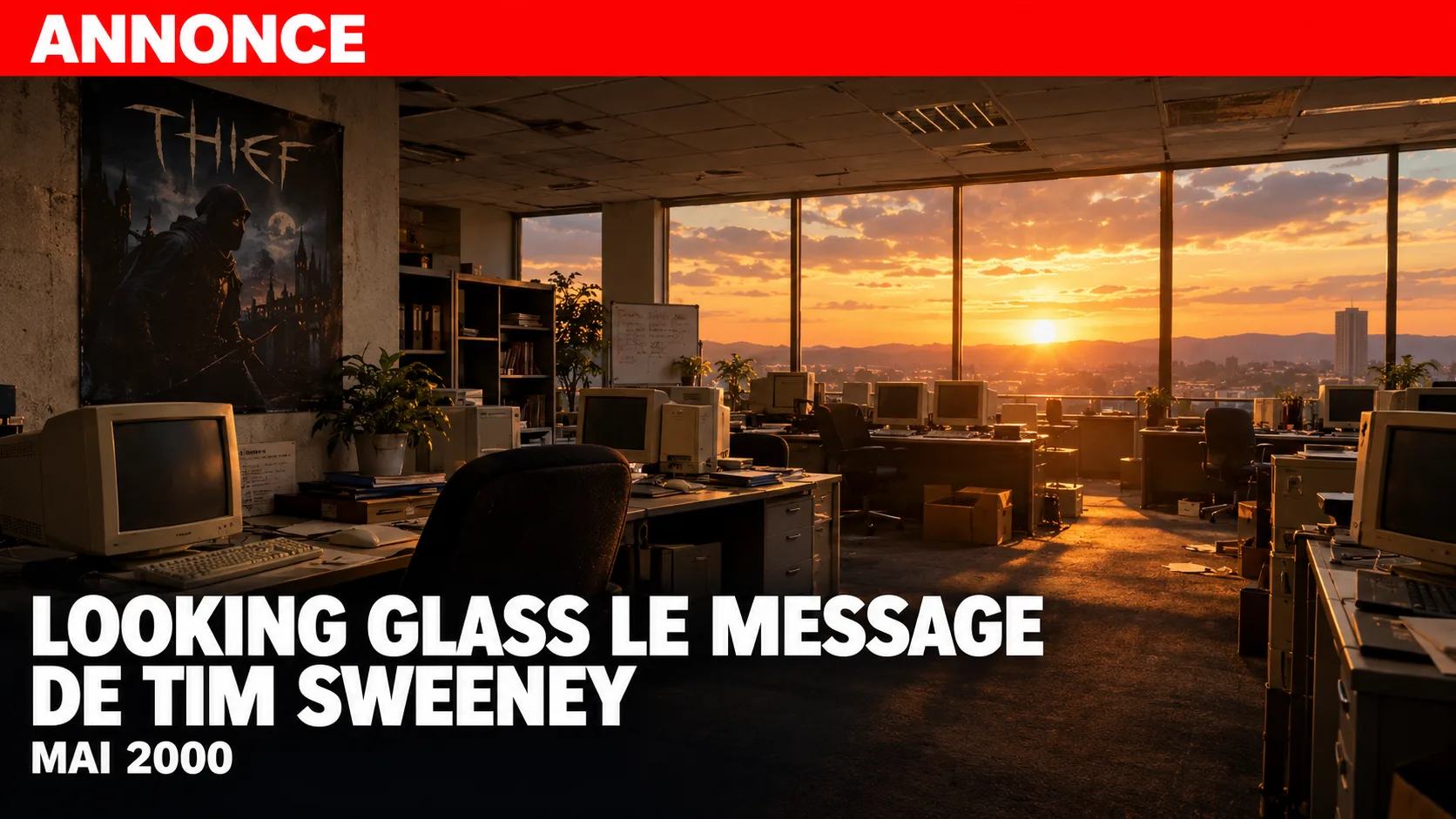
On May 25, 2000, Tim Sweeney, already head of Epic Games, wrote on the forums of Looking Glass Studios, the studio behind Thief and System Shock, which had just closed: « This isn’t a sad day. » Twenty-six years later, on October 23, 2026, that post is back, pushed forward by FRVR and the specialist press.
Tim Sweeney Looking Glass: what he wrote in May 2000
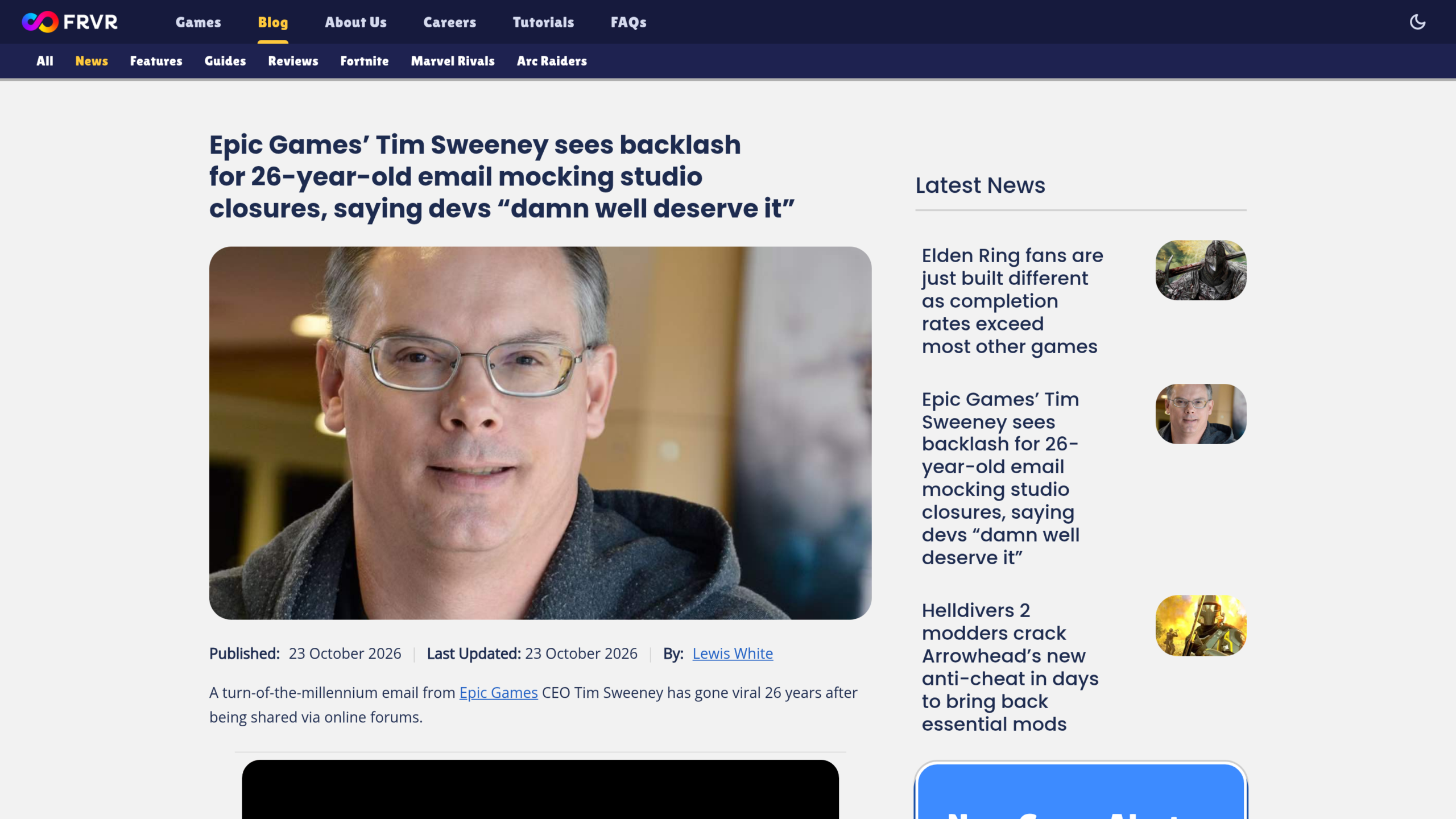
Here is what the media quote. FRVR (Lewis White, October 23) reproduces the message as it was posted on May 25, 2000 on the Looking Glass forums. Sweeney writes: « It’s an economically realistic day. Looking Glass spent lots of money making innovative games that never sold well. »
He pushes the argument further. According to the same source, he says the studio’s logo could well have been « By MIT Grads, For MIT Grads » and that « most of the stuff they did was way out of the realm of what most mainstream gamers wanted ». He adds that targeting a niche and making unusual games is a good thing, but that you then have to stay « lean-and-mean ». His example of success in a small genre: Pop Top, the studio behind Railroad Tycoon.
The lines that caused the reaction come after. Sweeney writes that Looking Glass is « only the beginning » and that « some of the companies and teams that will take the axe damn well deserve it ». He ends on an image: this is the moment the comet hits the Earth and the dinosaurs die, but « the way is cleared for cooler life forms to evolve ».
The full text remains out of reach
The original message was reposted on the TTLG forum, in a thread that now answers our requests with a 403 error (access denied). We found no copy in the web archives, and none of the outlets we read reproduces the full Tim Sweeney Looking Glass text: all of them quote excerpts. If the message contains more nuanced passages, we can neither confirm nor rule it out. What we can say is that the excerpts above are the ones FRVR attributes to Sweeney, and that the economic argument (a studio too expensive for what its games sold) is clearly there alongside the line about the axe.
Why Tim Sweeney Looking Glass is back on October 23, 2026
FRVR credits the revival to an X account named Sinnoware, without the date of its post being known. The article recalls that studio closures are commonplace today, with BioWare having closed a few days earlier, whereas in 2000 the Looking Glass closure came as a shock. TheGamer (James Lucas) picked the story up the same day, as did Nuclear Coffee.
The reactions are harsh. Dillon Rogers, developer of Gloomwood, replies that Sweeney already had « the mindset of an a**hole CEO » back then, according to FRVR. FRVR also quotes an ironic user: Pop Top, Sweeney’s example of good management, does it still exist? A 2000 message on the Looking Glass forums had already answered: « He seems to be implying that only games that sell are good and deserve to exist ».
We found no reaction from Sweeney to this resurfacing, on X or in the press.
What happened at Epic in 2026
The comparison is all the easier because Sweeney himself has cut staff. On March 24, 2026, Epic announced more than 1,000 layoffs. Decrypt (syndicated by Yahoo) quotes Sweeney’s memo: « the layoffs aren’t related to AI ». The stated cause is a drop in Fortnite engagement since 2025, leaving Epic spending « significantly more than we’re making ». More than $500 million in savings come on top, through less contracting and marketing, and unfilled roles. We covered that announcement at the time.
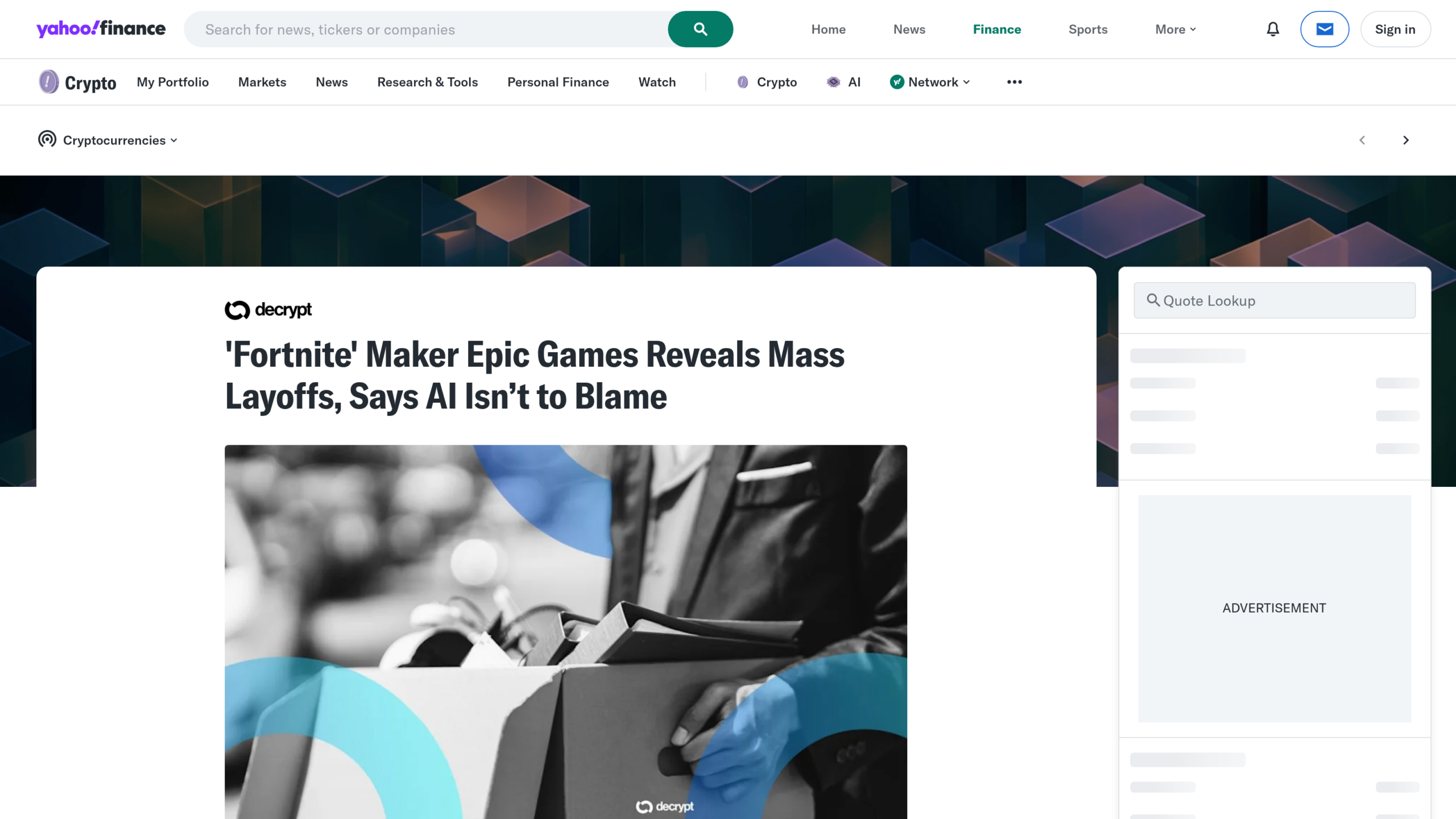
One clarification, because the accounts are getting mixed up. FRVR writes that Sweeney laid these employees off « to push a new focus on generative AI ». That is not what Sweeney says in the memo quoted by Decrypt, which denies that link.
What this retrospective lets us say
A message from 2000 proves nothing about 2026, and the two situations differ: in 2000 Sweeney was commenting on another studio’s fall, in 2026 he runs the company that lays people off. What the Tim Sweeney Looking Glass message shows is the continuity of a line of reasoning: a studio that spends more than its games earn ends up being cut, whether it makes Thief or something else.
Looking Glass left behind Thief, System Shock and System Shock 2, which FRVR cites as landmark titles of the 1990s. None of the sources we read gives the studio’s revenue or the detail of its losses: the sentence « its games did not sell » remains, in this file, a claim by Sweeney, not a figure.





0 Commentaires
Aucun commentaire pour le moment. Soyez le premier à commenter !