
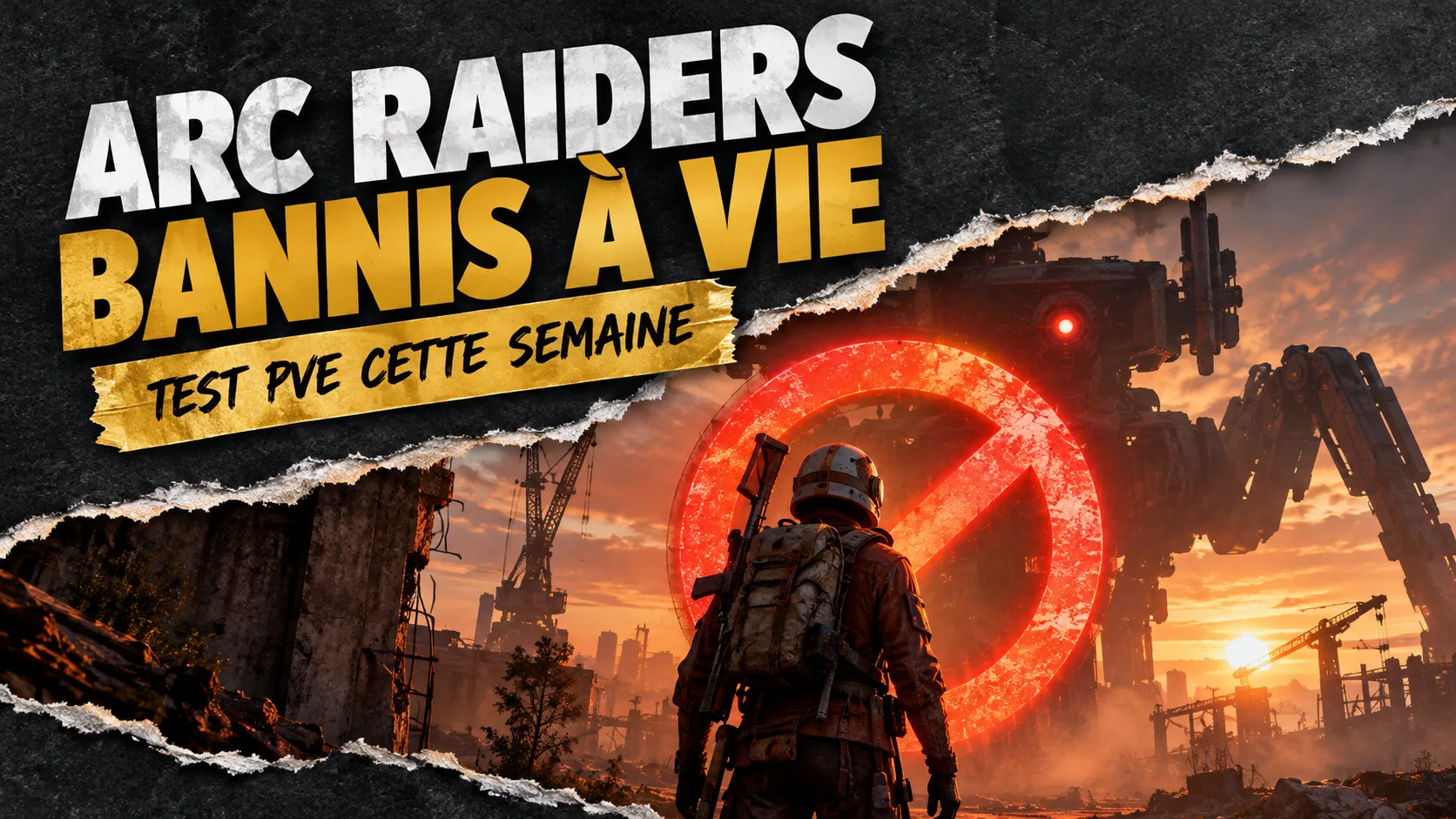
One banned account, and the copy of the game that goes with it: it won’t work on any other account. Since September 30, that is the rule in Arc Raiders, a third-person extraction shooter from Embark Studios where you fight machines, the ARC, and other players, and can lose all your loot. Thirteen days later, the studio opens a test that takes the other players out of the equation. On one side, a lifetime ban from the first cheat; on the other, Arc Raiders matches with no combat between players: two answers in two weeks, best read together.
The permanent ban, Arc Raiders’ rule since September 30
In “An Update on Anti-Cheat”, published on September 30, 2026 and signed by executive producer Aleks, Embark writes that permanent bans are now the norm for all known cheat software. Any account caught cheating is banned for good, with no warning. Two locks come on top. License restrictions stop a copy of the game tied to a sanction from being used on another account. And an account that was ever linked to a banned copy receives a permanent ban of its own.
The shift is sharp. TechJuice, by Muhammad Haaris, reported in January that the studio, after mere temporary suspensions, had just started banning permanently. The trigger it cites: an ultimatum from streamer TheBurntPeanut (“Fix this, or I’m actually out of here”), followed, according to his colleague Thump, by a ban half an hour later. According to Beebom, Embark had hesitated until then to ban for life on a first offense.
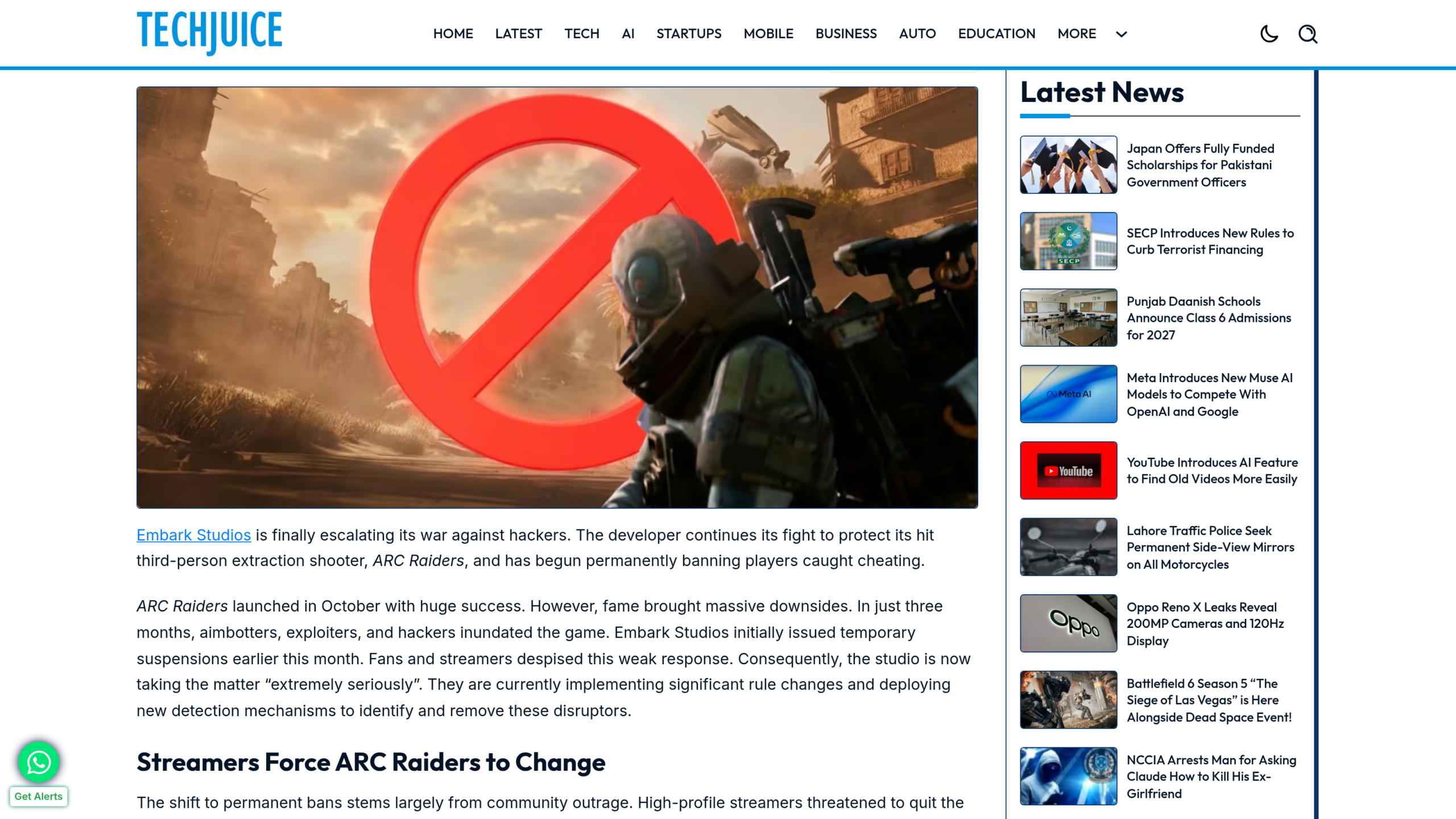
The ban targets the machine too. Embark’s text explains that the hardware block, which stops the game from running on the PC used to cheat, recently had its threshold lowered, with wider coverage planned later this year. Beebom compares it to Call of Duty’s action against a distributor of Cronus, a cheating device, and we have already covered Activision’s response to cheating.
Detection and queues: what the post details
On detection, Embark’s post names Denuvo, which provides kernel-level protection (the core of the system, where cheaters try to hide), and Anybrain, which supplies detections. Beebom adds in-house machine learning models, and specifies that a human team reviews flagged footage before banning: the systems watch behavior over time, so sanctions do not land the second a cheat is used. Elytra, the in-house system already tested at small scale in The Finals, another Embark game, could arrive in the game later. Embark acknowledges that cheating is a multibillion-dollar industry that “cannot be eliminated,” according to Beebom.
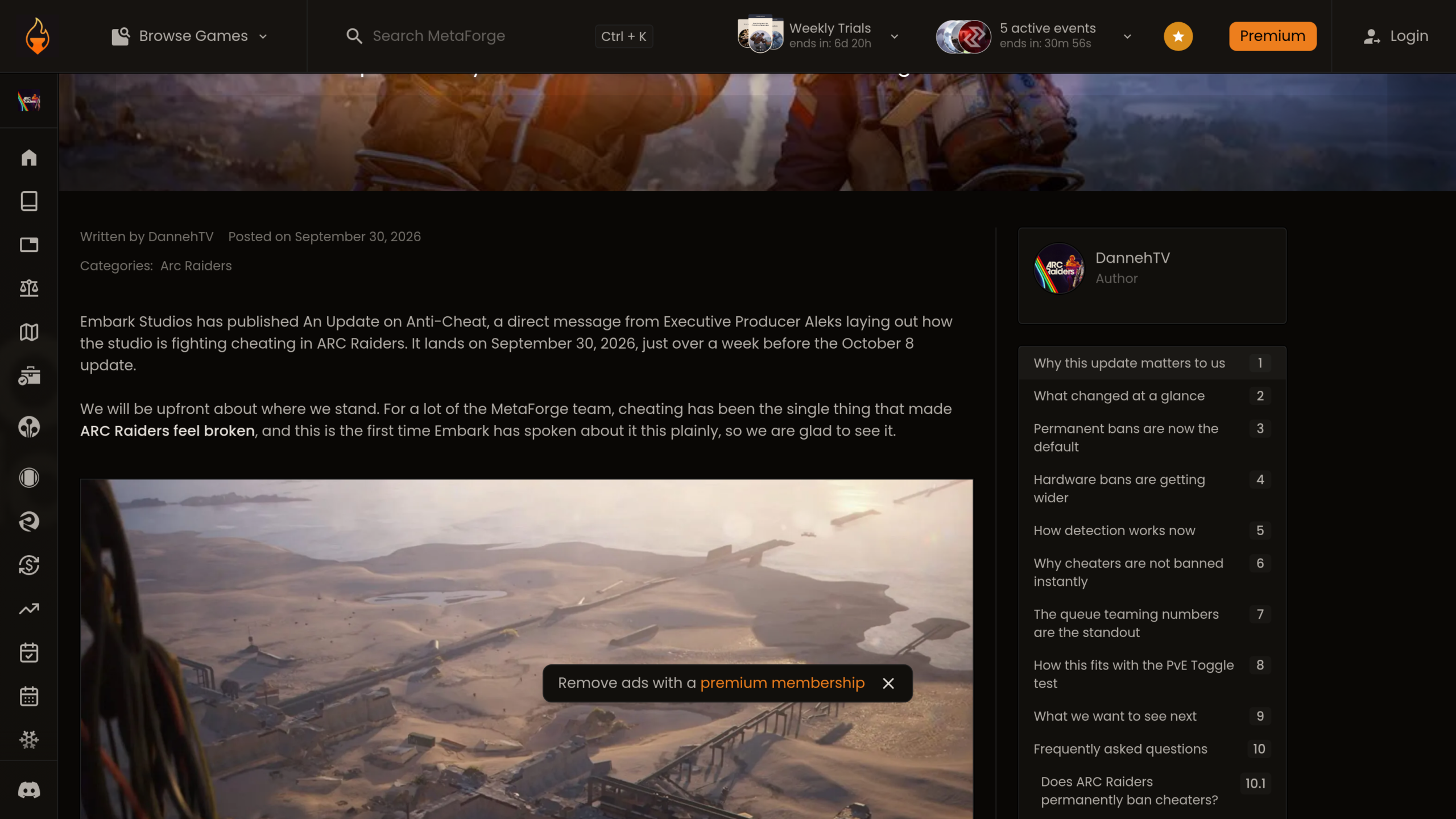
The standout figure is elsewhere. Queue teaming (players who coordinate to enter the same match and ruin another player’s raid) was tackled by separating known groups at matchmaking. “Five days later, we saw 85% fewer players engaging in this behavior,” writes Embark. Ruined raids dropped from about one in 50 to about one in 300, with no notable effect on wait times. The MetaForge summary also makes it the highlight of the announcement.
The PvE toggle, October 13 to 20
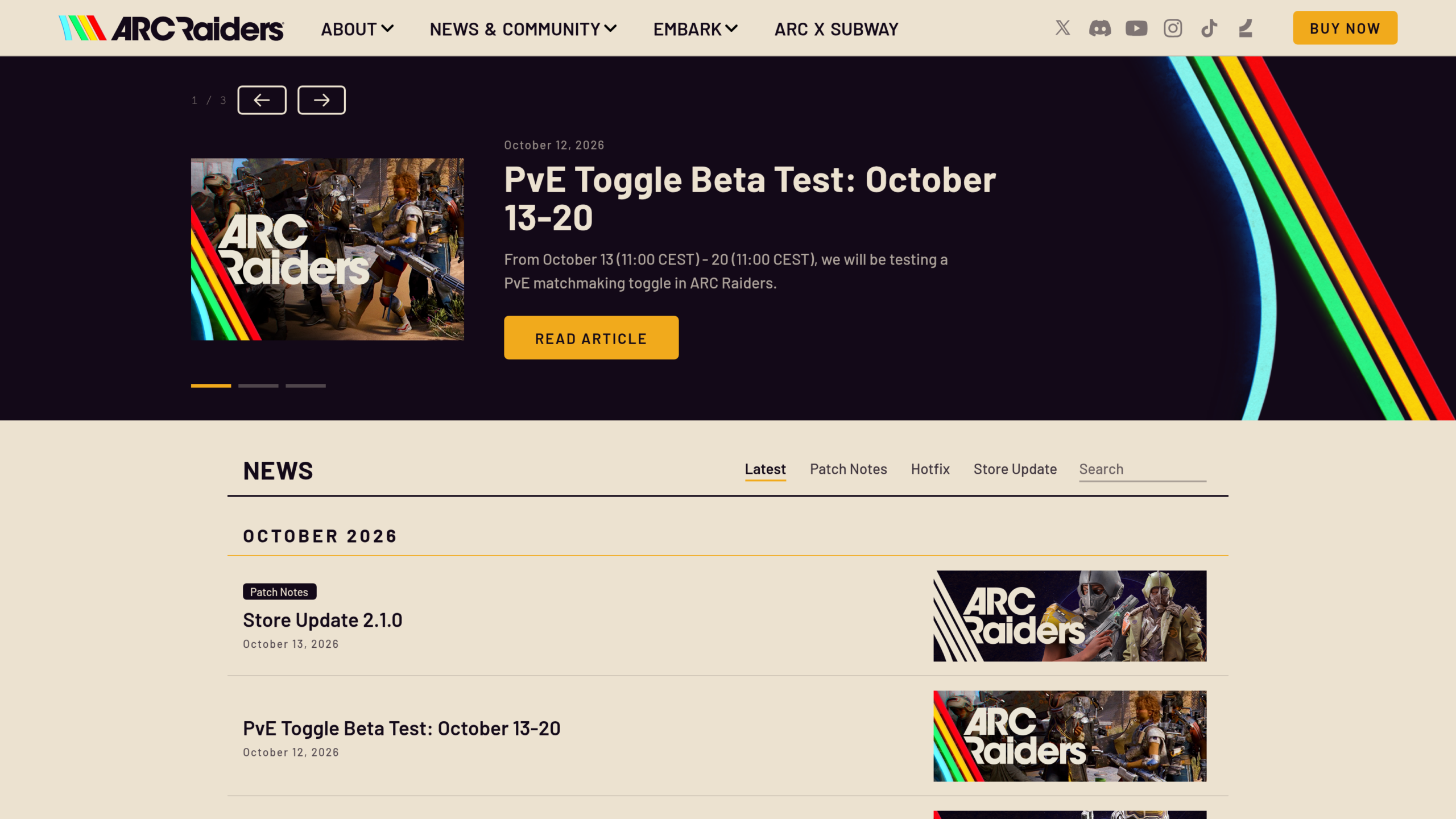
The second answer opened today, October 13 at 11:00 a.m. (Central European Summer Time) and closes on October 20 at the same time: a PvE matchmaking test, announced on the page “PvE Toggle Beta Test: October 13-20”. In these matches, players cannot hurt each other, and the ARC remain dangerous. According to Beebom, the test is open to everyone, with no sign-up, through a toggle in the matchmaking options. It arrives with update 2.1, released the same day.
Loot is worth less there. Embark writes that overall loot value will be lowered on PvE servers, and Inven Global specifies that loot in regular matches is slightly raised during the test. Five conditions have no PvE option: Night Raid, Locked Gate, Hidden Bunker, Frigate and Redirection. A downed player gets eight seconds of grace, after which the ARC can attack again if they move. Embark explains this choice by the wish “to explore ways to maintain tension even in the absence of PvP,” according to Inven Global.
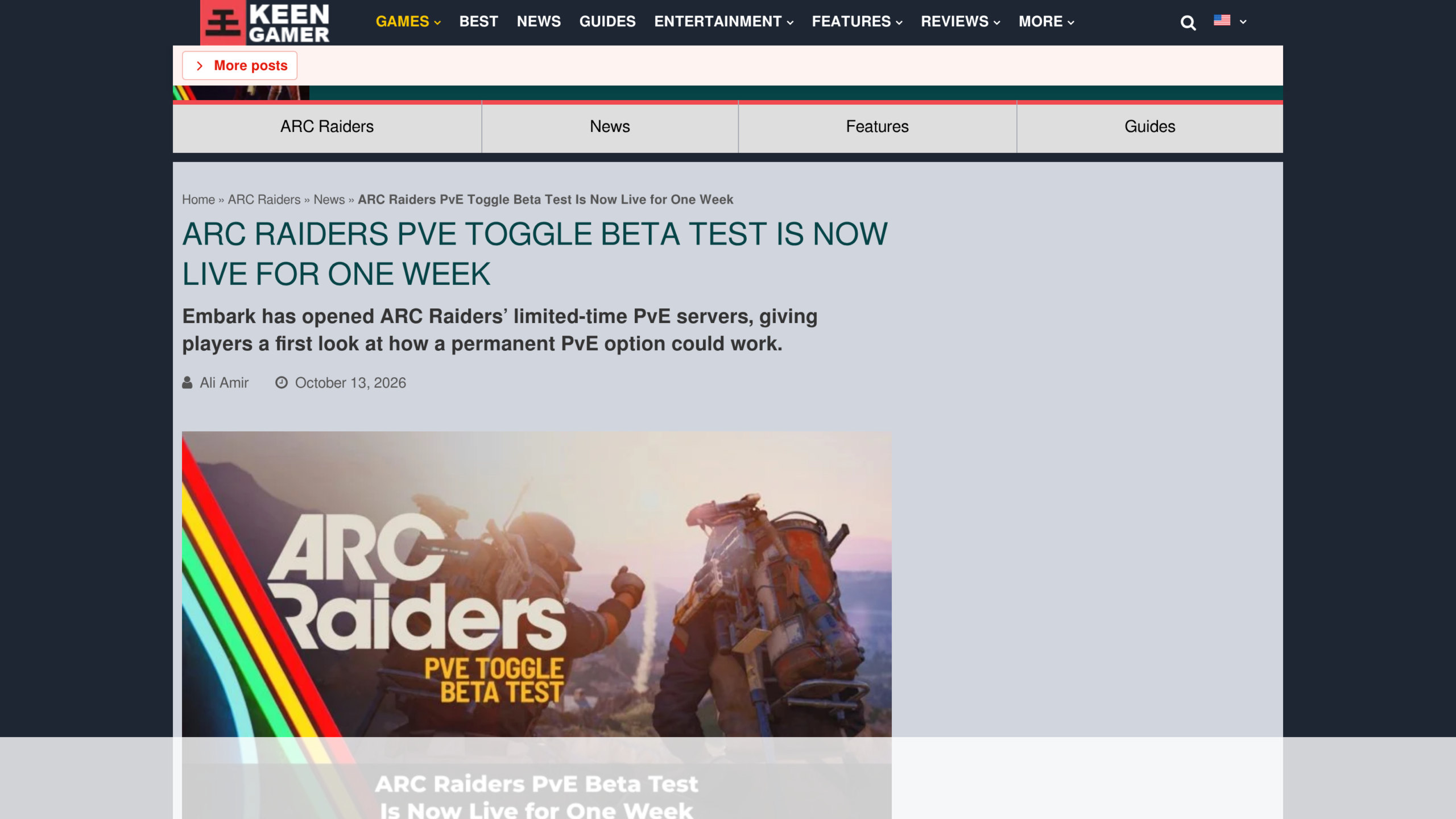
According to KeenGamer, the toggle then disappears while the studio reviews feedback, wait times, the economy and the effect on PvPvE (matches where players and machines oppose each other). The test is not a promise of a permanent PvE mode.
PvE: a shelter from cheaters, or just a player preference
Without combat between players, a cheater has no one left to target. Embark’s answer, though, does not go that way. The reasons the studio gives are player numbers: according to KeenGamer and Inven Global, 51% of surveyed players are interested in a dedicated PvE option, and 37% of the population prefers friendly cooperative play, a group that has grown since launch. Inven Global also recalls that the game was conceived about seven years ago as a cooperative raiding game against machines.
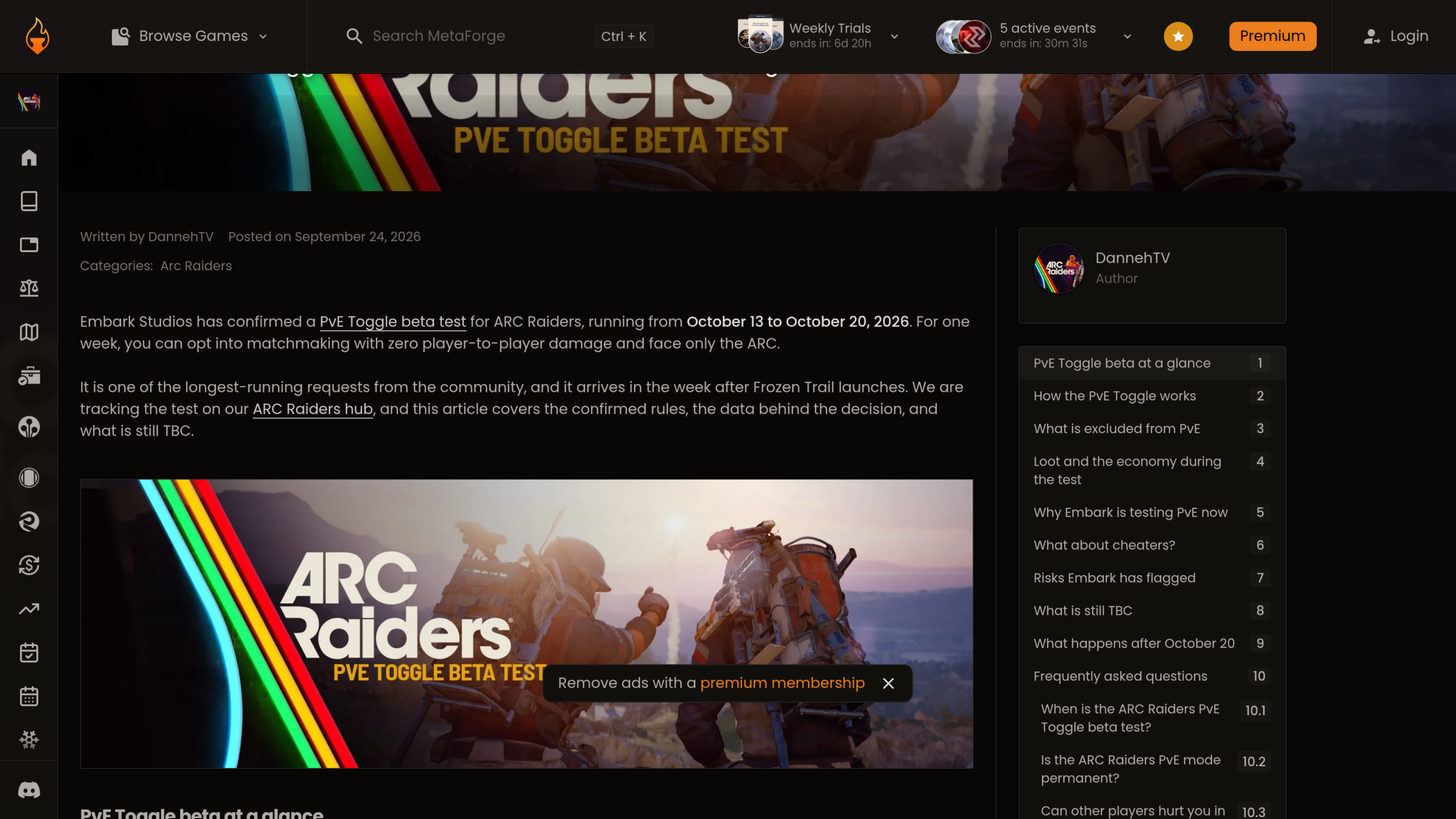
The table of contents of MetaForge raises the cheater question in its test guide. Embark does not answer it: in the texts from the studio and the outlets we read, none presents these matches as an anti-cheat measure. The two announcements meet on the calendar, not in the message. The studio will decide after October 20. Until then, players tired of running into cheaters have a week to see what Arc Raiders looks like without a human opponent.









0 Commentaires
Aucun commentaire pour le moment. Soyez le premier à commenter !