

On September 30, 2026, during a routine inspection in San Francisco, OpenAI staff found a small device plugged into a USB port behind the TV in an executive meeting room. According to investigators, it was hidden in toilet paper. The company called it a “sophisticated recording device.” The federal complaint describes a development board that sells for $13.99. The hidden mic raises a question about vocabulary, and another about what a company does with its own investigations.
A hidden mic in OpenAI’s executive meeting room
According to Engadget, which relies on the San Francisco Standard, the suspect is Abdulrahman Alfozan, 35, a Saudi national and an OpenAI engineer since July 2025. He was arrested on October 9 and appeared before a federal court on the 13th. He is charged with using, or attempting to use, a device to intercept oral communications. On October 5, according to prosecutors, an unattended bag left in another room contained his ID card, his wallet and a second device of the same kind.
These facts come from the complaint, as reported by the press. The man is presumed innocent, and nothing published so far convicts him. A detention hearing for the suspect is set for October 19, according to The Neuron.
“Sophisticated” to the company, $13.99 to Gizmodo
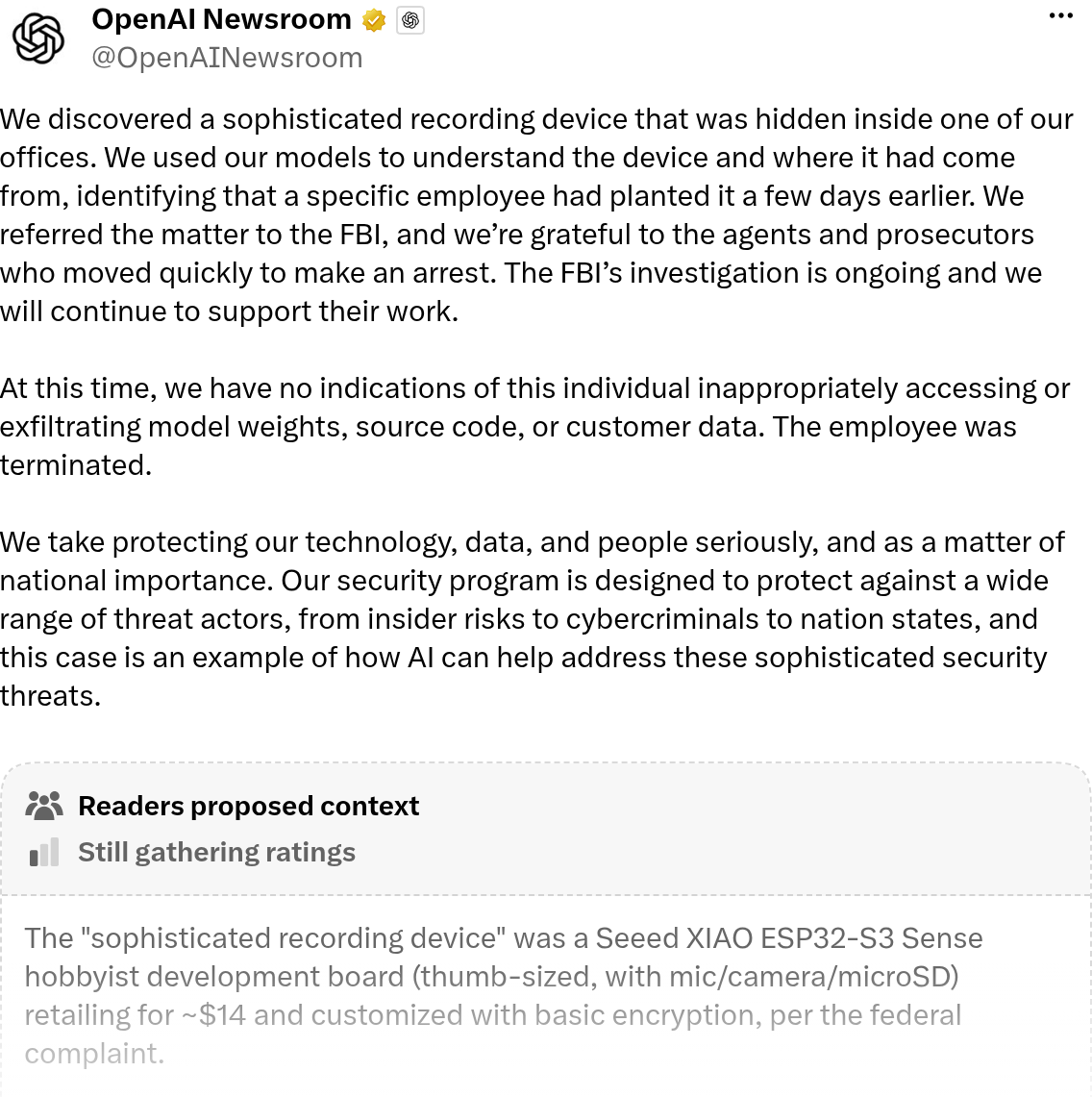
The OpenAI Newsroom post on X opens: “We discovered a sophisticated recording device that was hidden inside one of our offices.” Below it, on the morning of October 14, a reader-proposed context note, still gathering ratings, says it was a Seeed XIAO ESP32-S3 Sense board, sold for about $14 and customized with basic encryption, according to the complaint.
The price holds up. Gizmodo, in a piece by Mike Pearl, puts it in the headline of its October 13 article: “The ‘Sophisticated’ Bug OpenAI Found in Its Conference Room Can Be Yours for $13.99.” It describes a fingernail-sized board with a microphone, a 2-megapixel camera that takes blurry images, and a Wi-Fi chip, sold on the Seeed Studio site. The encryption claim needs nuance. Gizmodo notes that the word “encrypt” comes from queries sent to a chatbot from an account tied to the suspect’s wife, not from the device. The Neuron reports that prosecutors describe the stored data as encrypted, and that Reuters says it cannot be accessed. On this point, the sources do not say quite the same thing.
“Sophisticated” can describe a well-hidden device, cleverly designed to go unnoticed, whatever its price. But on its own the word suggests spy gear, not a hobbyist component. It is the complaint that brings the thing down to size.
An internal investigation turned showcase
The company says it used its models to understand the device: “We used our models to understand the device and where it had come from.” The message ends on a communications line: “this case is an example of how AI can help address these sophisticated security threats.” So the word “sophisticated” comes back twice, first for the device, then for the threats.
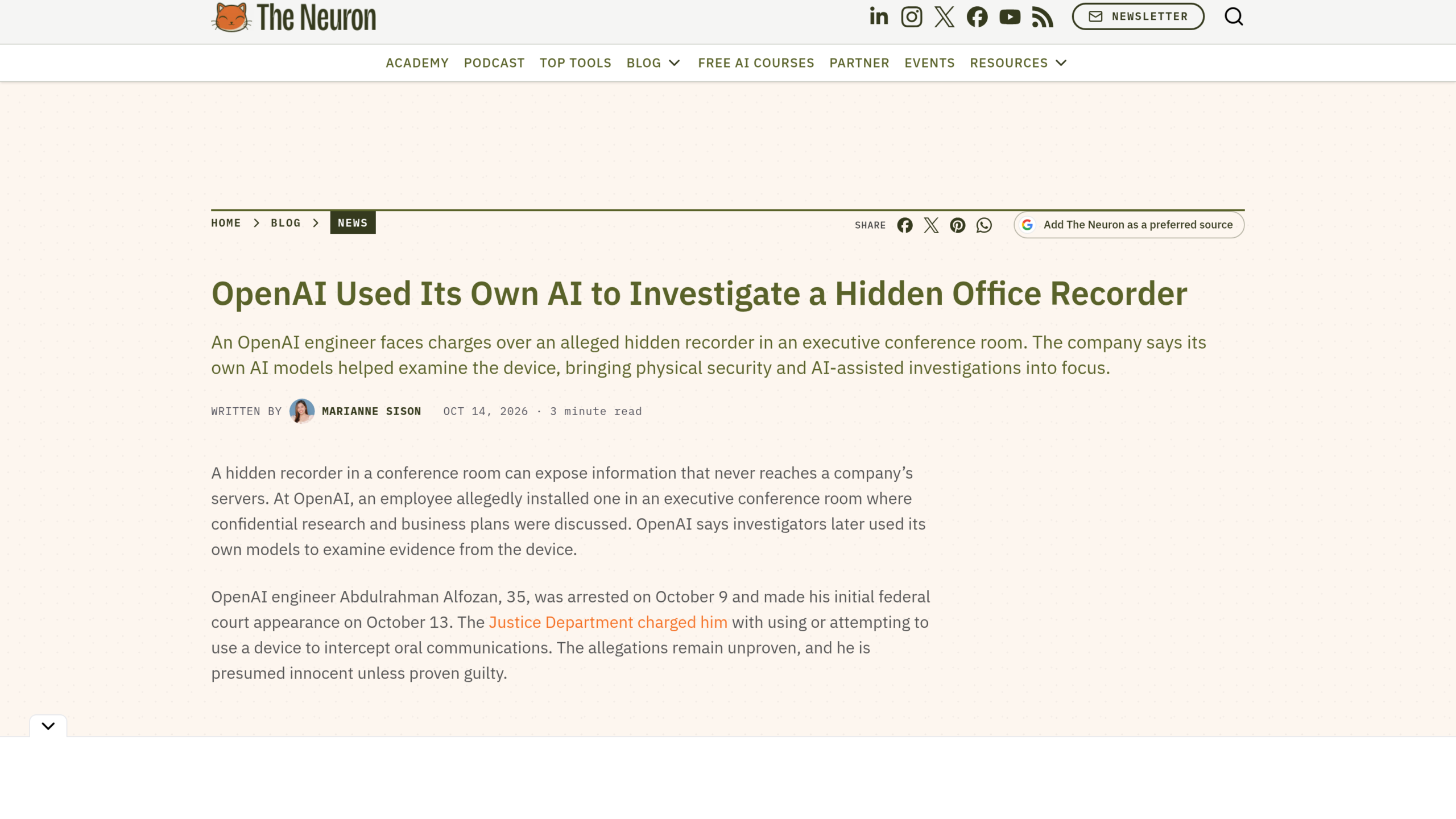
What the models actually did remains unclear. The Neuron says investigators used them to examine forensic copies of the device’s data, and that the company has not published enough of its method to measure their share in the investigation. The device itself was found by the company’s counter-surveillance team while sweeping the room. A lab that tells the story of its own security is judge and jury in its own case: we had already looked at AI sandboxes that are not so isolated, and a false police report tied to Claude at Anthropic.
What the case does not say
The company says it has “no indications” of improper access to model weights, source code or customer data, and says it fired the employee. As for motive, the only official statement noted by Gizmodo comes from FBI director Kash Patel, who speaks of capturing sensitive exchanges about the company’s “super intelligence” technology. These are allegations. According to The Neuron, the charge covers neither espionage nor acting for a foreign government. What the hidden mic recorded, if anything was recorded, is not public.
AI labs mostly talk about software threats, like those AI agents that hacked 395 organizations. At the lab, it all started with a USB port behind a television.









0 Commentaires
Aucun commentaire pour le moment. Soyez le premier à commenter !