
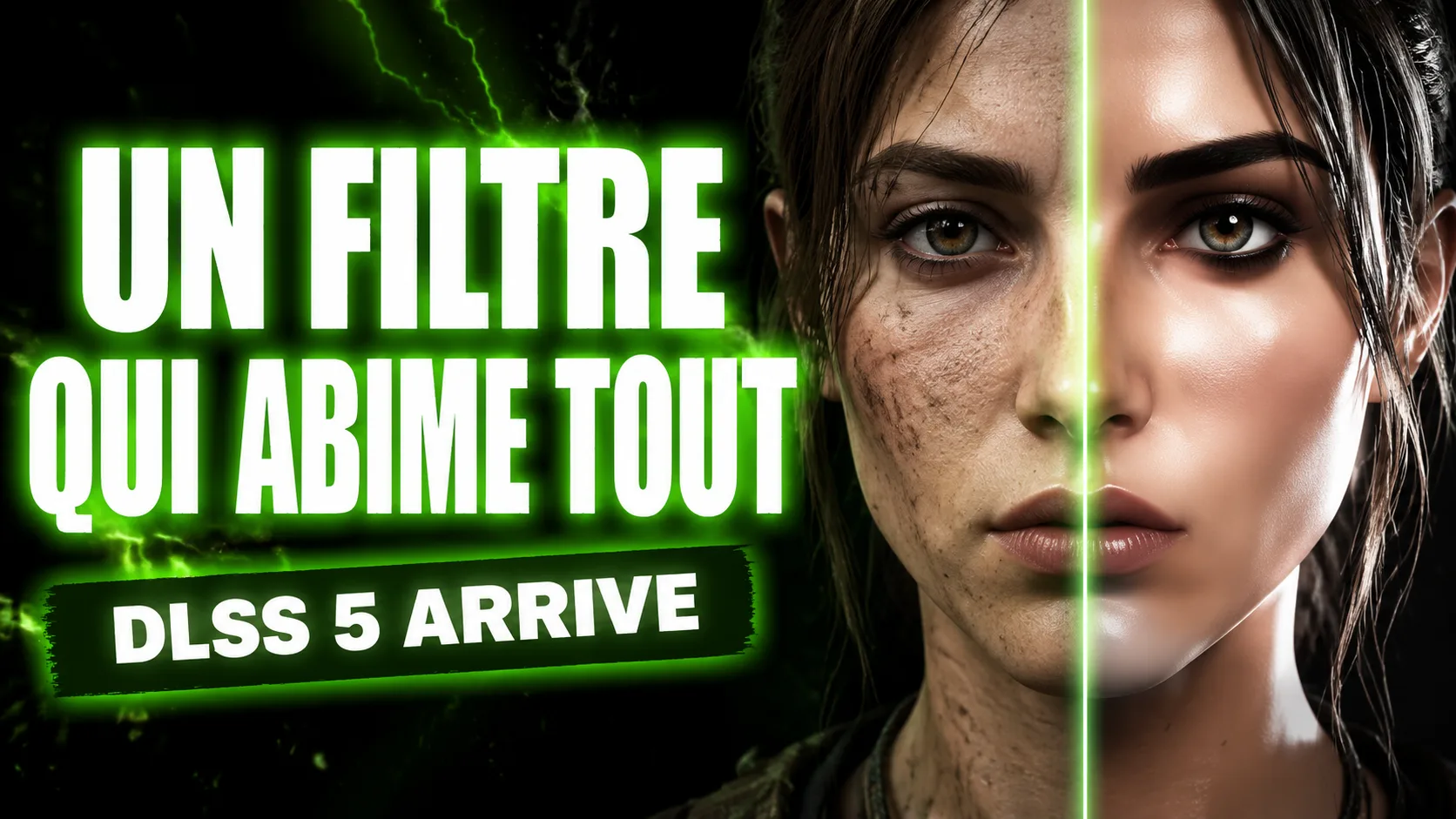
NVIDIA is rolling out DLSS 5 this week. NBA 2K27 is the first game to officially support it, a milestone covered by Video Games Chronicle on September 1st. Until now, every version of DLSS boosted the displayed resolution or the frame rate. This one changes something else: the game’s actual appearance, through lighting and materials reworked by an artificial intelligence. The technology is limited to RTX 50 Series graphics cards.
Even before its official release, the files had leaked. Players found them inside NBA 2K27’s libraries and installed them on other titles, without the consent of the studios involved. Reactions were strong, and not only from players. A rendering engineer employed by Respawn described the result as an airbrush filter, named after the retouching tool that smooths and flattens an image. The judgment comes from the very profession NVIDIA says it wants to serve.
What NVIDIA Is Selling, In Its Own Words
NVIDIA states a clear promise on its official page for DLSS: « Supreme Speed. Superior Visuals. Powered by AI. » The tone is that of an improvement in service of the player, not a filter slapped over the creators’ work.
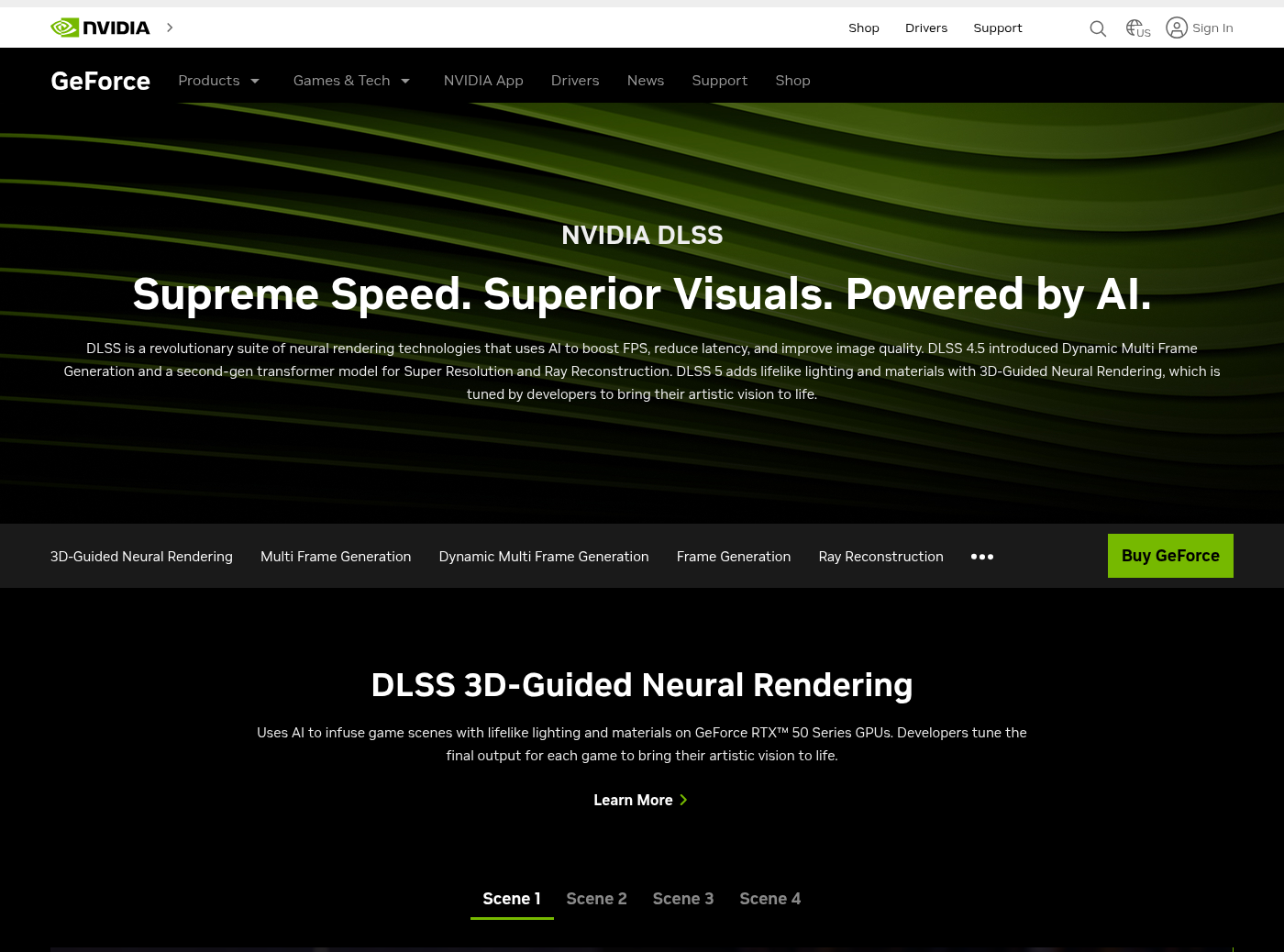
The technical text specifies what the new version does: « DLSS 5 adds lifelike lighting and materials with 3D-Guided Neural Rendering, which is tuned by developers to bring their artistic vision to life. » The dedicated section adds that the technology « uses AI to infuse game scenes with lifelike lighting and materials on GeForce RTX 50 Series GPUs. »
The detail that changes everything is a single word: tuned. NVIDIA presents DLSS 5 as a tool each studio calibrates by hand, not a universal preset applied as-is. This version breaks from the technology’s history, which we covered when version 4.5 launched. Previous generations boosted resolution or frame rate without touching the visual style.
The Filter Leaked, and Modders Put It Everywhere
NBA 2K27 remains the only game where the technology is officially available, with the tuning NVIDIA promised. Video Games Chronicle confirmed this launch in an article published on September 1st, 2026.
The problem started earlier. On August 28th, Dave Aubrey reported in Video Games Chronicle that the DLSS 5 files were already sitting inside NBA 2K27’s DLL libraries, the code files the game loads on startup. Players extracted them, then modders, people who alter a game outside its original studio, installed them on titles that were never meant to receive the technology.
Control, Cyberpunk 2077, Final Fantasy VII Rebirth, Monster Hunter Rise, and The Last of Us Part 2 all received the filter this way. Seven style presets, ready-made combinations of settings, are already circulating among players. The performance cost is real: the frame rate can be cut in half depending on the graphics card used.
When Rendering Professionals Say It Ruins the Image
The first reactions focused on familiar faces. On Cloud Strife’s retouched look, players wrote « This is horrifying » and simply « Eww! » On Ellie, one comment noted the filter had « Made her look 40. »
Danny O’Dwyer, a journalist and documentarian specializing in video games, summed up the effect in one sentence: DLSS 5 « randomly turns everyone into yassified, looks-maxed freaks. »
Steve Karolewics goes further. This rendering engineer works at Respawn, the studio behind Apex Legends and the Titanfall series. He describes what he sees as « an overbearing contrast, sharpness, and airbrush filter. » Coming from a professional whose job is precisely to tune lighting and materials on screen, the word carries more weight than a player’s opinion.
A serious objection deserves to be raised. The rendering judged by modders is not the official rendering NVIDIA presents. Control, Cyberpunk 2077, and The Last of Us Part 2 never received the developer tuning the company describes as essential to its technology. What’s circulating is a generic version, grafted onto games that were never meant to receive it. The seven available presets change nothing about the principle: the same filter, without the artistic work NVIDIA claims as a condition.
The real test awaits the next games that will officially integrate it.








0 Commentaires
Aucun commentaire pour le moment. Soyez le premier à commenter !