
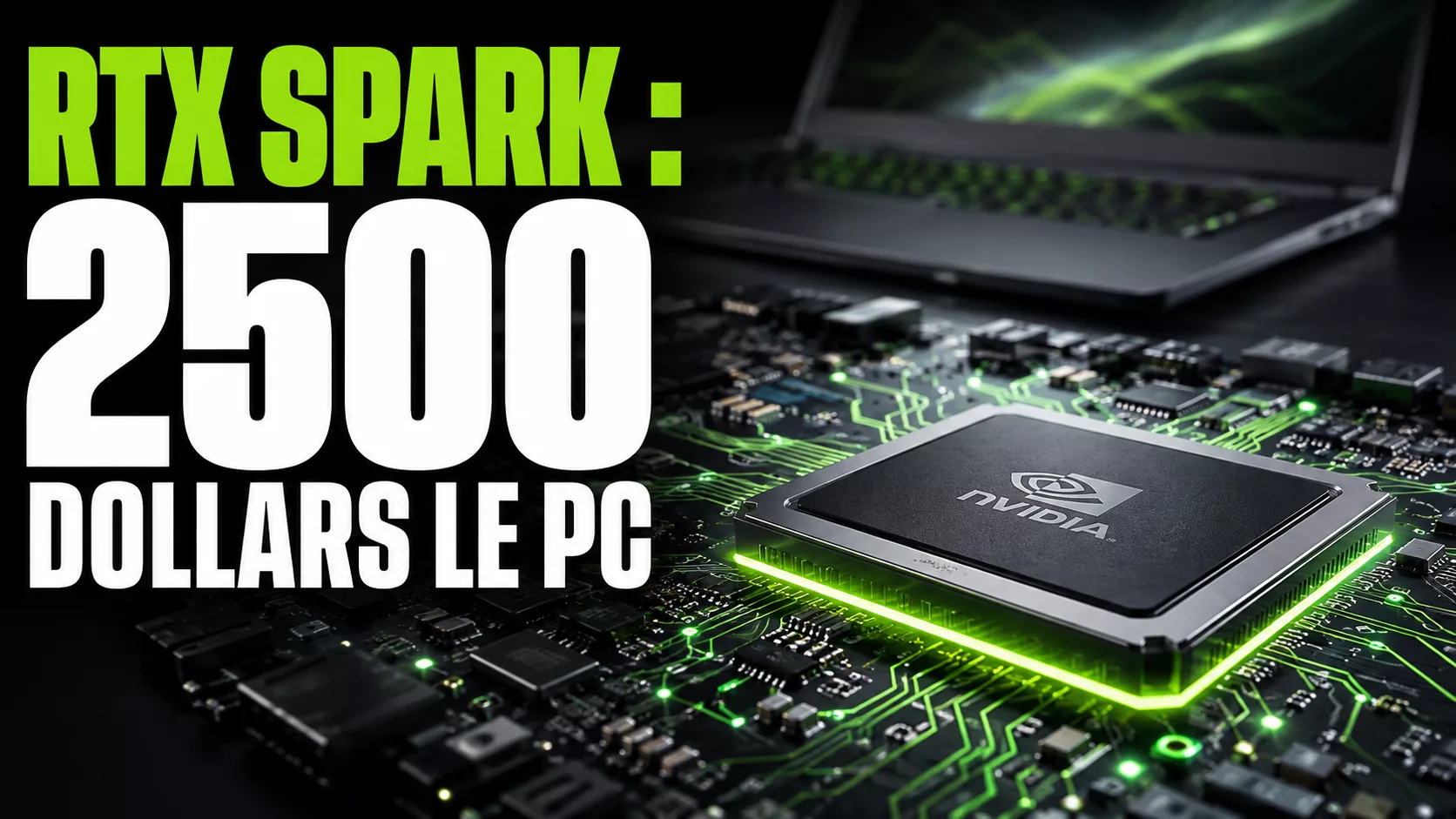
NVIDIA has confirmed the first RTX Spark machines and their release window, this autumn. The maker no longer sells a graphics card to slot into a case: it sells the whole computer, processor included. And it leaves the architecture that has powered PCs for forty years.
RTX Spark: a whole chip, not a card
The platform pairs a 20-core Grace processor with a Blackwell RTX graphics chip. It carries up to 128 GB of so-called unified memory, shared between general compute and display instead of being split into two pools. NVIDIA claims one petaflop of AI performance, a thousand billion operations per second on that kind of maths. For gaming, it targets around 100 frames per second at 1440p.
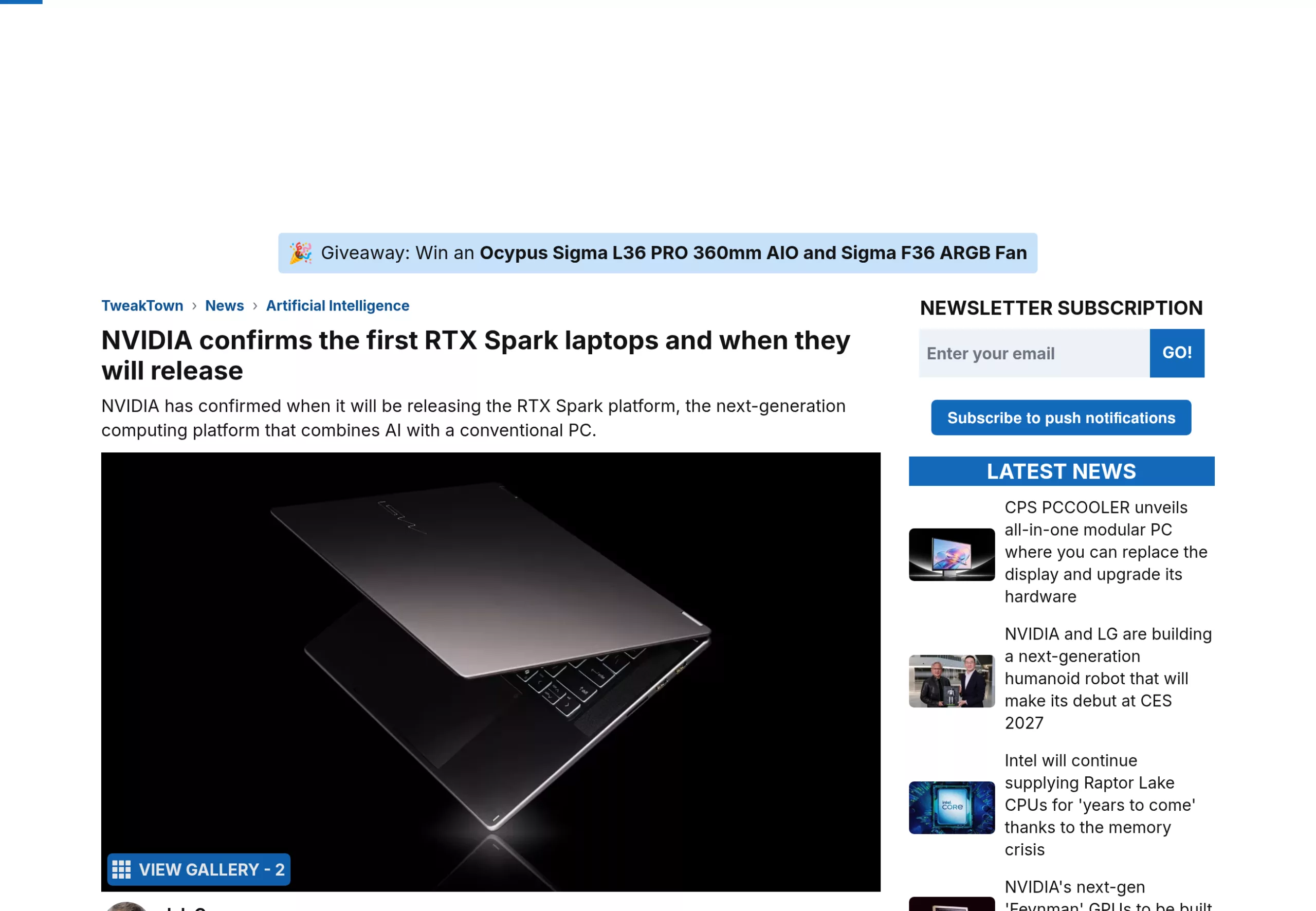
The Grace processor uses ARM, the architecture of phones and recent Macs. It leaves behind the x86 of Intel and AMD. ASUS and MSI lead the launch, with Acer, GIGABYTE, HP, Dell, Lenovo and Microsoft Surface behind them. All makers who usually sell Intel or AMD.
The price is going to hurt
Reported prices start between 2,500 and 3,000 dollars. NVIDIA has published no official price. There is no suggested retail price for laptops, and no machine carries a confirmed price at this stage.
At that price, the machine compares to a workstation rather than a gaming PC. That fits the positioning: the 128 GB of unified memory exist to run large AI models locally, which no consumer card allows today. Gaming at 100 frames per second is the side argument, not the purpose.
Windows on ARM, the real test
PC games are compiled for x86. Running them on ARM requires a translation layer that converts instructions on the fly, and that translation costs performance. Qualcomm broke its teeth on this with the Snapdragon X: office work passes, gaming much less so.
Announcing 100 frames per second at 1440p on an ARM platform therefore amounts to claiming NVIDIA has solved that problem. That is the one thing to check at launch, before the petaflops and the 128 GB. Do the games in a Steam library start, and at what cost in frames per second? Until an independent test answers that, the rest is paper.
All of this lands in an already strained hardware market. The RTX 5090 went from 1,999 to 4,930 dollars under the memory shortage. Selling the complete machine also removes any dependence on a card price the maker no longer controls. Valve is preparing its Steam Machine and Steam Frame with the opposite approach: modest hardware and software tailored to it. On the existing install base, NVIDIA plays another card. It gives DLSS 4.5 to every RTX, back to the 2018 20 series.








0 Commentaires
Aucun commentaire pour le moment. Soyez le premier à commenter !