
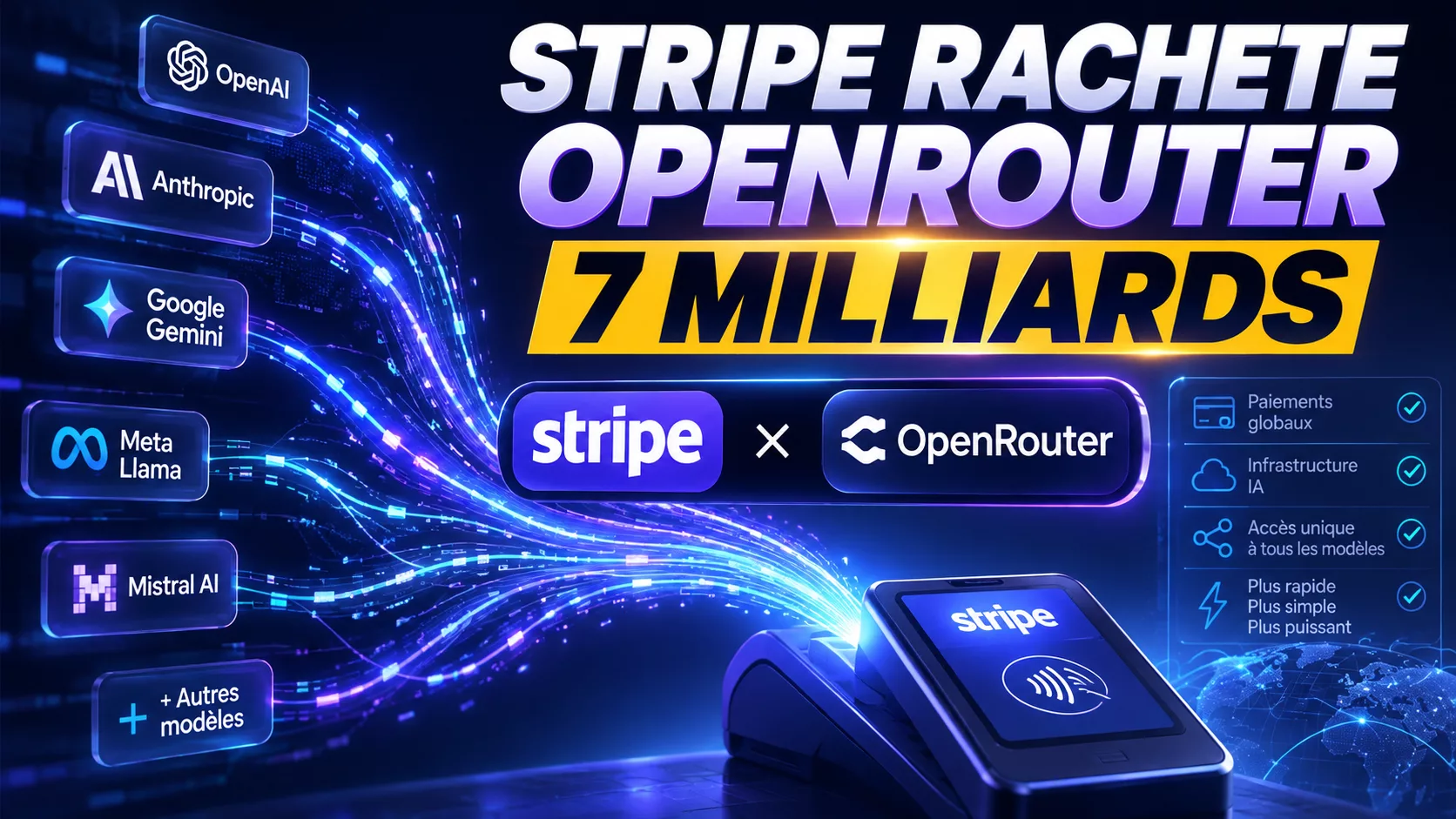
The Stripe and OpenRouter deal is done. The online payment specialist has bought the AI gateway for more than 7 billion dollars, a story broken by Bloomberg on August 16 and confirmed the next day. The amount is less surprising than the timing.
OpenRouter was worth 1.3 billion back in May, at its Series B round. Three months later it sells for 5.4 times that price. That kind of multiple over a single quarter says something about how the market reads this particular piece of plumbing.
Seven billion for a gateway
A gateway here means a single entry point to several services. Rather than wiring an application to OpenAI, then Anthropic, then Google through three separate integrations, a developer goes through OpenRouter and switches models without rewriting anything.
The appeal works on two fronts. Picking the model that best fits each task, and above all arbitraging on price. A cheap model to sort messages, a premium one for complex reasoning.
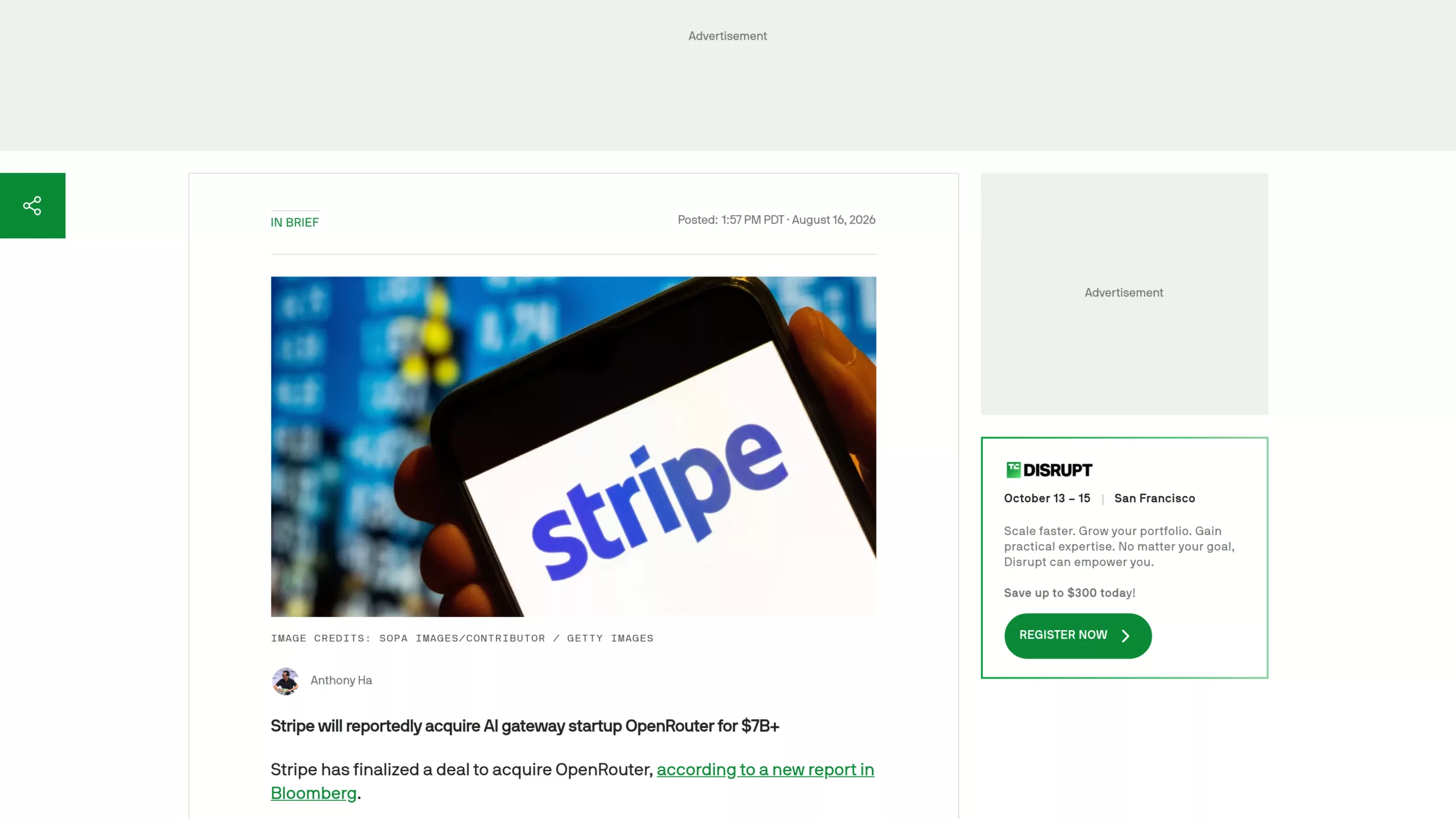
Bloomberg says more than 7 billion, Forbes points to a range that could climb to 8. Nobody has publicly settled the gap between the two figures yet.
What OpenRouter actually carries, in numbers
The company puts its counters right on the home page, which saves any guesswork. More than 500 models available, 80 providers plugged in, 10 million users, and 200 trillion tokens processed every month.
A token roughly matches a fragment of a word. It is the billing unit of every language model. So that counter measures the volume moving through the gateway, not a self-declared audience.
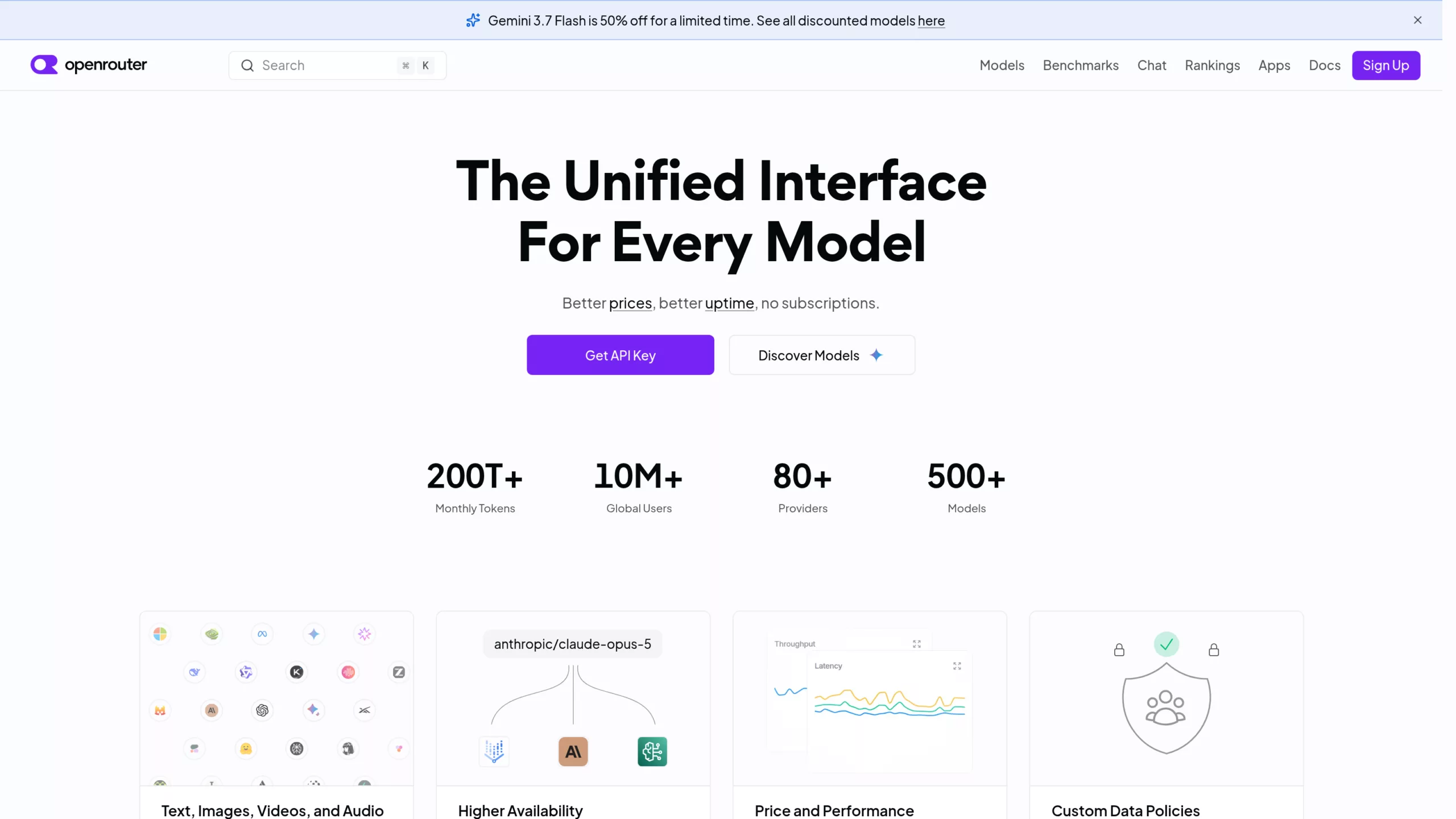
Their sales pitch fits on one line of the site. Better prices, better uptime, no subscriptions. Billing therefore runs on usage, token by token. Hold on to that detail, it explains what follows.
Why a payments company buys a router
Stripe collects payments for millions of businesses. OpenRouter counts the tokens burned by millions of developers. Both jobs amount to the same thing, measuring consumption and charging for it.
Paying that much signals that Stripe does not see OpenRouter as one developer tool among many. The company is buying a tollbooth. Every request sent to a model passes through a metering point, and whoever holds that point holds the billing data of an entire industry.
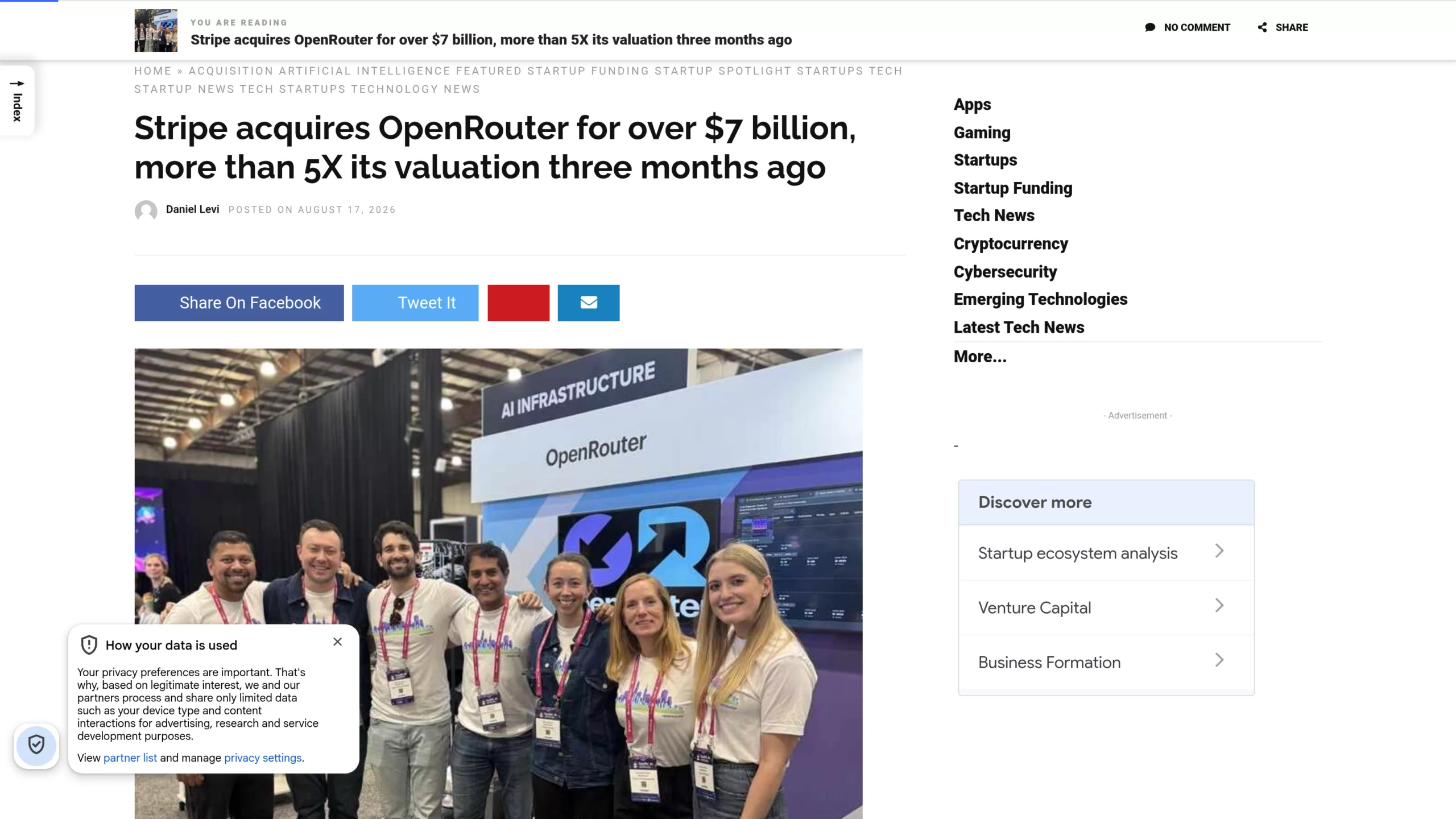
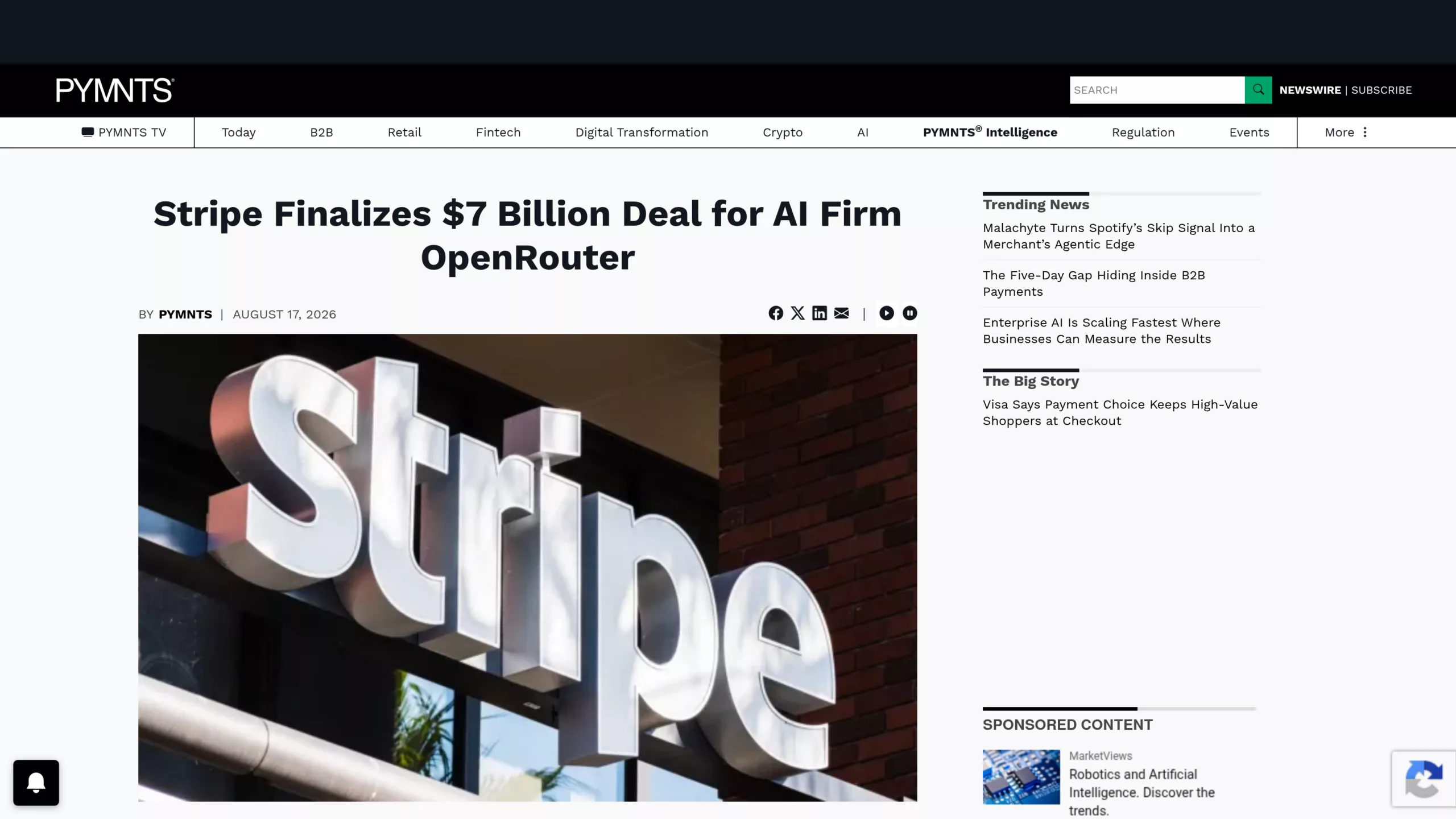
PYMNTS covering the story at all is telling, given it exists to report on payment methods. This deal reads as much in finance circles as it does in AI ones.
One more layer turns into a paid one
This move belongs to a wider shift. We wrote a few days ago that the billions of AI are switching sides, moving from models toward the pipes that run them. Stripe’s purchase applies the same logic one level up, on the software layer that dispatches requests.
Every floor of this stack is finding an owner. Data centres, chips, models, and now the switching between models. What looked like a free developer utility is today worth more than plenty of established software vendors.
One unknown remains for OpenRouter users. A gateway sold as neutral across 80 providers now belongs to a company with commercial interests of its own. Nothing suggests pricing or model rankings are about to move, but the question will come up sooner or later. The same doubts followed Amazon’s decision to train its models on Twitch streams, where the middleman and the beneficiary were one and the same company.
For now, no change has been announced on the service side. Developers using the gateway keep paying per token. The acquisition also leaves untouched the obligations resting on model providers, starting with the ones pushing Anthropic to watermark Claude’s output.









0 Commentaires
Aucun commentaire pour le moment. Soyez le premier à commenter !