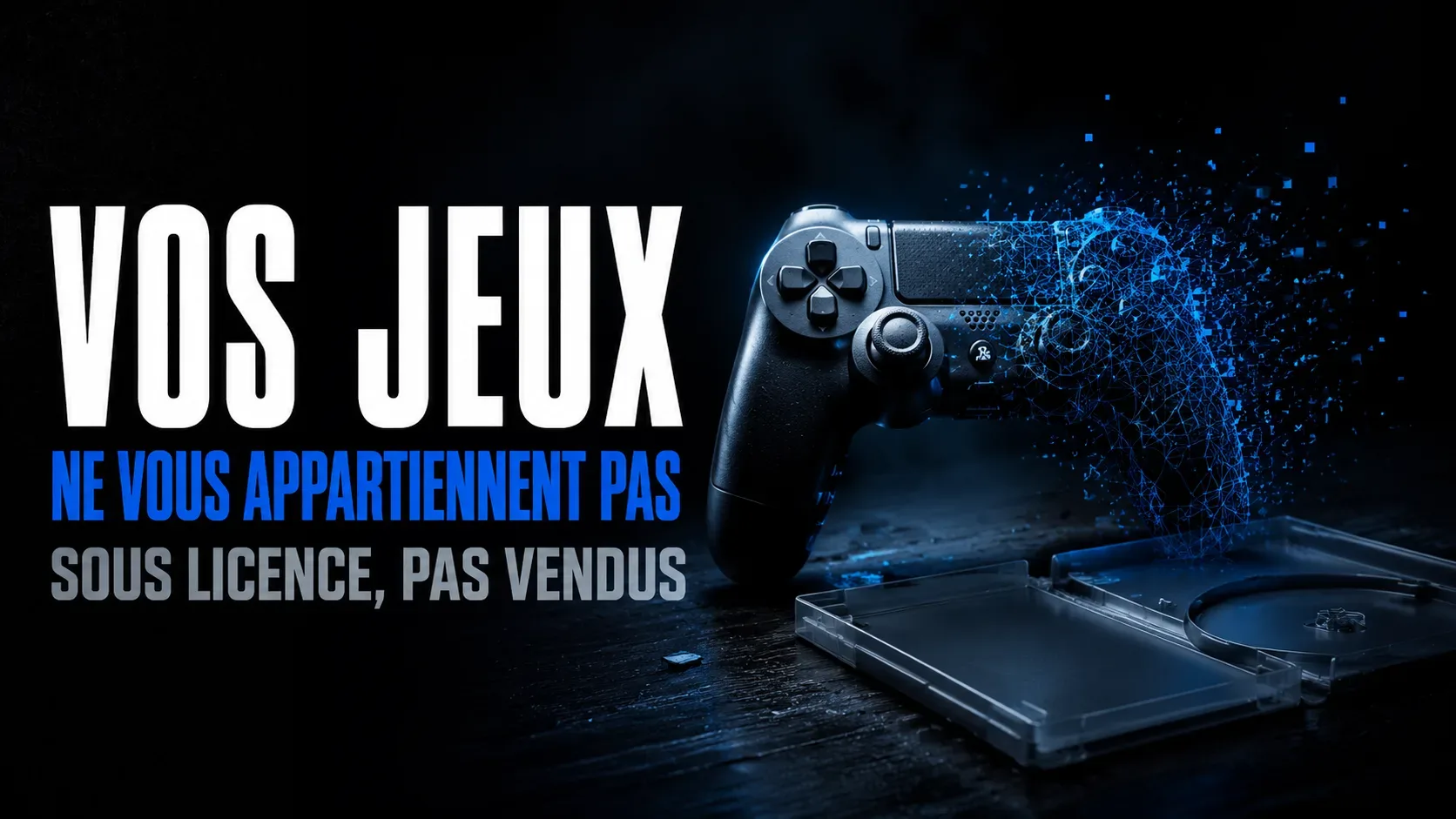
On the weekend of August 22-23, 2026, PlayStation players received an email from Sony Interactive Entertainment. Nothing looked unusual at first glance: a copy of the terms of use, the code of conduct, the end-user license agreement (EULA, the legal text that governs how software may be used), and the privacy policy. Except this time, players opened the full document, and one line about the PlayStation license spread across social media within hours.
« The Software is licensed to you, not sold »: the game is licensed to you, not sold outright. That single line, buried in pages of legal text, sums up the principle that has governed every PlayStation game for years. The PlayStation license doesn’t make you an owner, even when you paid full price. GamesRadar+ summed up the unease in one simple line: these games don’t belong to you, not even the ones you bought.
The real problem isn’t the content of the clause. It’s the timing chosen to bring it up again. The email landed in the middle of a boycott movement against Sony, just hours before the start of a week of protest over the announced end of physical games. For many players, the PlayStation license they thought they knew suddenly took on a different meaning.
What the PlayStation license actually says
Stripped to its core, the PlayStation license, as it appears in Sony’s official terms, comes down to one simple idea: buying a game, whether physical or digital, means buying the right to use it, not the game itself. Ownership of the software stays with the publisher. The player receives a right to use it, one that can be revoked under certain conditions.
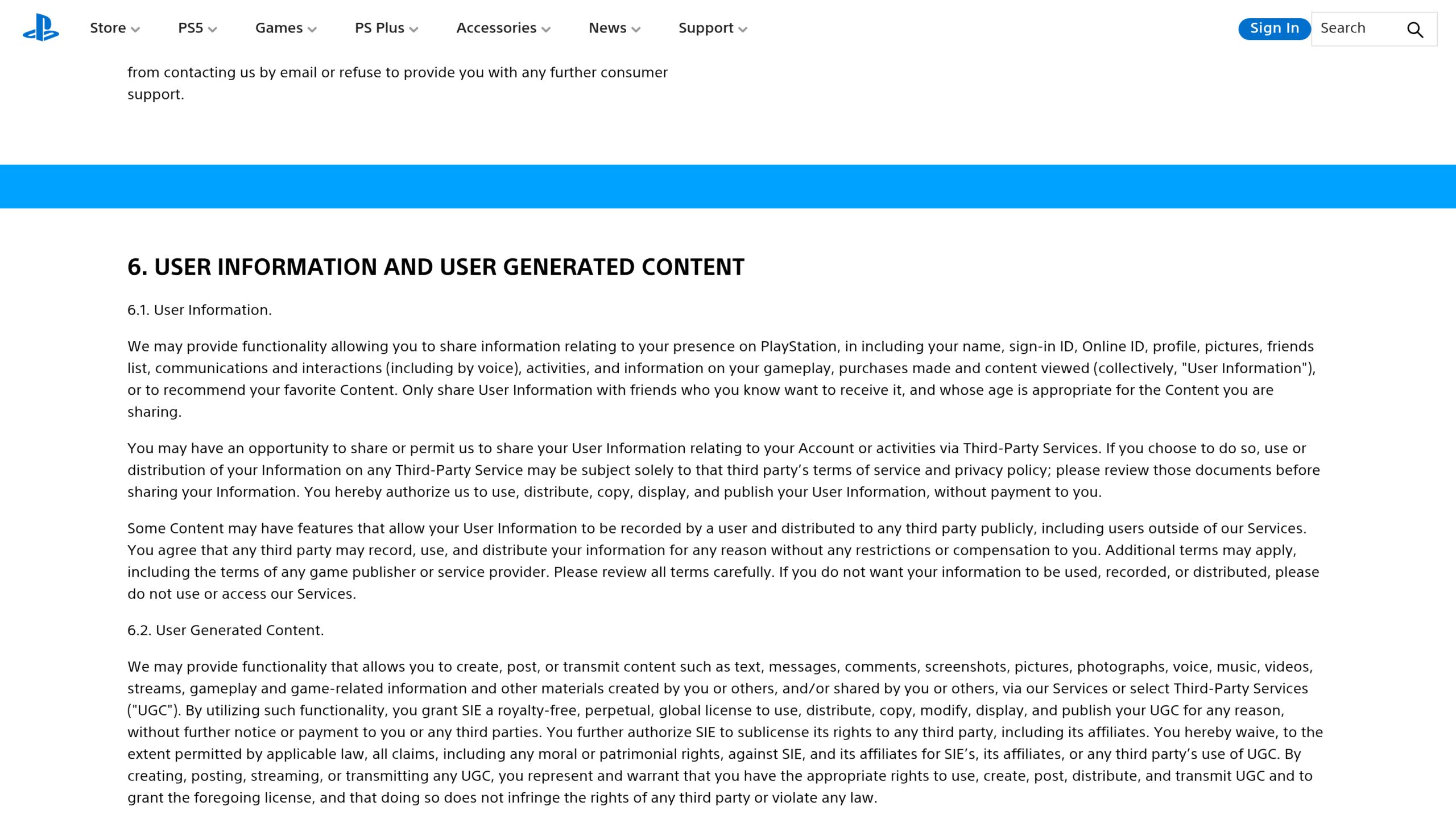
Two specific points in particular caught readers’ attention this week. First, the possibility of losing access to your content if your account gets suspended (a temporary or permanent block on a PlayStation Network account, or PSN, the online service that ties the console to the player’s account). Section 1.8 of the terms is clear: a violation can lead to the temporary or permanent suspension of the console or account, and the loss of access, or restricted access, to the content tied to that account. Second, the right Sony grants itself to use video clips captured by players for commercial purposes, another clause that has been around for a long time but that few people had ever actually read.
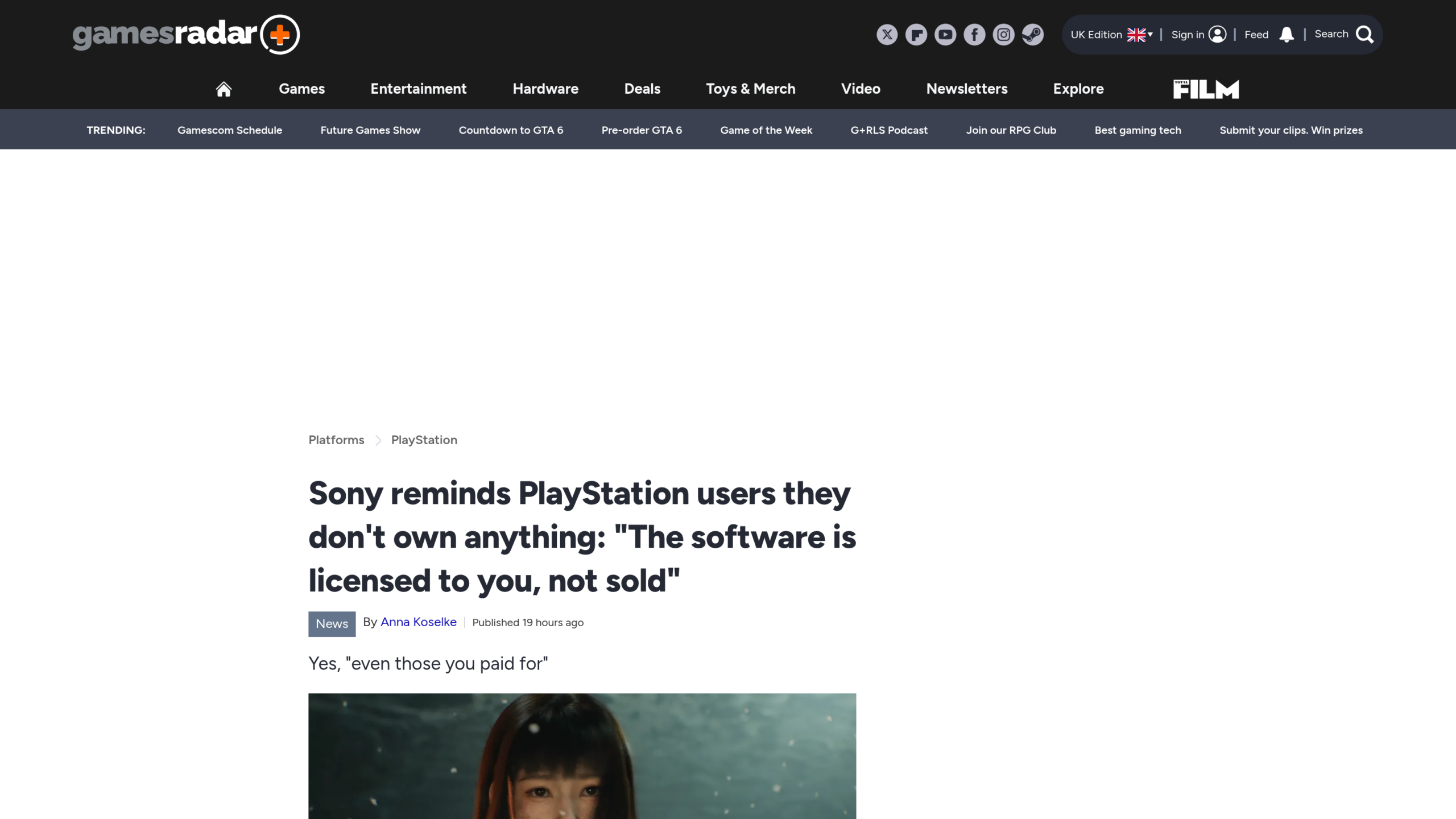
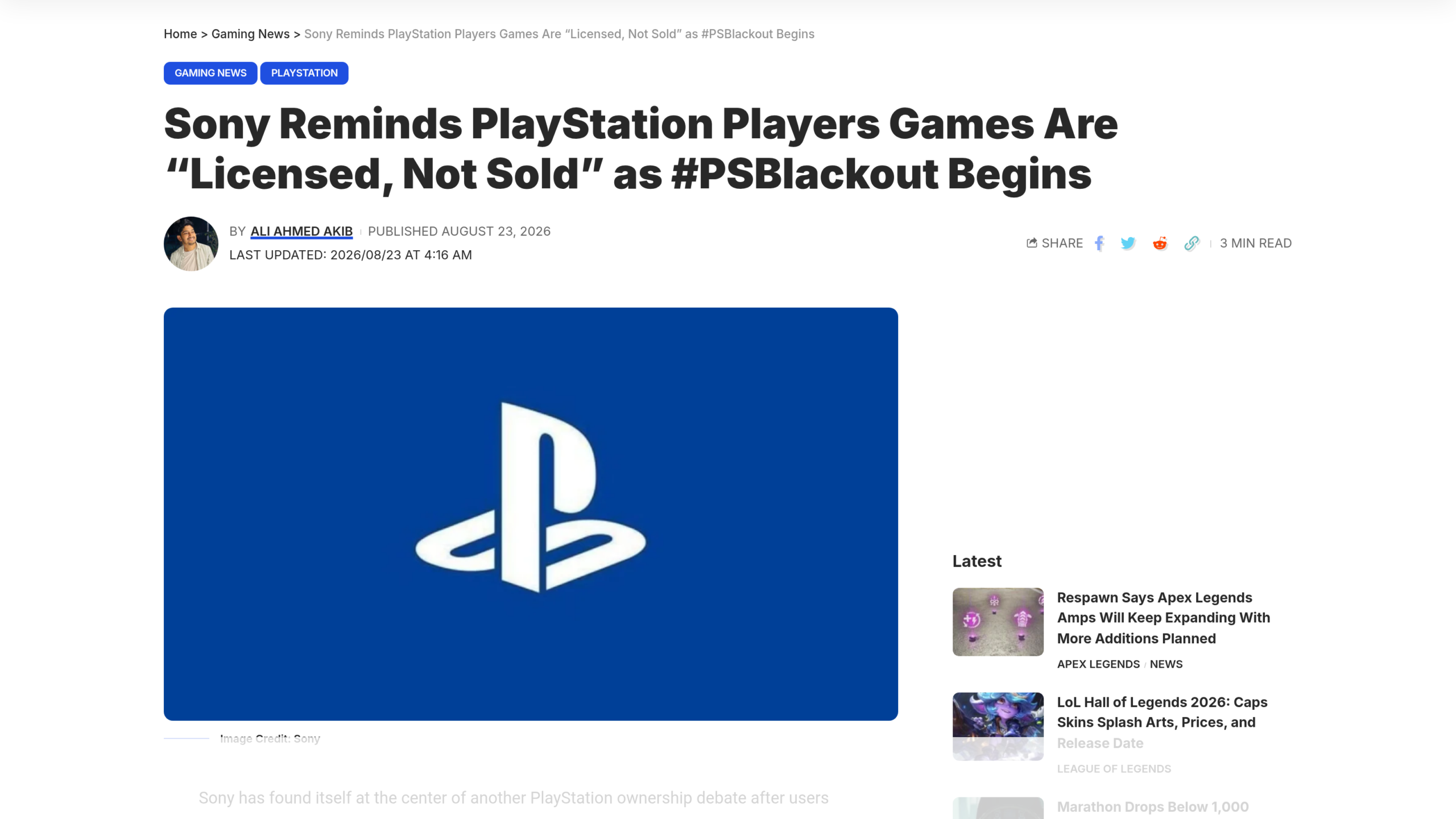
GamesRadar+ published an article detailing the clause on August 24, written by Anna Koselke, a few hours after an earlier piece from GameRiv on August 23, written by Ali Ahmed Akib. PlayStation LifeStyle followed the same day with a report written by Zarmena Khan. All three outlets reach the same conclusion: the PlayStation license isn’t a secret, but almost nobody takes the time to read a user license agreement before clicking « accept ».
A reminder that landed right in the middle of #PSBlackout
The timing explains the scale of the reaction. The video game preservation group DoesItPlay launched a movement called #PSBlackout, running from 7 p.m. on August 23 through August 30, 2026. The instructions are simple: turn off your console, log out of the PlayStation Network, and buy nothing from the store for a week. The goal is to put pressure on Sony after an announcement that shook the community this summer, the decision to stop producing physical discs for all new games starting in January 2028.
Getting a PlayStation license reminder at the exact moment people are protesting the end of physical support is no coincidence. For some players, the disc represented the last tangible form of ownership: an object you could resell, lend out, or keep on a shelf. Without it, all that’s left is the digital file and its usage agreement. The PlayStation license then becomes the only legal link between the player and their game, and that link made itself known to everyone at the worst possible moment for Sony.
The episode adds to an already long list of friction points between the publisher and its community this year. Sony’s CEO sold 56% of his shares shortly after the disc announcement, a move some players read as a signal, though no official link has ever been established between the two events.
An old clause, not a new one
One point deserves to be stated plainly: the PlayStation license circulating this week hasn’t changed a single line. This wording has been in Sony’s terms for years, and equivalent clauses exist at nearly every platform holder, consoles and PC storefronts alike. AndroidHeadlines put it plainly: this email doesn’t reveal anything new.
What’s changed is how the information spread. By sending the full documents by email instead of just a link to a rarely visited page, Sony put in front of its players a text that most of them had accepted without ever reading. The PlayStation license existed before the boycott, and it will exist after it. What changed this week is how many people actually opened it. Sony hasn’t offered any public comment on the timing, and nothing suggests the email was deliberately sent in response to the protest movement.
What this actually changes for players
Legally, nothing has changed. The PlayStation license remains exactly what it was last week, last month, and since the creation of the PlayStation Network. Symbolically, though, reading this text in the middle of the debate over the end of physical media has crystallized a broader worry about what it means to « own » a video game in 2026.
| What the PlayStation license says | What that actually changes |
|---|---|
| The game is licensed, never sold | Nothing new: it’s been the rule all along, physical or digital |
| An account suspension can cut off access to content | A banned account loses access to its digital game library |
| Sony can reuse players’ video clips | Commercial use possible without compensation, an old clause |
| The license also applies to games bought in a box | A disc grants no more rights to the software than a download does |
This issue goes far beyond Sony. It runs through the entire industry, from digital storefronts shutting down to games pulled from catalogs to publishers piling on license clauses instead of sale terms. It’s feeding into a broader crisis of trust between major publishers and their audiences, one where PlayStation is neither the first nor the only company involved. The PlayStation license isn’t inventing anything new, but it just reminded an entire community that a purchased game remains, above all, access that’s granted to us.






0 Commentaires
Aucun commentaire pour le moment. Soyez le premier à commenter !