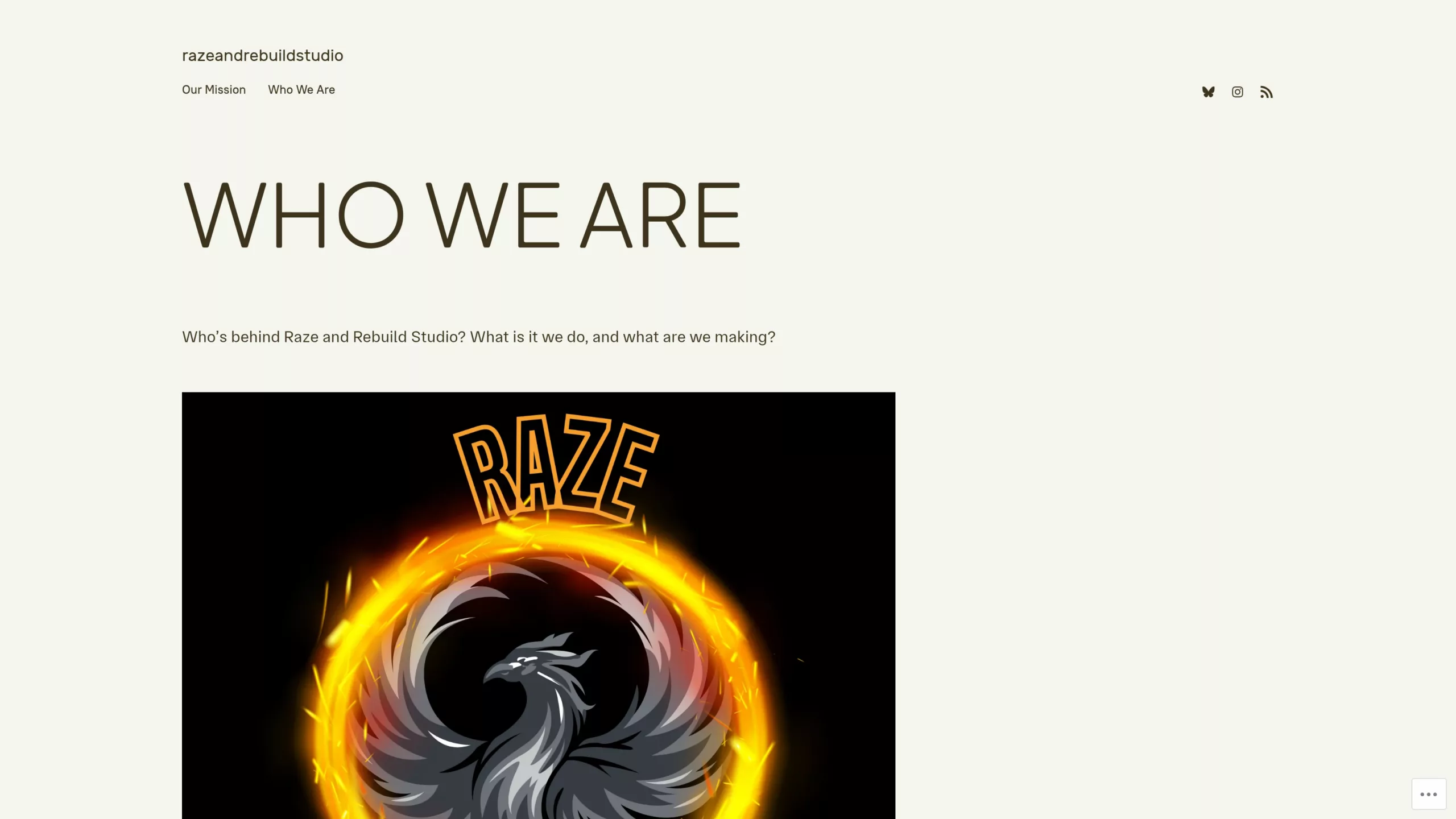
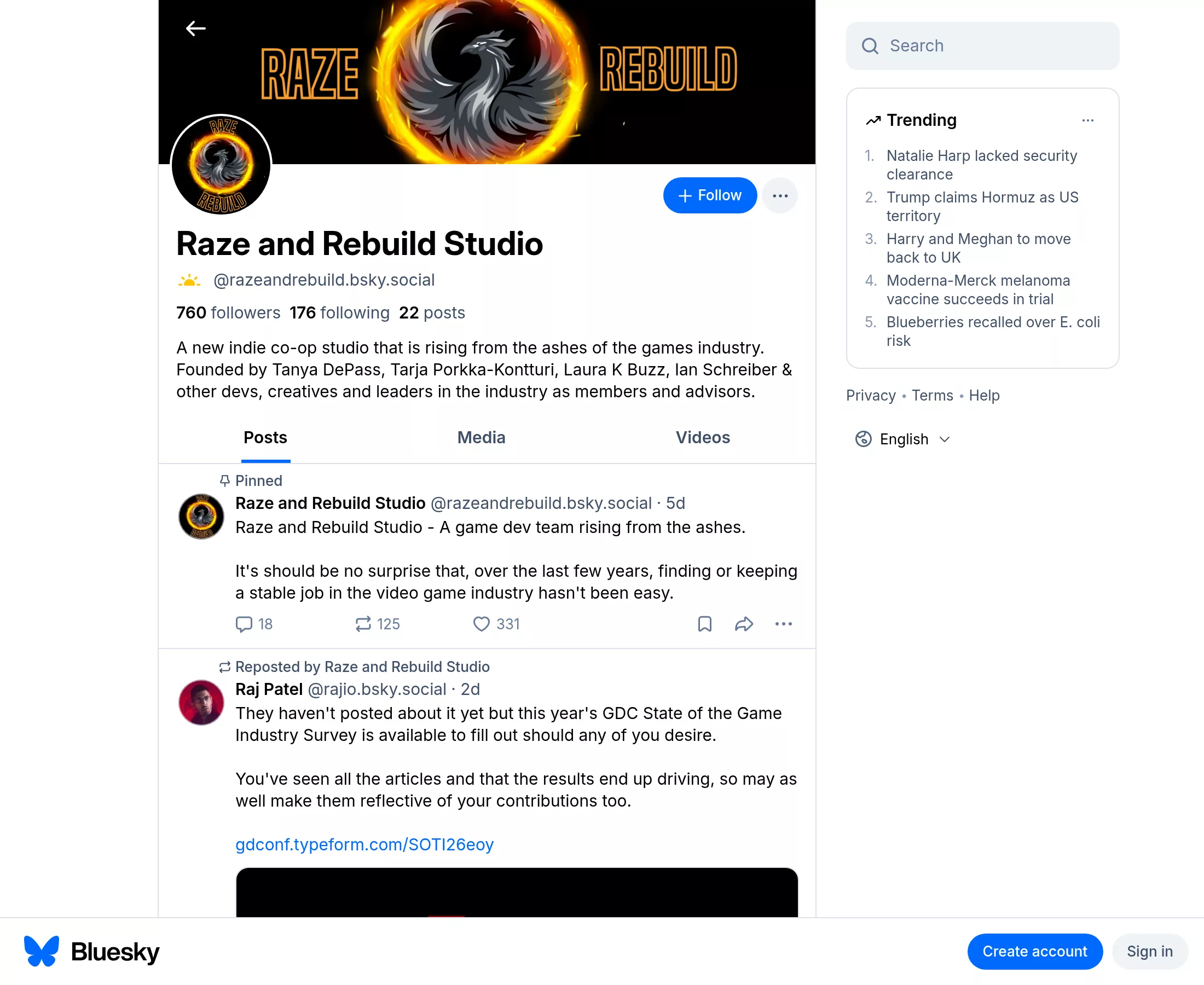
Four developers announced the creation of Raze and Rebuild Studio on August 19, 2026, a cooperative owned by its employees. The studio describes itself as rising from the ashes of the game industry. That line sounds like a slogan, except the ashes in question are dated and counted, and one of the founding members watched their own project die with the studio that employed them.
Four names behind Raze and Rebuild
The studio isn’t starting from nothing. Its four founders are already known in the industry, and they share one thing: each was pushed out, or set aside, by an industry hit again and again by waves of layoffs.
Tanya DePass is the clearest case. As Senior Writer at Monolith Productions, DePass worked on the Wonder Woman adaptation. Warner Bros closed the studio in February 2025, killing the project after more than two years of development. Alongside that work, DePass founded and runs I Need Diverse Games, a Chicago-based nonprofit, has written for Polygon and VICE, and holds the position of Senior Annenberg Civics Media Fellow at USC.
Tarja Porkka-Kontturi brings a different set of skills: award-winning business development, cultural production, community management, and accessibility consulting. Alongside her, Laura Kate Dale, also known as Laura K Buzz, an award-winning games critic, works as an accessibility and representation consultant, and as a sensitivity reader (a reader tasked with spotting harmful representations in a text or a game).
Ian Schreiber rounds out the four. A co-founder of Global Game Jam, the largest time-limited game creation event in the world, he has been designing games since 2000, has shipped eight published titles, and co-authored three reference books on design: Challenges for Game Designers, Breaking into the Game Industry, and Game Balance. He now teaches at the Rochester Institute of Technology.
Raze and Rebuild’s official Bluesky bio notes that other developers, creatives, and industry leaders are joining as members or advisors. Four names, then, but not four people alone.
What does a cooperative actually change for a developer
Take Motion Twin, the Bordeaux studio behind Dead Cells. A worker cooperative (a structure where every employee co-owns the company) since 2004, it runs on one simple rule: equal pay for everyone, and equal weight in every decision. When a game does well, bonuses are calculated the same way for each person. A developer earns as much as an artist. A worker hired yesterday earns as much as a founder. The studio deliberately caps its headcount at fifteen people, because this style of governance becomes unmanageable beyond that.
In Montreal, KO_OP has run on the same principle since 2012, summed up by its own formula: « equal pay and equal say ». Raze and Rebuild picks up that logic, with an unusual addition: the studio says it wants to account for disability-related fluctuations in work capacity when sharing revenue, a criterion neither Motion Twin nor KO_OP states explicitly.
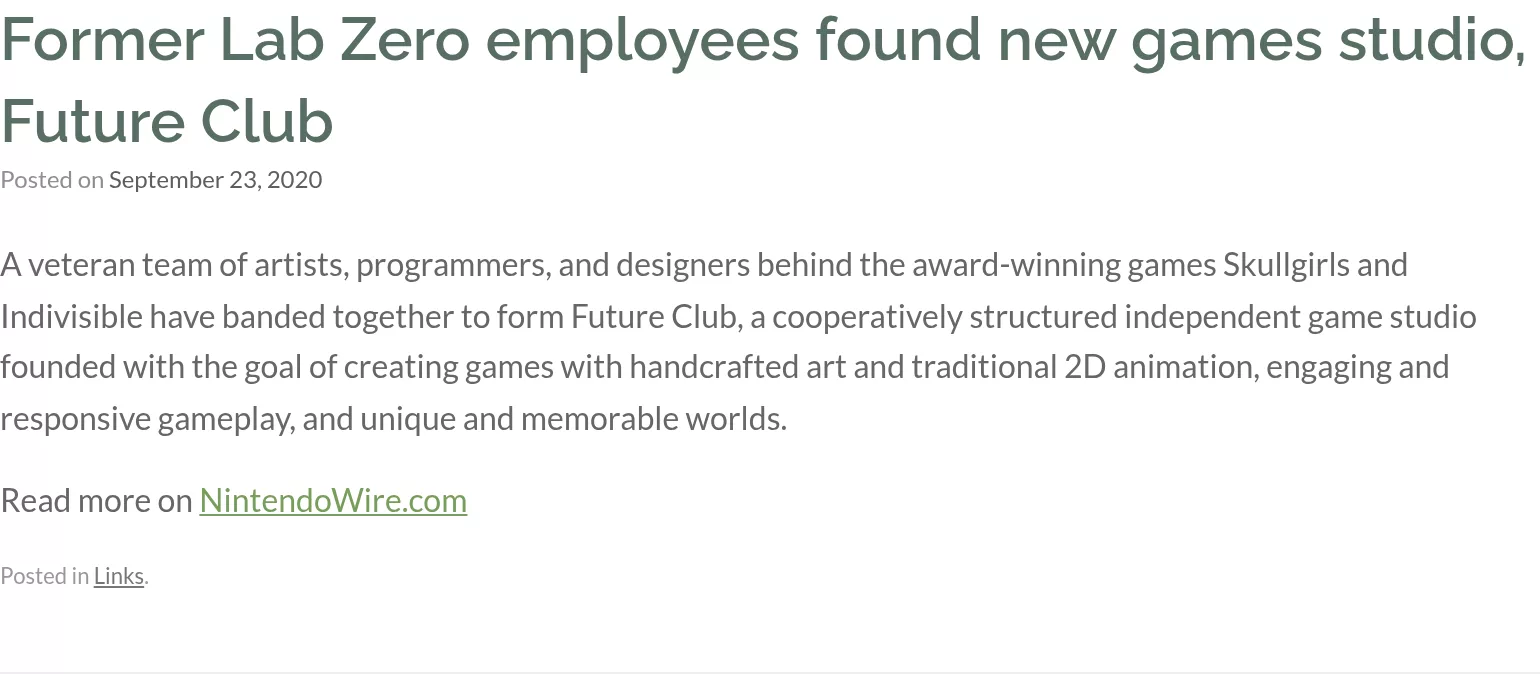
The closest precedent to the Raze and Rebuild case is Future Club, founded in 2020. Its origin was a collapse. Lab Zero Games, the studio behind Skullgirls and Indivisible, fell apart after several waves of accusations against its owner Mike Zaimont, over inappropriate sexual comments and a toxic work environment. The most visible employees left in protest. Everyone else, except Zaimont, was laid off.
Sixteen former employees regrouped to start over, this time under a cooperative structure. Francesca Esquenazi, who became CEO and producer of Future Club, summed up the reasoning: « We wanted to start fresh with a company structure that was worker owned and gave everyone a say in the future of our organization. » The studio also put internal conflict resolution procedures in place from day one, to avoid reliving what had destroyed Lab Zero from within.
Grassroots Economic Organizing, which tracks the American cooperative movement, lists the expected benefits of this model: shared ownership and control of the workplace and its output, greater say in decisions, a more equal share of profits, and a stronger sense of community among coworkers.
One limit remains, and none of these studios hide it. Motion Twin, KO_OP, and Future Club all make modest-budget games with small teams. None has attempted a big-budget project under this model. The cooperative works, but so far, it has never been tested at scale.
Accessibility written into the bylaws, not a charter
At a typical studio, how accessible a job is often depends on an internal charter. A document that management writes, enforces, and can revise at will. Laura Kate Dale, a founding member of Raze and Rebuild and an accessibility consultant, explained to Game Developer on August 19, 2026 why her studio chose a different path: writing these guarantees directly into the bylaws, the legal rules that found the company.
« One of the most important aspects of going for a co-op model is how that intersects with accessibility, not just in what we make but also how we work, » Dale sums up. The nuance is in what follows: « Structuring this so that the unpredictable nature of disability is addressed up front, the ways work ability may ebb and flow, is something we can make foundational in a cooperative structure, and is so rarely supported. » The word she chooses is foundational, built into the very foundations of the structure.
Two of the four founders come directly from this field: Dale, an accessibility and representation consultant, and Tarja Porkka-Kontturi, a consultant in accessibility, business development, and cultural production. Their Bluesky bio adds that the team also includes other developers, creatives, and industry leaders, as members and as advisors.
A policy can be withdrawn at the next change of management. A rule written into a cooperative’s bylaws belongs to the employees themselves, since they are the ones who vote on the rules they follow.
A small first game, and zero outside money
Raze and Rebuild won’t say much about its first game for a long time. Laura Kate Dale summed up the studio’s position: « It’ll be a while before we reveal our first game, but we can say that we are interested in games for impact that touch on real world lived experiences. » The team is deliberately keeping its scope small and building multiple prototypes (disposable test versions used to try out an idea) before deciding which one deserves full development.
The inspiration comes from direct experience. « We have a lot of satirical ideas centered on our background as people struggling to find employment within the industry, and some sillier side ideas focused more on mechanics, » the team said. It’s hard to get more literal than that: Tanya DePass’s Wonder Woman game died with Monolith, and the studio is now writing a satire of that same struggle.
Funding follows the same logic. The studio launched with no outside investment at all, and is developing its first project while pursuing possible grants (financial support given without taking a stake in the company) and talking with partners. With no investor to answer to, nobody can impose a schedule or dictate content. Nothing guarantees the studio has the means to go the distance, either. A small team with no outside capital moves slowly. It also moves without anyone else deciding for it.
The backdrop: 45,000 jobs lost in three years
2024 remains one of the worst years in recent video game history. 14,600 layoffs were recorded over the twelve months, with a peak in the first quarter: 8,619 jobs cut in three months, the highest quarterly figure ever recorded in the sector. Our investigation into the human crisis running through the industry looked at what these numbers cost the people behind them.
Between 2022 and mid-2025, independent trackers (community-run tools that record every wave of announcements, studio by studio) put the total at roughly 45,000 jobs lost. The trend hasn’t stopped in 2026. 9,781 layoffs were confirmed as of July 26, and the ASGC Games Industry Layoffs Tracker, an observatory that centralizes these announcements across the sector, now projects 14,259 people by the end of the year, 78% more than its own January estimate.
Entire studios have disappeared in this wave. Netflix shut down Night School Studio six weeks after its game launched. Supermassive Games, known for Until Dawn and The Quarry, opened a process on August 11, 2026 targeting up to 75 jobs. That’s its third round in two and a half years, after roughly 90 layoffs in February 2024 and 35 in July 2025. The studio had 350 employees in 2023, and it will keep barely half of that. Elsewhere, EA has to cut 700 million dollars to cover the interest on its buyout.
These numbers likely understate the reality. Trackers struggle to capture contract workers, freelancers (independent workers hired for a specific project), and outside vendors, who get cut first and without any announcement.
This is the landscape Raze and Rebuild was announced into. Four people don’t fill a hole of 45,000 layoffs, and the announcement doesn’t claim otherwise. The studio presents itself as one more option, in a sector that has cut 9,781 jobs in the first seven months of 2026.







0 Commentaires
Aucun commentaire pour le moment. Soyez le premier à commenter !