
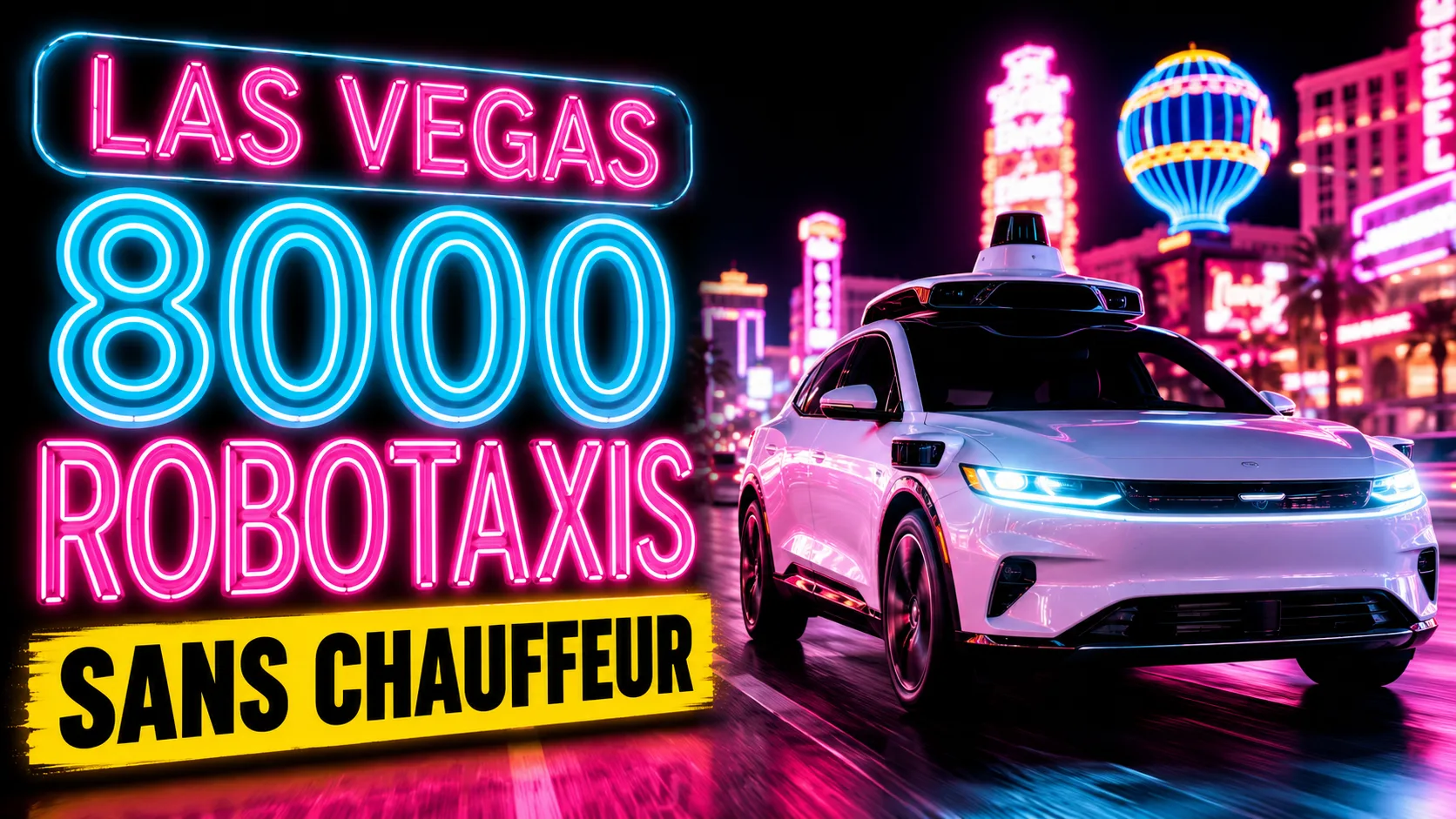
On August 20, 2026, the Nevada Transportation Authority (the regulator that issues commercial transport permits in the state) unanimously approved three separate applications filed in recent months. Tesla, Uber, and Waymo can now offer paid robotaxi rides in Clark County (the administrative area that includes Las Vegas and its surroundings). The number that circulated right after the announcement is spectacular: up to 8,000 robotaxis could be driving on the county’s roads over the next twelve months.
This number deserves a closer look before being repeated as is. It adds up three separate caps, granted to three companies with no contractual obligation to reach them. A robotaxi (a car that drives without a human behind the wheel and charges for the ride like a regular taxi) is still a service that has to be built vehicle by vehicle. Between the permit issued on paper and the fleet actually visible on the streets, the gap can be considerable, and the previous month’s example makes that clear.
Exactly one month earlier, the same authority had already allowed Tesla to run driverless cars in Las Vegas. But with a cap set at just ten vehicles, for an initial request that covered 5,000. That contrast shows how far there is still to go before Las Vegas actually becomes the city of the 8,000 robotaxis promised on paper.
8,000 robotaxis on paper
The three applications approved on August 20 each set a different cap. Tesla can operate up to 5,000 vehicles, by far the largest contingent of the three. Waymo, the Alphabet subsidiary already active in several American cities, is limited to 1,000 vehicles in Clark County. Uber also gets a cap of 1,000 units, which it plans to fill not with its own fleet but through two industry partnerships: Motional, the joint venture founded with Hyundai, and Zoox, the rival service acquired by Amazon.
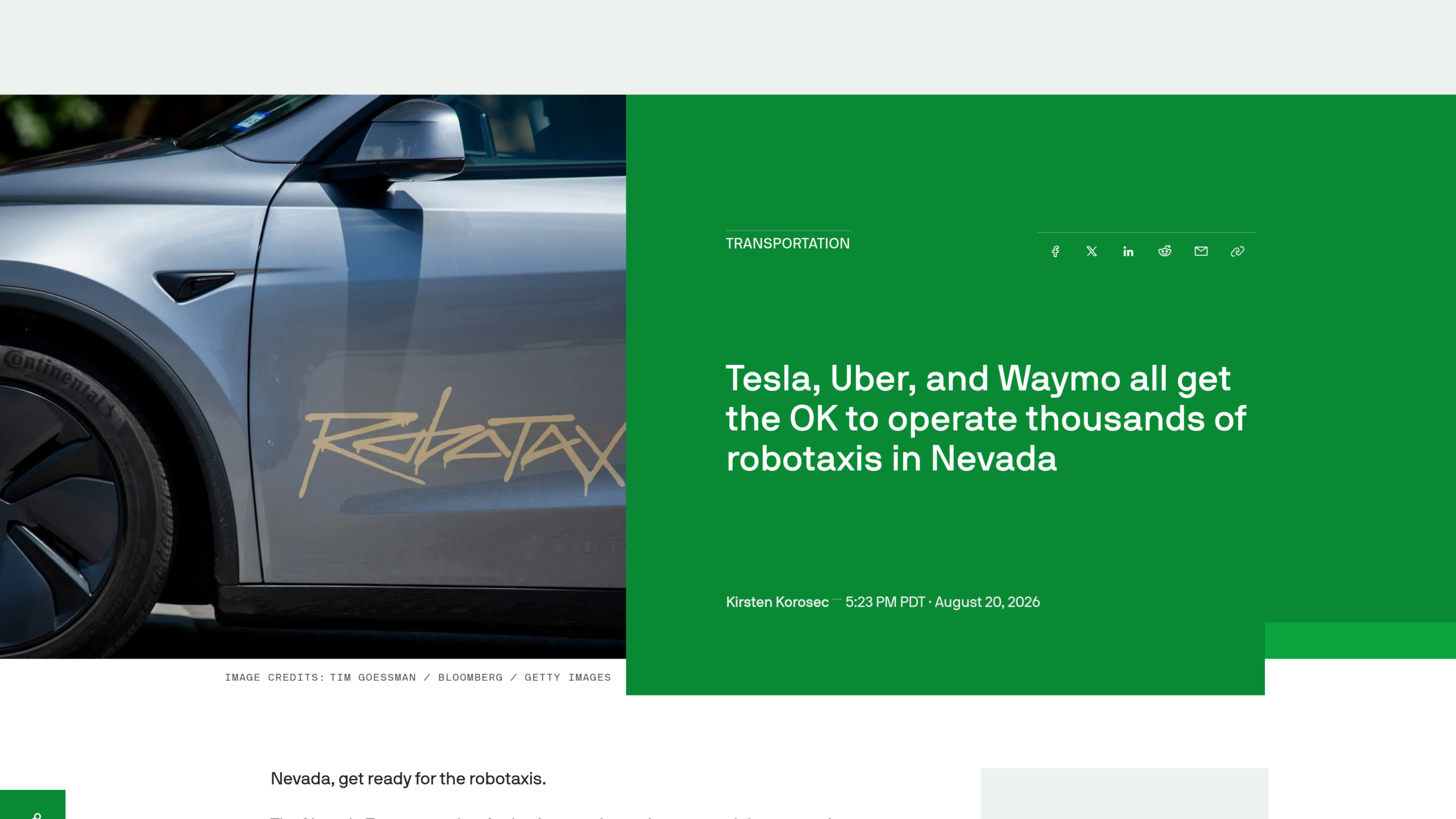
Adding up these three caps gives the figure of 8,000 robotaxis, widely picked up by the American press as soon as the Nevada authority made its announcement. It is technically accurate. It describes a theoretical maximum capacity over twelve months, though, not a target the three companies committed to reaching before the regulator.
| Company | Authorized vehicle cap |
|---|---|
| Tesla | up to 5,000 |
| Waymo | up to 1,000 |
| Uber (via Motional and Zoox) | up to 1,000 |
Funding a fleet of this size requires investment comparable to what is currently flowing into artificial intelligence infrastructure at large, a sector where the capital involved keeps changing scale almost every quarter. Building, insuring, and running several thousand autonomous vehicles is expensive, long before a single passenger ever climbs aboard.
A cap, not a promise
Before the Nevada authority, Tesla’s Cybercab chief engineer chose candor over commercial enthusiasm. « The 5,000 has always been a ceiling for us » he said at the hearing, adding that he does not expect Tesla to get 5,000 robotaxis on the road within a year. The number making headlines is an authorized maximum, set out of regulatory caution, not a deployment roadmap.
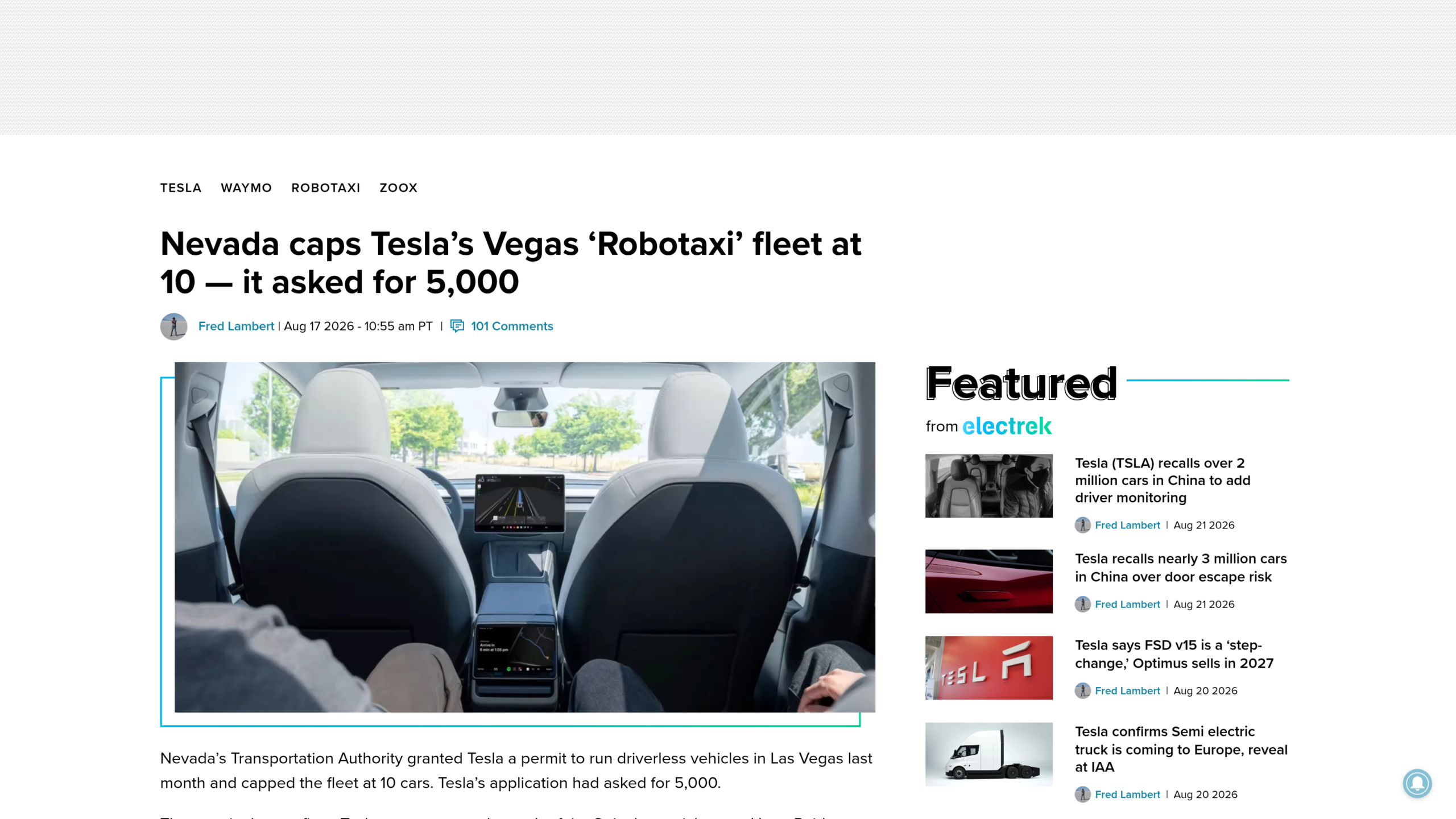
That caution matches the company’s very recent history in the state. The previous month, the same authority had granted Tesla its first-ever permit for driverless robotaxis in Las Vegas, capping the fleet at ten cars even though the initial request covered 5,000 vehicles. A ratio of 1 to 500 between what was granted and what was requested, since corrected by the new decision.
The timeline also reflects Tesla’s international regulatory expansion strategy, pursued on several fronts at once. Its supervised driving software just secured a first-of-its-kind green light in the Netherlands, a first for this system in Europe, at the very moment the company is negotiating the expansion of its US permits.
Ten cars, a month earlier
This first permit, granted in July, imposed two other concrete restrictions. Vehicle speed was capped at 45 miles per hour (about 72 km/h), a low limit for a city where several boulevards allow faster speeds. Trips to Harry Reid International Airport were also banned, ruling out one of the routes most requested by tourists.
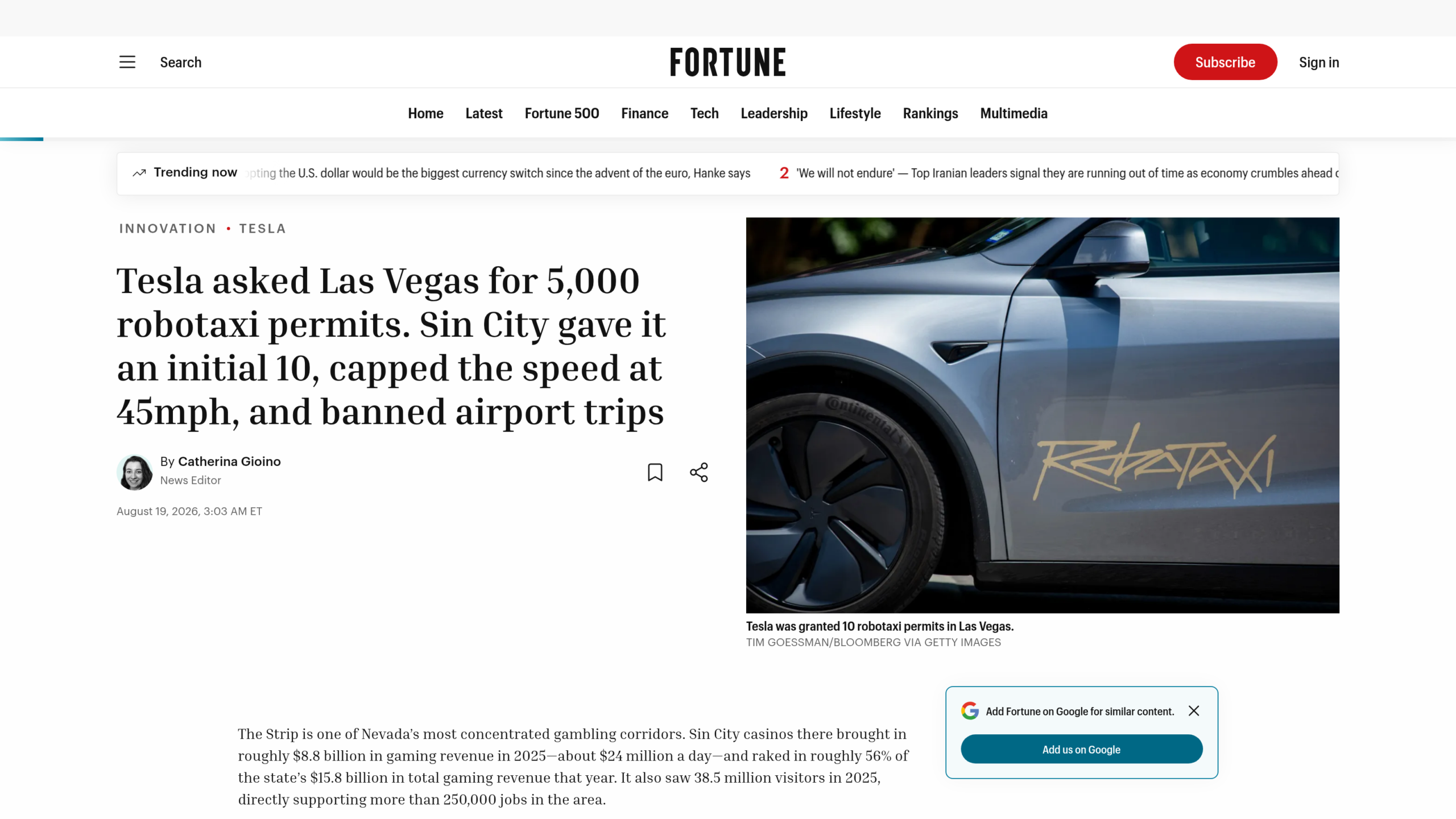
The new permit lifts some of these constraints by raising the vehicle cap to 5,000. It stays silent, however, on the top speed and the airport, two points the Nevada authority will likely still have to settle, month after month, as Tesla adds vehicles to the county’s roads.
A self-driving car makes decisions on its own while moving, without waiting for a reply from a remote server. This need for onboard computing explains why NVIDIA now sells machines like the $2,500 RTX Spark, built to run a model locally rather than in a data center.
Why Las Vegas attracts robotaxis
Las Vegas brings together several advantages for this kind of rollout. Downtown and the Strip follow a grid layout, simpler to map and model than a network of winding streets. The desert climate also limits the rain or snow episodes that disrupt autonomous vehicle sensors. Finally, the city draws a dense, steady stream of tourists, with strong demand for short trips between hotels, casinos, and convention centers, all year round.
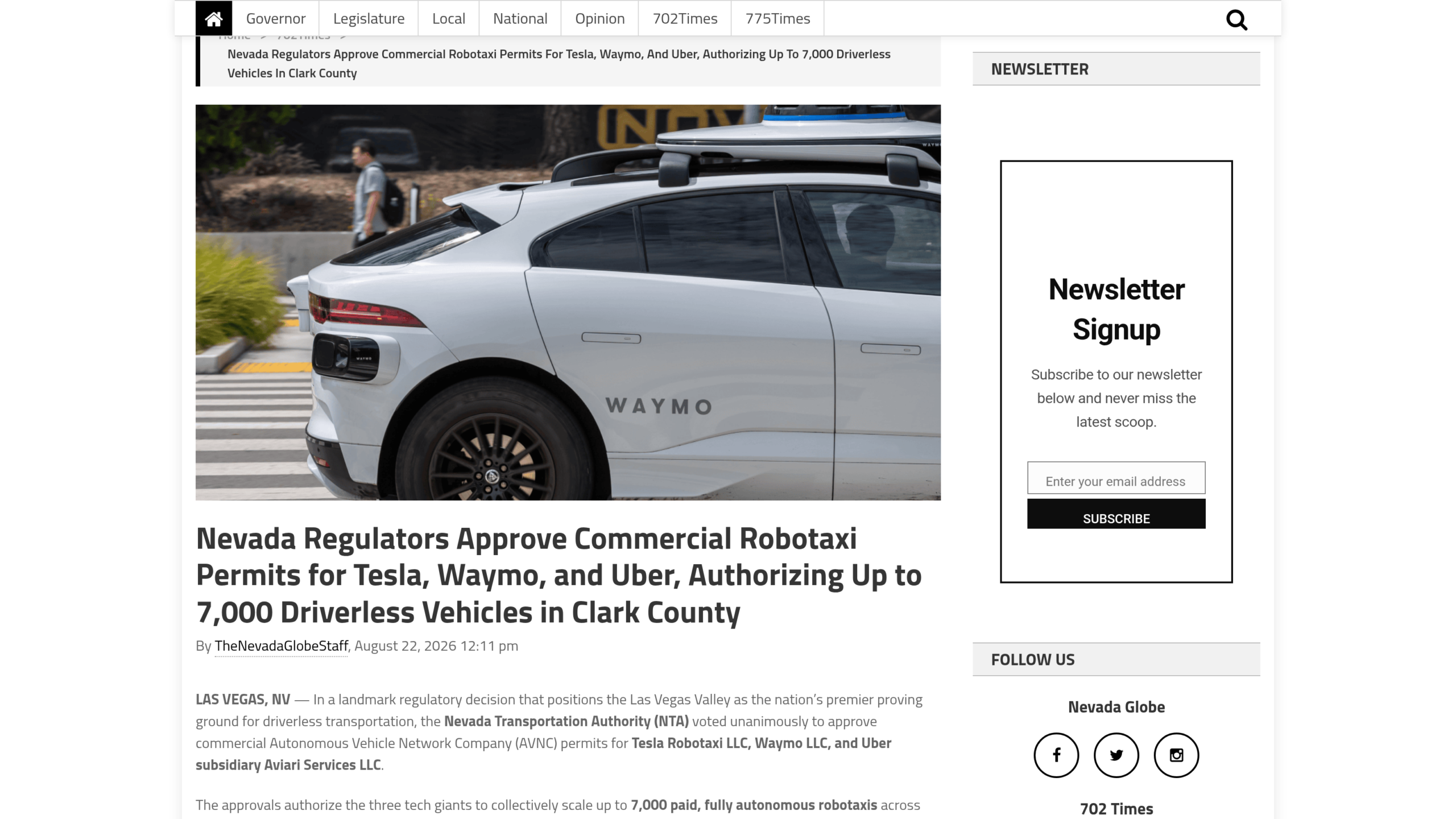
The approval is not unanimously welcomed outside the authority’s hearing room. Taxi and ride-hailing groups opposed it, citing local market saturation and the road congestion that thousands of additional vehicles, autonomous or not, could cause on a network already busy at peak hours.
Tech companies increasingly have to deal with demanding local regulators, on the roads as elsewhere. Apple experienced this in China, where it had to partner with Alibaba to run its own artificial intelligence under strict local regulatory constraints. Nevada, in its own way, is now imposing the same kind of discipline on self-driving companies.
Still, the figure of 8,000 robotaxis will remain, for now, a theoretical cap. Twelve months will barely be enough to find out how many of these vehicles Tesla, Uber, and Waymo actually put on the roads of Las Vegas, and how quickly the Nevada authority agrees to lift its own restrictions.









0 Commentaires
Aucun commentaire pour le moment. Soyez le premier à commenter !