

Fifteen hours. That’s what will be left of cloud gaming per month on the most expensive Game Pass tier, starting in November. Microsoft announced it on September 3, specifying that the change would only affect 4% of its subscribers. That figure, meant to reassure, has become the argument everyone throws back at it. Here’s what Xbox Cloud is becoming, what the hour ends up costing, and why Microsoft’s math leaves something to be desired.
Three tiers, three caps
Launching a session on Xbox Cloud (cloud gaming, meaning a game running on Microsoft’s servers and streamed as video to your screen, with no installation) will soon come with a time limit. Microsoft detailed the change in the official announcement on Xbox Wire, published on September 3, 2026 under the title « Upcoming Changes to XBOX Cloud Gaming », signed by Team Xbox.
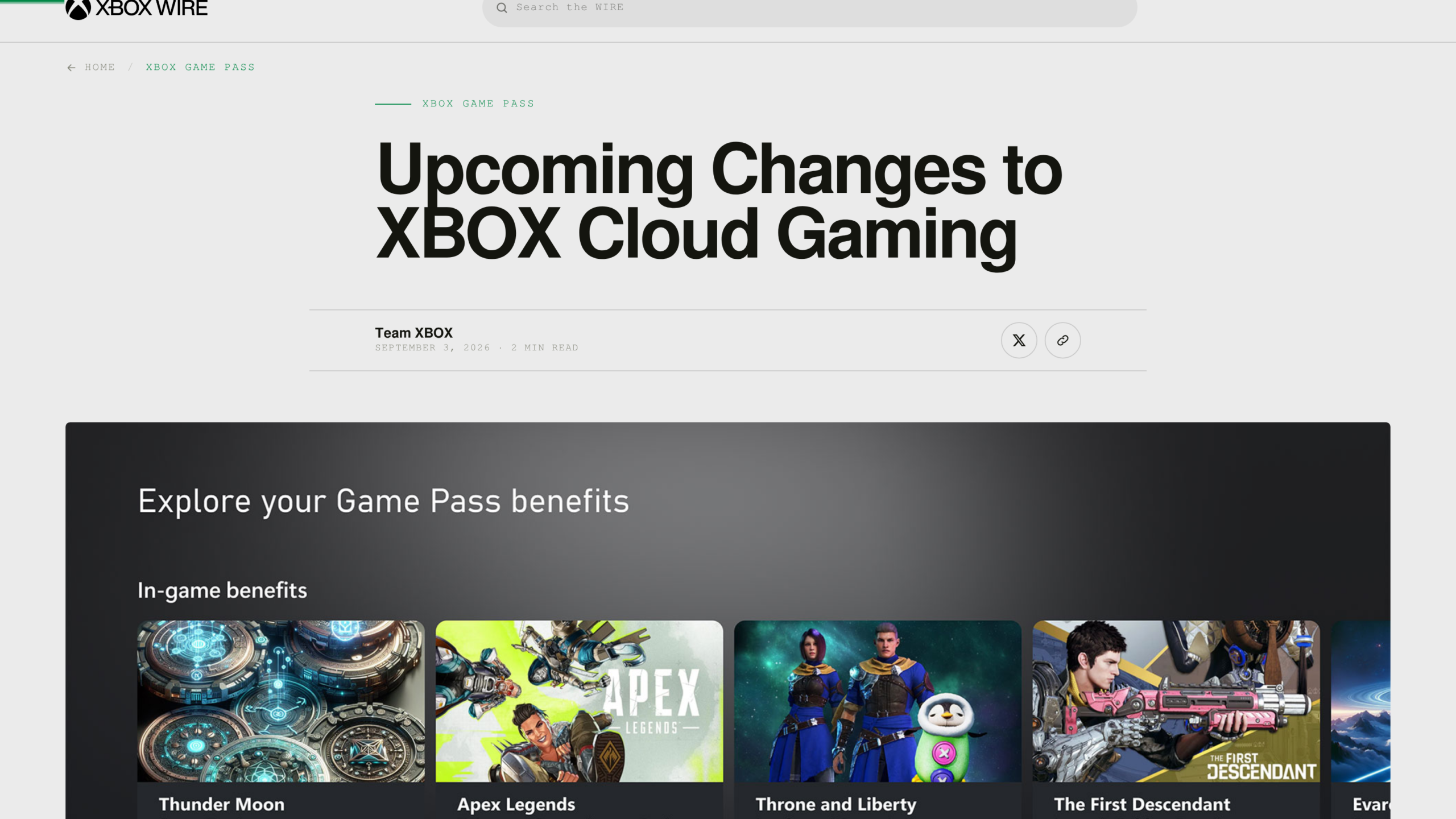
Today, cloud gaming included with Game Pass has no limit. Starting in November 2026, each tier will have its own monthly hour counter. Here’s the announced breakdown.
| Tier | Cloud gaming hours per month |
|---|---|
| Game Pass Ultimate | 15 hours |
| Game Pass Premium | 10 hours |
| Game Pass Essential | 5 hours |
Once that quota is used up, it will still be possible to keep playing by buying extra time on the Xbox Store. Microsoft has not announced any pricing for that scenario. The official wording is clear on this point: « We’ll share pricing and further details before the changes take effect ».
One thing stays the same. Games you already own can still be streamed via the cloud without a Game Pass subscription, cap or no cap. Microsoft also points out that this remote streaming keeps a particular value in markets where consoles are less available.
Thirty minutes a day, on the most expensive tier
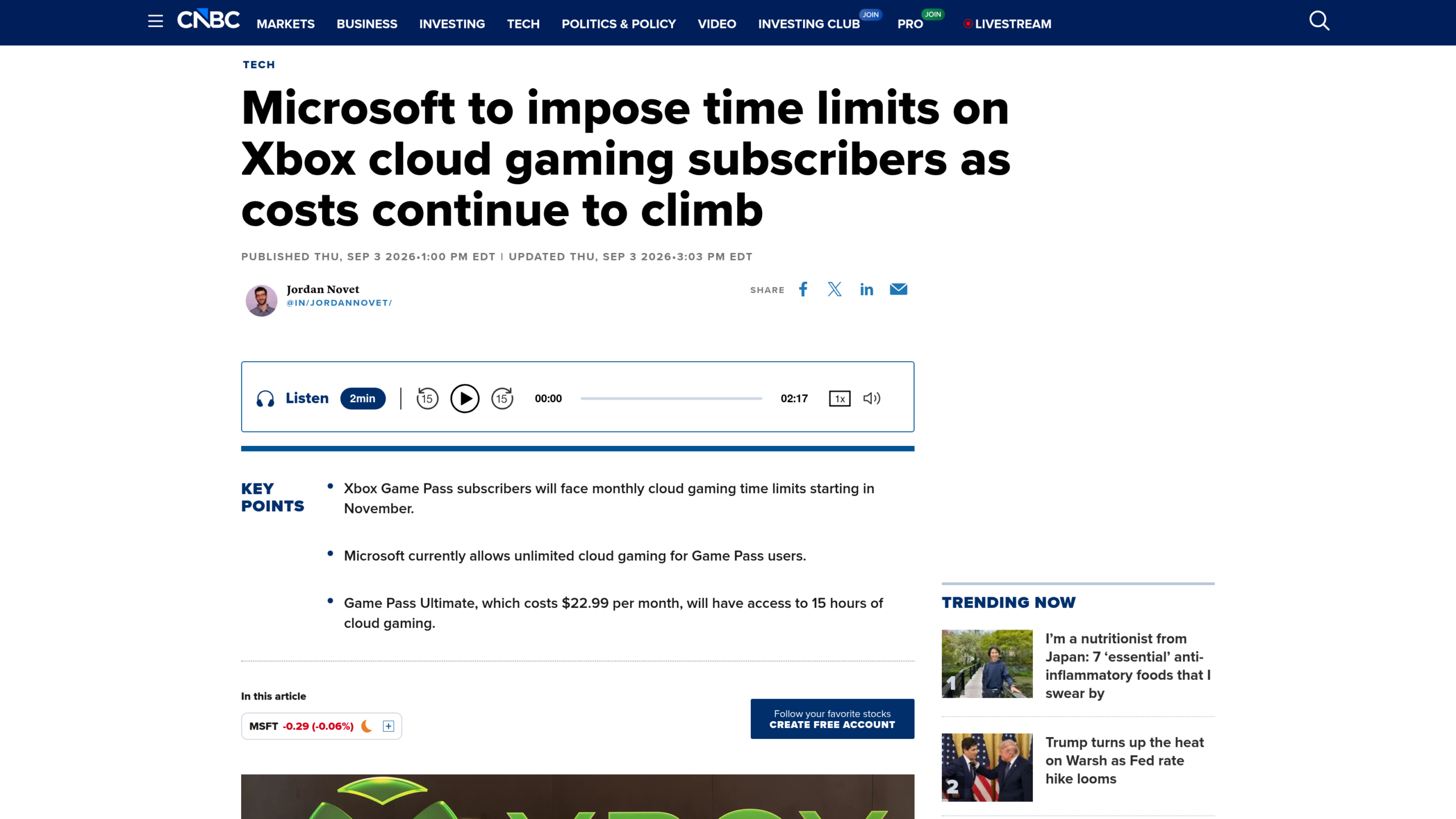
The figure concerns the priciest subscription in the catalog. CNBC, in an article by Jordan Novet published on September 3, 2026, states that Game Pass Ultimate costs $22.99 a month in the United States. This is the tier that gets the 15 monthly hours of cloud gaming announced by Microsoft.
Spread over a 30-day month, those 15 hours work out to half an hour of cloud gaming a day.
CNBC notes that Microsoft currently allows unlimited cloud gaming for Game Pass subscribers. The 15-hour cap therefore marks a clear step back from the unlimited access currently in place.
Dividing $22.99 by 15 gives a rough figure: about $1.53 per hour of cloud gaming included in the subscription. This calculation isn’t an official price, since Game Pass Ultimate covers far more than just Xbox Cloud. It gives an idea of what Microsoft now values in its offering.
This $22.99 price is US-only. No source we found gives the European equivalent for this specific announcement. Our site had covered the 50% price hike Ultimate subscribers took in October 2025, which brought the European price to €26.99. That increase involved a different currency and a different date: it shouldn’t be confused with the price given by CNBC.
The 4% argument, and how it backfired
Microsoft didn’t leave the change unjustified. The company gives a precise figure: « We expect this upcoming change to impact 4% of Game Pass subscribers. » A figure meant to reassure. Nearly all players, the message implies, will never hit this cap.
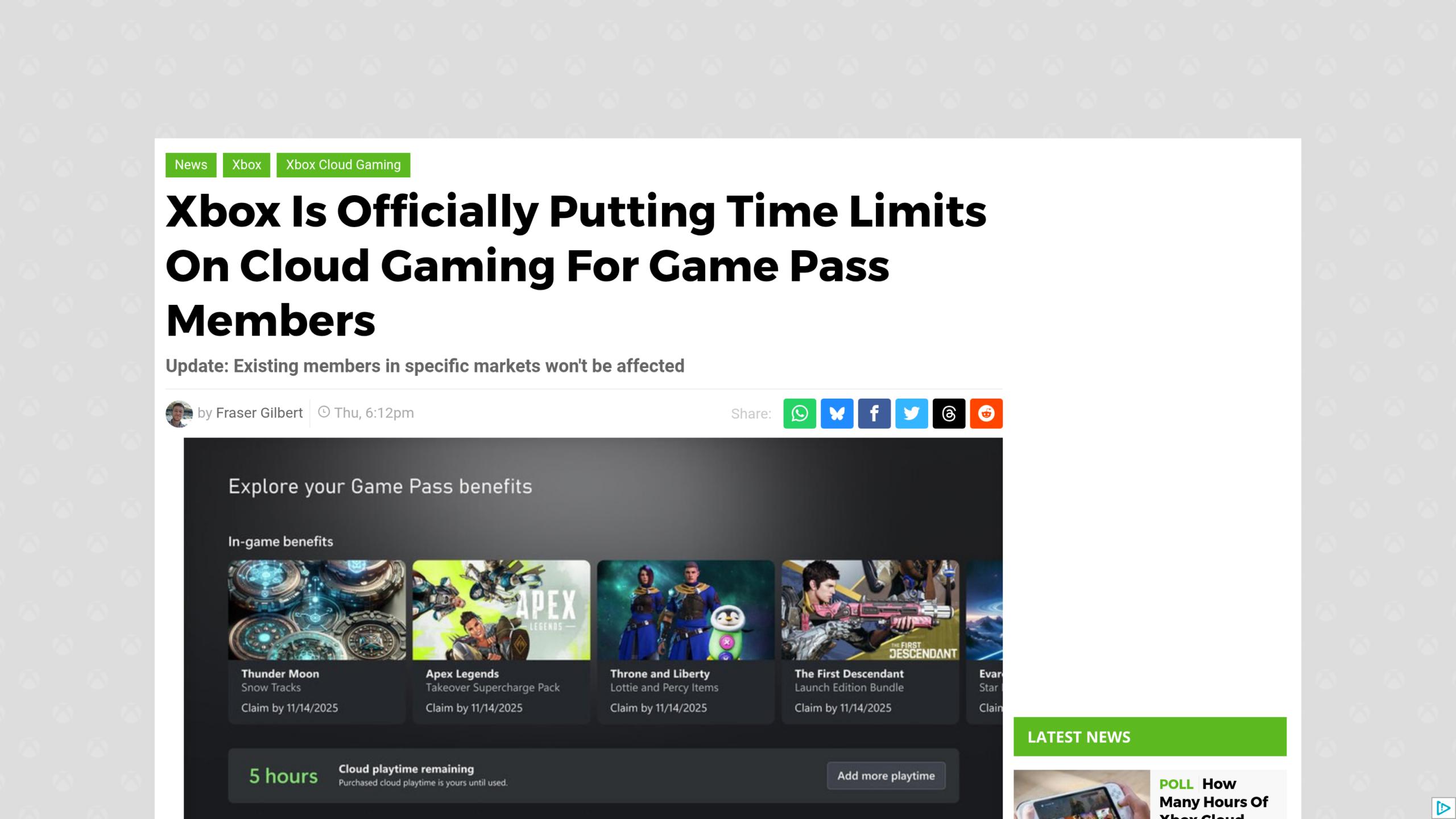
This figure backfired on its own message. Kotaku made it the very headline of its article: « Game Pass Will Start Capping The Number Of Hours You Can Use Streaming Each Month But Says Not To Worry Because This Will Only Affect 4 Percent Of Players. » Pure Xbox went with a blunter line: « Xbox Is Officially Putting Time Limits On Cloud Gaming For Game Pass Members. » The reaction was negative, including within the Xbox community itself.
The problem lies in what this figure doesn’t say. Microsoft justifies the change by rising costs: « the cost of providing cloud gaming grows as more people use it and play for longer. » Two readings open up from there, and nothing in Microsoft’s communication lets you pick between them.
First reading: if only 4% of subscribers exceed the new caps, the savings involved stay marginal. Why impose a restriction that affects so few people, at the risk of irritating the rest of the subscriber base, who are only now discovering that a limit even exists?
Second reading: that 4% could account for most of the load on the servers. A small group of heavy users can easily consume a disproportionate share of computing capacity and bandwidth. In that case, the measure targets precisely those who cost the most, and the percentage of subscribers affected says nothing about the volume of hours actually at stake.
Microsoft provides no consumption figures that would settle the question. No average session length for that 4%, no share of total traffic they represent, no cost per hour of streaming. The 4% remains an isolated statistic, put forward to minimize the perceived impact without shedding any light on the economics it’s supposed to justify.
What Xbox Cloud promised, and what it’s becoming
For years, Microsoft sold cloud gaming as a simple promise. Play anywhere, on any screen, no console needed. That was the core pitch of Xbox Cloud Gaming at launch.
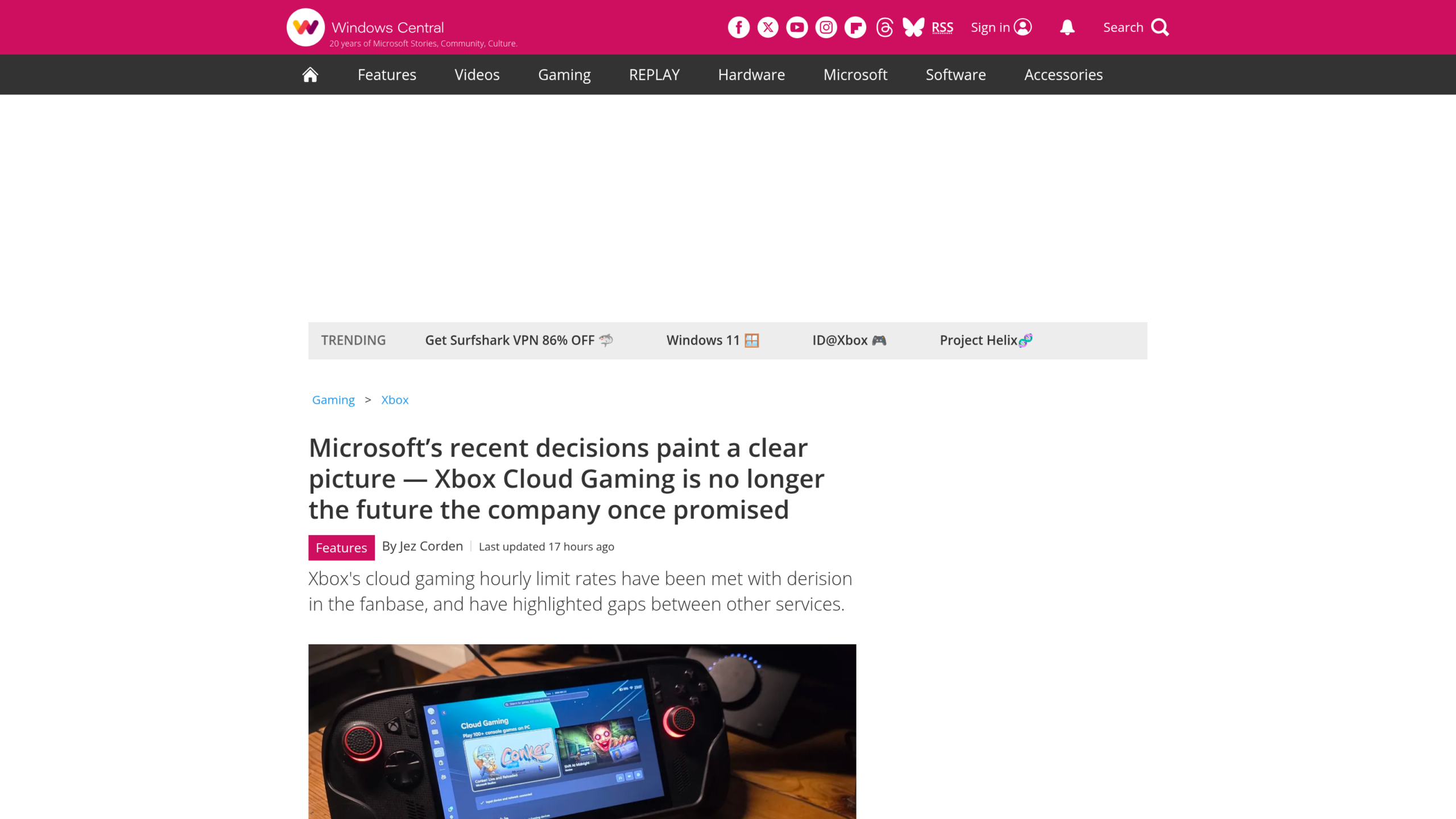
Windows Central argues that Microsoft’s recent decisions paint a clear picture. The outlet’s headline is blunt: « Microsoft’s recent decisions paint a clear picture, Xbox Cloud Gaming is no longer the future the company once promised. »
The monthly caps take effect in November 2026. Pricing for extra hours will be announced before then. Microsoft, for its part, maintains that cloud streaming keeps its value, especially where consoles remain scarce. Games already owned will continue to be streamable without a subscription — that part hasn’t changed.
This move doesn’t stand alone. We’ve already shown how Sony and Xbox redefined what you actually own through their digital catalogs. An hour cap on a service that once promised unlimited access follows the same slope. These announcements are piling up just as we’ve also been documenting why the industry is losing players’ trust.
Three separate signals, published at different times, point in the same direction. Each looks modest on its own. The pattern, though, reads itself.








0 Commentaires
Aucun commentaire pour le moment. Soyez le premier à commenter !