
Two stories break on September 1, 2026, just hours apart. On one side, Sony’s response to a lawsuit from California players, who accuse the PlayStation Store of suggesting a purchase rather than a license. On the other, an Xbox feature that turns a physical disc into a digital license tied to the account. Two companies, two unrelated stories, and two opposite directions on the same day.
We’ve been following this story since the boycott triggered by the end of PlayStation disc production, and since Sony had to clarify its terms of use amid the controversy. The question of digital ownership is not new on this site. On September 1, it takes a legal turn on one side, a commercial one on the other.
What Sony Tells the Judge
Sony announced it would stop manufacturing PlayStation discs starting in January 2028. That decision triggered several lawsuits, one of which, filed in June 2026 in California, directly targets Sony Interactive Entertainment. Four players are behind the lawsuit, two of whom are named in the filing: Edward Heycock and Jason Mendoza.
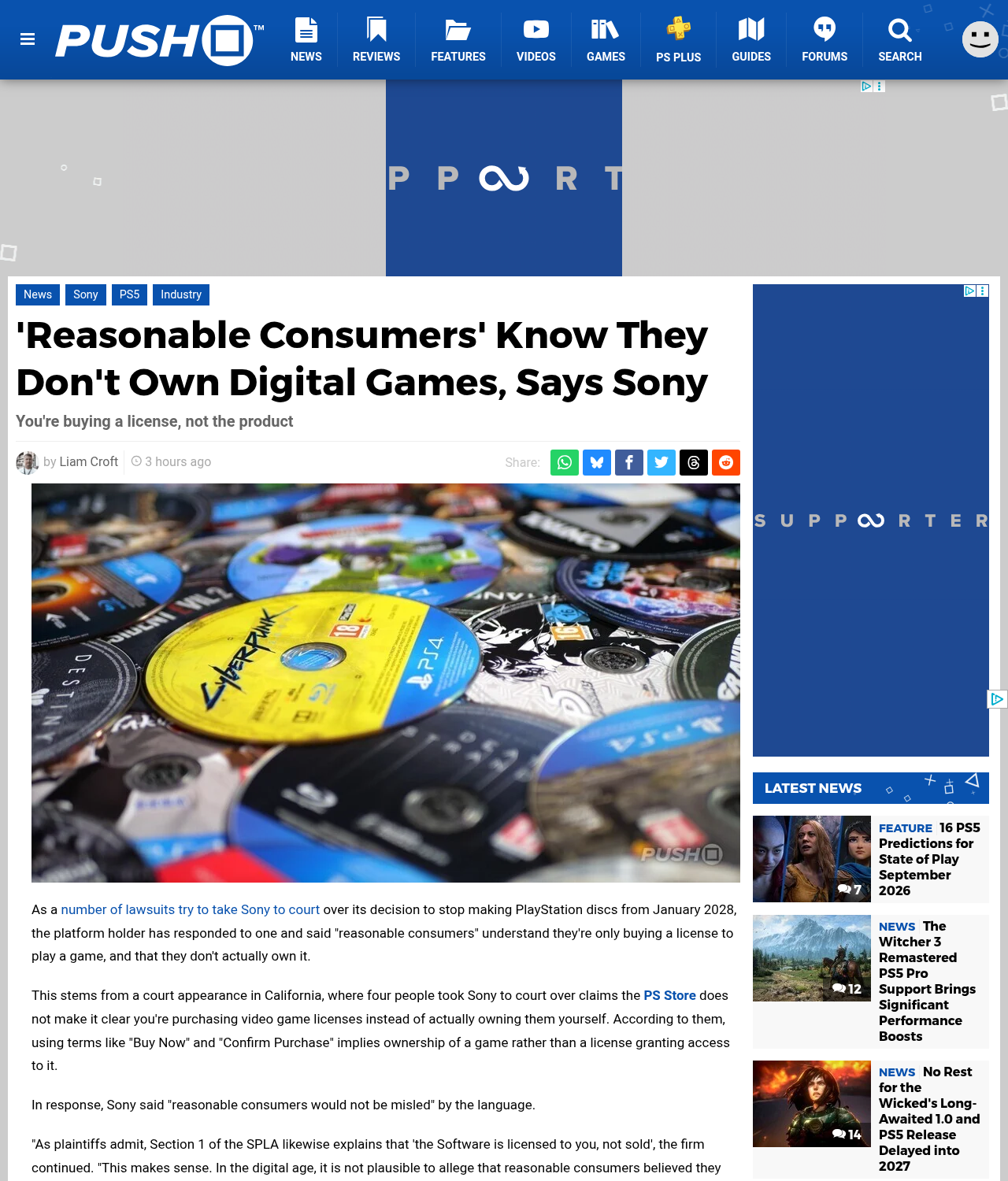
Their complaint centers on the PlayStation Store buttons. « Buy Now » and « Confirm Purchase » are phrases that, according to the plaintiffs, suggest ownership when the player only acquires an access license. The problem is framed in very concrete terms: a button says one thing, a contract says another.
Sony detailed its response in a legal brief reviewed by Push Square. The company writes that « reasonable consumers would not be misled. » It relies on section 1 of its software license agreement, the SPLA, which states that « the Software is licensed to you, not sold. »
The same filing adds: « In the digital age, it is not plausible to allege that reasonable consumers believed they were obtaining ‘ownership’ of a digital game. » On this basis, the company is asking the court to dismiss the lawsuit. One useful clarification: this is a legal filing, not a press release. The court has not ruled.
The Same Day, Xbox Does the Opposite
Microsoft is rolling out a « disc-to-digital » feature to Xbox Insider members that same September 1, reports Video Games Chronicle in a piece bylined by Chris Scullion. The principle: « The feature lets players insert a compatible Xbox One or Xbox Series X disc and receive a digital licence for it. »
Xbox still sets a limit on the rollout: « while it’s starting with thousands of titles, not every disc results in a digital licence at this point. » Two catalogs are missing. Ubisoft and Square Enix games aren’t compatible yet, since each publisher has to opt in before its discs can be converted.
Delisted Games, the Detail That Says It All
It’s a discovery made by testers, not an official announcement, that shows the real scope of the feature. Xbox Insider program members noticed that games removed from the digital store still worked when the disc was inserted. Five titles were identified: Deadpool, F1 2021, Minecraft: Story Mode, Rock Band 4, and Titanfall. None of them has been purchasable digitally for a long time.

Video Games Chronicle sums up the situation in one line: « delisted games are no longer present on the Xbox store, putting in the disc will still result in a digital licence being granted. » The store no longer sells the game, but the disc still serves as proof of purchase.
Until now, a delisted game stayed locked to its physical copy. Impossible to buy it again digitally, impossible to find it anywhere else legally. If the console’s disc drive broke, or the next generation dropped one, the game became unplayable, even for someone who had owned the disc for ten years. The feature doesn’t give the game back to everyone. It hands a digital license to whoever already owns the physical copy, years after the store stopped offering it.
Let’s stay grounded about what this is actually worth. A license is still a license. It depends on Microsoft’s servers, on their being kept running over time, and on a company that could one day shut the service down. None of that makes the player an owner in the full sense of the word.
Two Answers to the Same Question
Sony and Xbox each answer, in their own way, the same question: what a player actually owns when buying a game. Sony does it in front of a judge. Xbox does it with an update. The difference says a lot about two ways of approaching the same shift in the industry.
Sony’s defense plays out on legal ground. The terms of use always said as much, a reasonable consumer couldn’t believe they were acquiring ownership of a game in the digital age, and the argument likely holds up legally. The problem lies elsewhere. A legal argument that’s right on the law can still leave a bitter taste, because it explains to the customer why they’re wrong to feel cheated, without offering anything in return.
Xbox answers on different ground: usage. The disc-to-digital feature changes nothing about a game’s legal status, and the player still only holds a license. But it rescues a disc, including one that’s become impossible to buy again, and it does so at the exact moment its direct rival is closing its own physical door in 2028. Between the two, the difference has less to do with the law than with the consideration shown to the player.
Let’s not credit Microsoft with disinterested goodwill. Making its platform more welcoming just as its main rival closes its own is also a way of winning players over. The business calculation and the gesture toward the user coexist just fine. Our article on player trust in the industry looks more broadly at the climate of distrust settling in on both sides.
The disc itself doesn’t survive this story. It’s disappearing at Sony, and it will eventually disappear everywhere else. What’s at stake now is what gets done with it before that. On one side, a legal argument. On the other, a door left open.






0 Commentaires
Aucun commentaire pour le moment. Soyez le premier à commenter !