
Etched, an AI chip start-up based in San Jose, California, has just doubled its valuation in less than a month. On August 18, 2026, the company closed a $700 million funding round led by Jane Street, a trading firm that now values Etched at $21 billion, the total figure assigned to the company based on the price paid by the new investors. A month earlier, in July, the same funding round topped out at $10.3 billion. In between, the Etched chip shipped its very first rack.
The climb is dizzying. $5 billion in December 2025, $10.3 billion in July 2026, $21 billion in August 2026. That’s a 4x multiple in eight months. The doubling alone happened in 26 days. Few hardware start-ups move at that pace, even in a sector entirely driven by artificial intelligence.
The Etched chip behind these numbers is called Sohu. It’s an ASIC, a chip etched for a single task, unlike a general-purpose graphics processor that can do anything. Sohu only runs one type of AI model. The bet is simple to state and risky to hold.
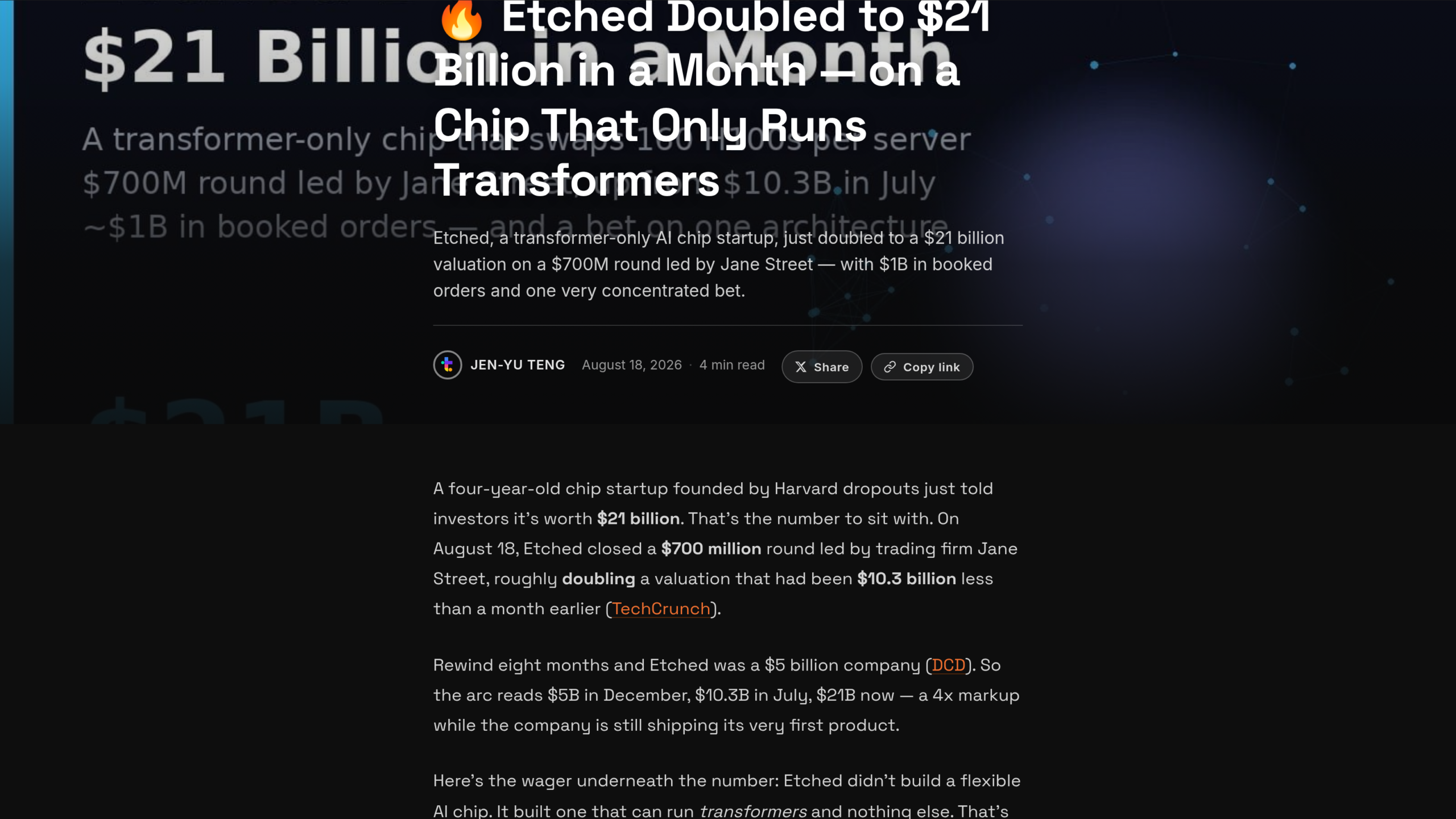
The Etched chip doubles in value in 26 days
Etched is four years old. Its founders left Harvard to start it. The company came out of stealth on June 30, 2026, with $800 million already raised, a working Sohu chip, and more than $1 billion in signed customer contracts. Seven weeks later, its valuation had doubled.
July’s funding round brought together familiar names from tech venture capital. August’s round is a different beast. Jane Street isn’t a venture fund, it’s a quantitative trading firm, used to betting on financial markets rather than on growth-stage start-ups.
The first rack of the Etched chip was delivered shortly before the August round. That timing raises the most questions. The market handed Etched a $21 billion valuation with no independent third-party testing, no published revenue, and its very first rack having only just landed at a customer.
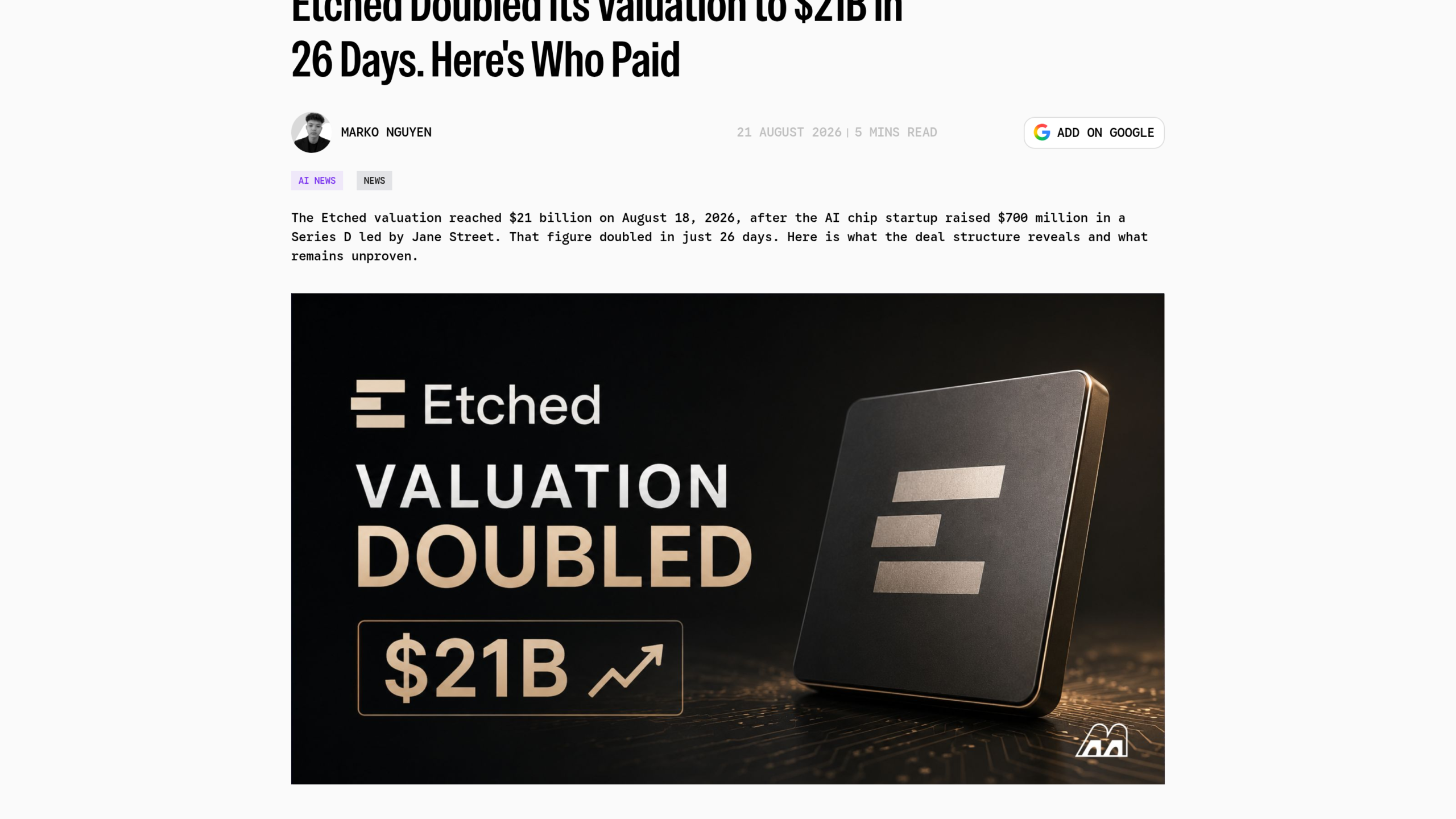
This isn’t an isolated case. Elsewhere in the sector, billions in AI infrastructure are changing hands at a similarly wild pace, driven by a component shortage and demand that far outstrips available supply.
Sohu, a chip that only knows how to do one thing
A general-purpose graphics processor, like the ones found in a gaming PC, can run a video game just as well as it renders 3D graphics, a scientific simulation, or an AI model. Sohu does one thing. It runs transformers, the architecture behind ChatGPT, Claude, Gemini and nearly every large language model in use today.
The Etched chip is fabricated by TSMC on a 4 nanometer process, the level of precision that determines how densely transistors pack onto the chip. Etched claims a single Sohu server replaces 160 NVIDIA H100 graphics processors for inference, the computation an already-trained model performs to answer a request, as opposed to the training that builds it.
Training a model consumes most of the compute power for several weeks, just once. Inference, on the other hand, runs continuously, on every request a user sends. That second market is what Sohu is aiming at, potentially larger in the long run than training itself.
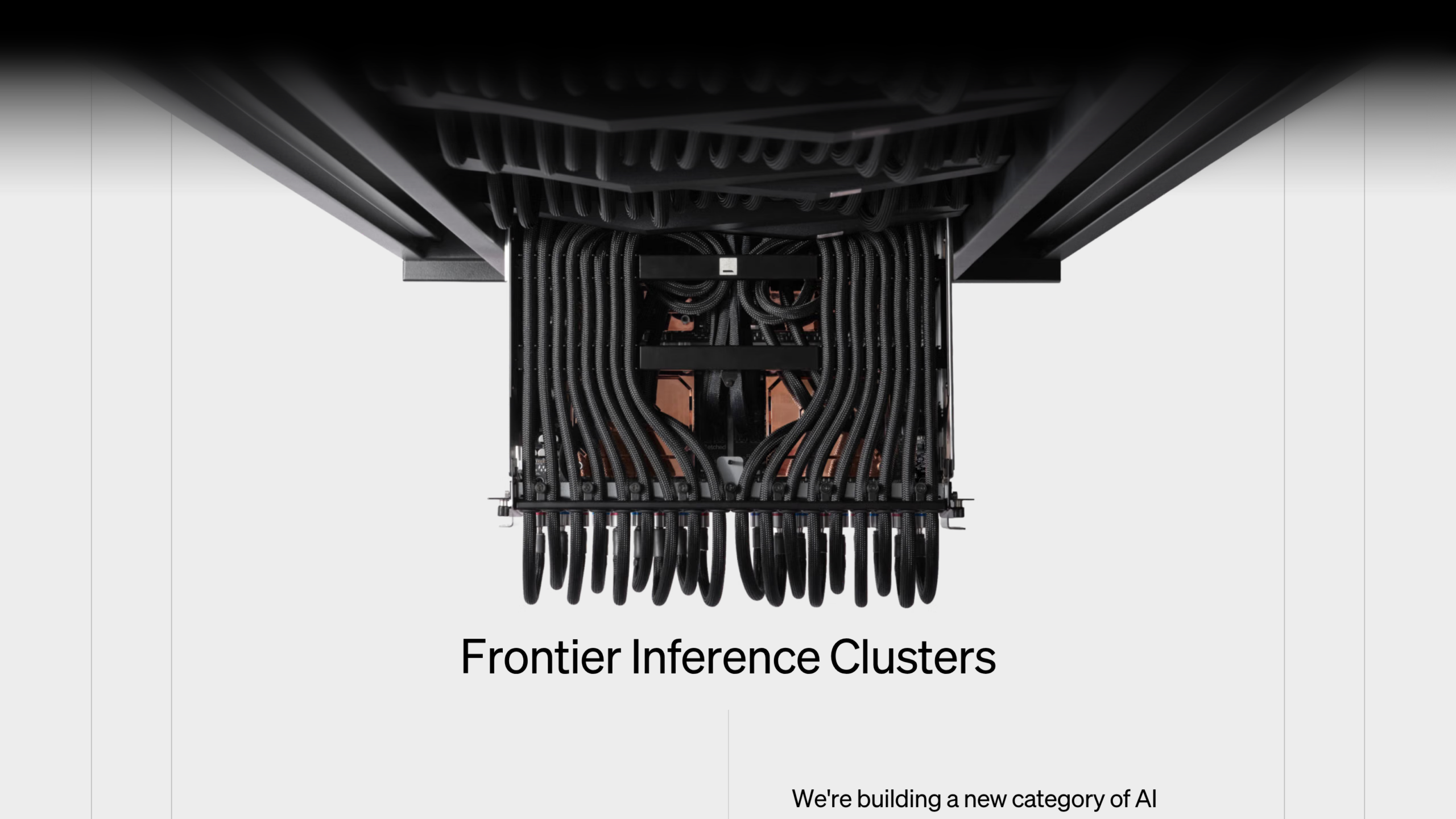
Etched’s official website talks about « Frontier Inference Clusters » and displays the line « We’re building a new category of AI. » The vocabulary is ambitious. The Etched chip, though, is still a young product: just one rack delivered by the time of the August round.
Jane Street, both investor and customer
Jane Street isn’t just a funding source. The trading firm is also the very first paying customer of the Etched chip. That double role raises a direct question: who validates the technology when the investor is also the buyer?
The choice makes sense. A trading firm lives or dies by how fast it processes information and runs its calculations. Investing in a chip built for inference, rather than renting capacity from a general-purpose cloud provider, signals a strong internal conviction about the performance gains Etched promises.
A truly independent validation would come from a third party with no financial stake in the outcome. Here, the money and the customer confidence come from the same pocket. Nothing suggests any dishonesty in this round. Public proof is simply missing, though, and Jane Street ends up being both judge and party.
The bet Etched is making
A general-purpose graphics processor survives an architecture shift. If some model other than the transformer came to dominate AI tomorrow, a GPU would just keep computing something else. The Etched chip, on the other hand, would stay locked onto an architecture that had become secondary. The risk isn’t hypothetical: several highly specialized hardware bets have failed to survive a standard shift in computing history.
The semiconductor industry has already seen this kind of bet. Chips designed for a single standard, cryptocurrency mining or a specific video compression format, have lost nearly all their value the day their use case got replaced by a different standard. An ASIC generally doesn’t get a second life.
The hardware backdrop doesn’t make it easy to reason calmly about this bet. The shortage is pushing prices up across the whole sector. DDR5 RAM prices have been soaring since early 2026, NVIDIA’s RTX 5090 has jumped from $1,999 to $4,930 as memory runs short, and even NVIDIA’s entry-level PC, the $2,500 RTX Spark, is part of this broad price surge.

In this climate, a strong technical conviction finds buyers, even without public proof. If transformers stay the dominant architecture for five years, Etched pockets a bet that paid off a hundredfold. If the architecture shifts before then, the Etched chip becomes a very expensive collector’s item, etched for a world that no longer exists.






0 Commentaires
Aucun commentaire pour le moment. Soyez le premier à commenter !