
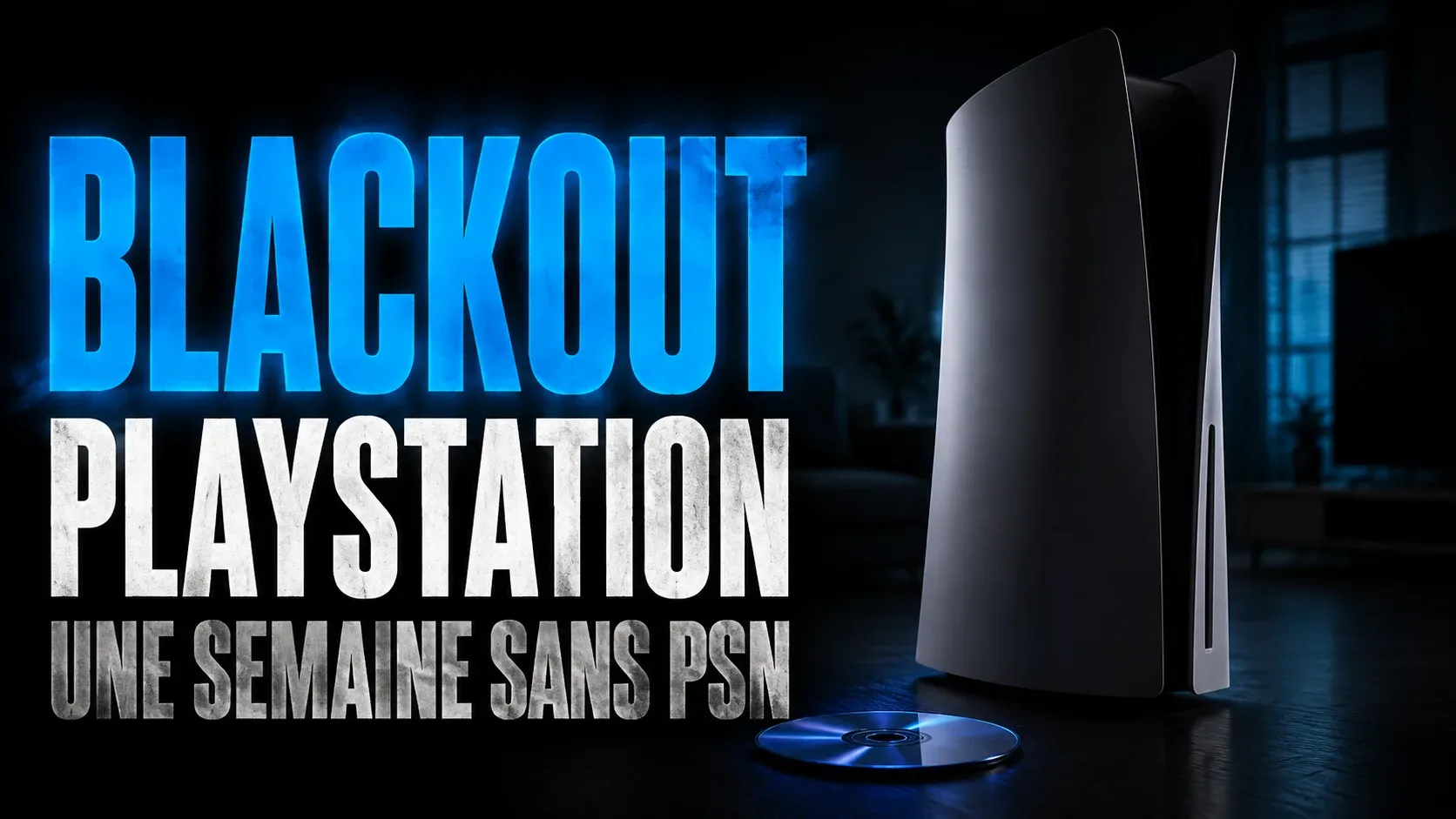
Since 23 August 2026 at 7pm local time, part of the PlayStation community has switched off its console. No outage, no hack: a PlayStation blackout, running until 30 August. The call asks players not to sign in to the PlayStation Network (Sony’s online service, required to play and buy on the PS Store), not to buy anything on the digital storefront, and to leave their console switched off for seven days.
The call comes from DoesItPlay, a video game preservation collective (an effort to keep a game playable even after its online support is shut down) and consumer advocacy group. The group launched its call on 26 July 2026 on X, under the hashtag #PSBlackout, promising an « economic and gameplay blackout »: a boycott of both wallets and playtime.
The movement’s target has been known for months. Sony Interactive Entertainment announced it would stop producing physical discs for all its new games starting in January 2028. For DoesItPlay, this PlayStation blackout is not an isolated move: it’s the response to a string of decisions, with this one said to be the latest.
What the PlayStation blackout actually demands
DoesItPlay’s statement leaves no room for interpretation. For seven days, players are asked to turn off their console, avoid signing in to their PlayStation account, and refrain from any purchase on the PlayStation Store. Nothing is mandatory: it’s a call for voluntary action, not a measure imposed by Sony.
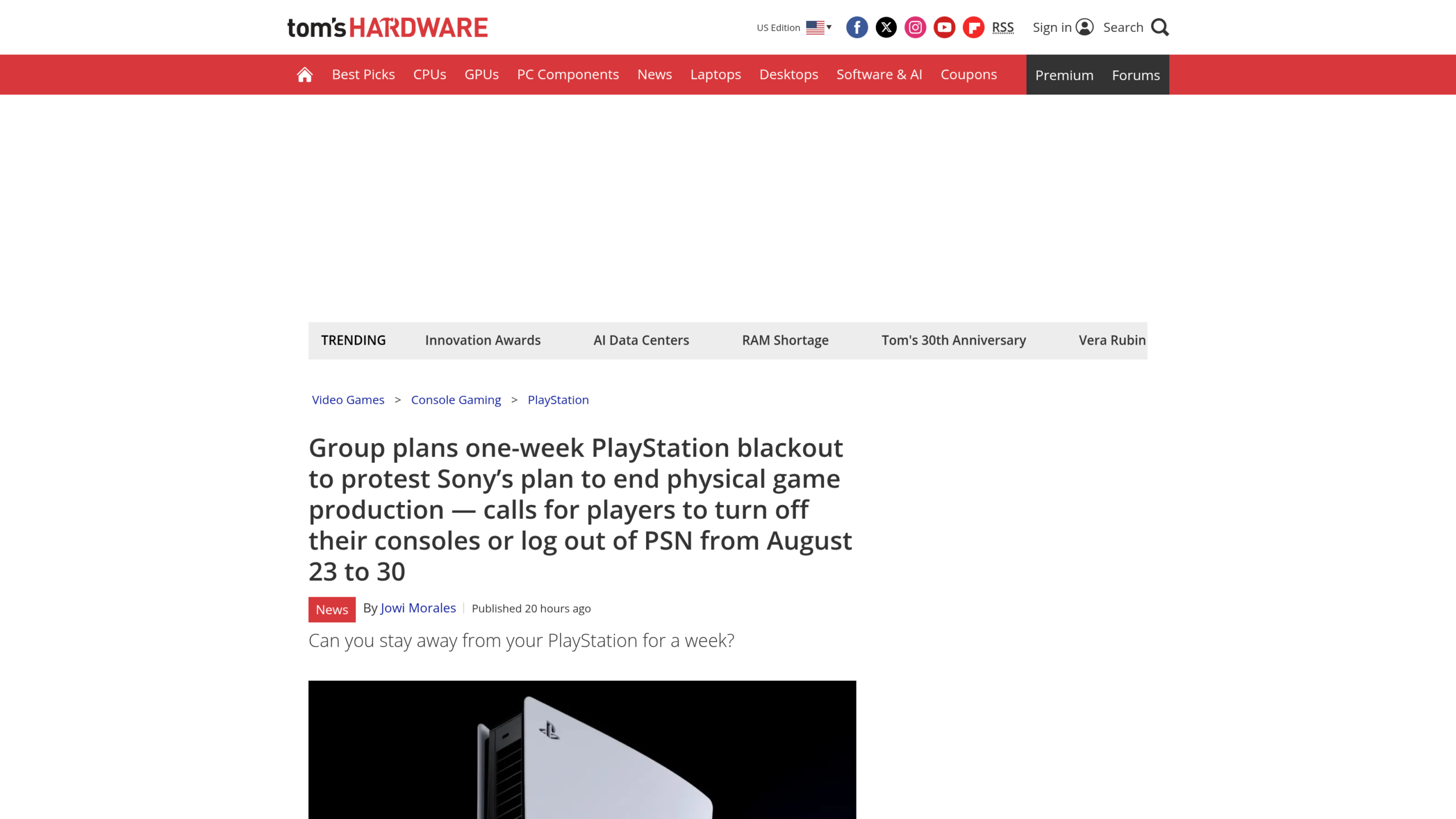
Its message is blunt. « PlayStation has never felt more disconnected from its community, » writes DoesItPlay, before adding: « Ending physical discs in 2028 feels like the last straw. » The statement also blames Sony for studio closures, a shift toward games as a service (games designed to generate revenue over time, through subscriptions or in-game purchases), and franchises left to wither.
Why now: the end of discs as the trigger
That date is no accident. DoesItPlay writes that « with the decisions that are within its control, the company continues to mismanage the strong position it inherited from the PS4 era. » The end of discs, detailed in our article on the announced disappearance of physical media at Sony and Xbox, points to a bigger concern: losing the ability to own a game instead of renting access to an online library.
| Date | Step |
|---|---|
| 26 July 2026 | DoesItPlay launches the #PSBlackout call on X |
| 23 August 2026, 7pm | Start of the PlayStation blackout |
| 27 August 2026 | Release of Metal Gear Solid Master Collection Vol. 2, right in the middle of the boycott week |
| 30 August 2026 | Scheduled end of the PlayStation blackout |
| January 2028 | Announced end of physical disc production at Sony |
The timing of the PlayStation blackout also has a tactical explanation. The group states it wants to « give publishers and developers minimal impact while still giving players a voice. » In short: target Sony without making the studios releasing a game that week carry the weight of the boycott.
A petition that has passed 345,000 signatures
The PlayStation blackout didn’t come out of nowhere. It builds on an earlier Change.org petition titled « Don’t Kill the Disc: Tell Sony to Keep Physical PlayStation Games. » It has now passed 345,000 signatures, with some sources counting precisely 347,691.
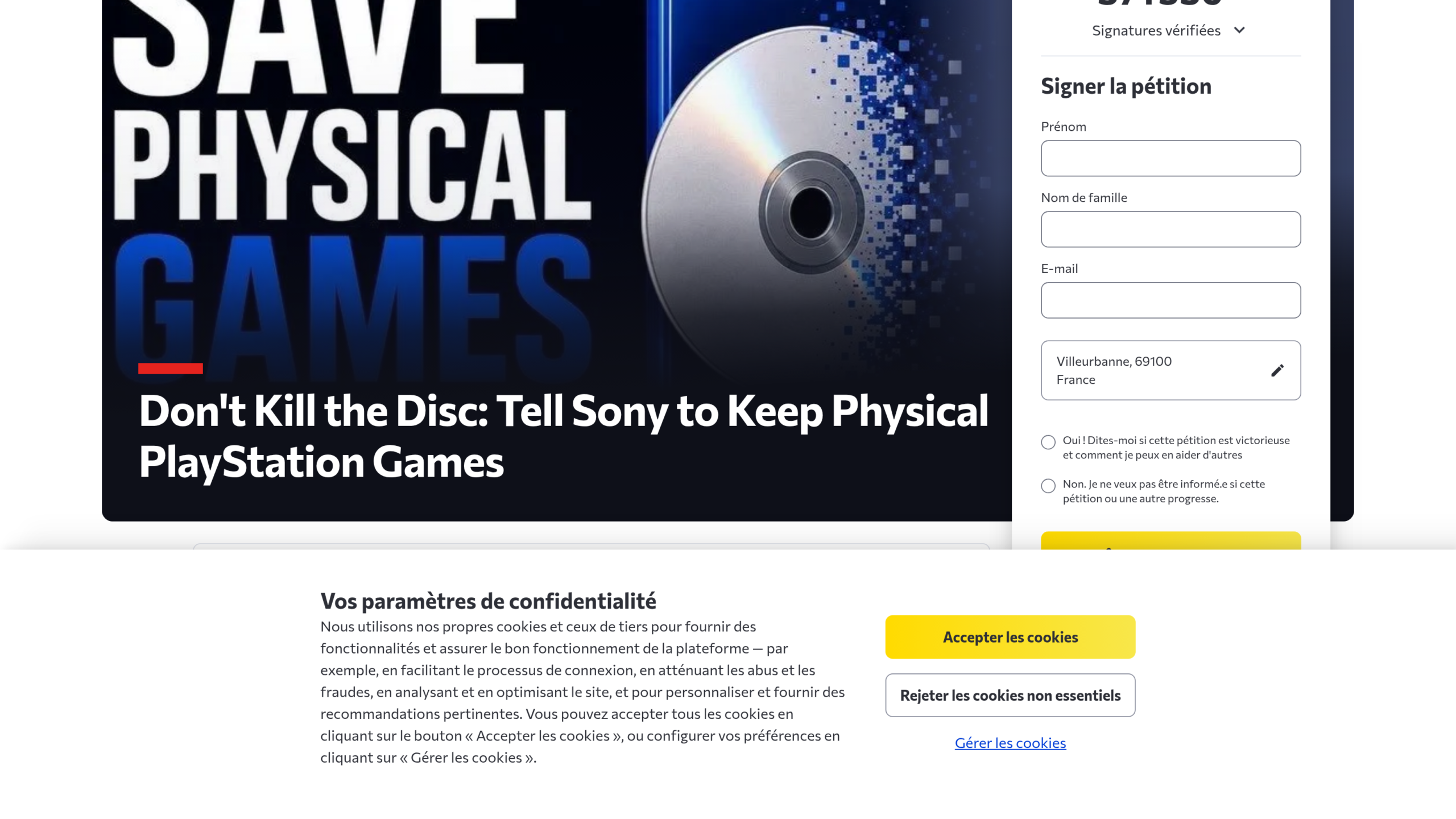
An update posted on the petition sums up the organisers’ mood: « A month later, Sony still hasn’t spoken to players directly. Join #PSBlackout this week. » To date, Sony has given no public response to the signatories.
Three major releases right in the middle of the PlayStation blackout week
This Week In Videogames flagged a detail that complicates DoesItPlay’s message. The PlayStation blackout week covers the releases of Star Wars Zero Company, Resonance: A Plague Tale Legacy, and Aliens: Fireteam Elite 2. Three games launching precisely within the window where organisers are asking players to buy nothing on the PlayStation Store.
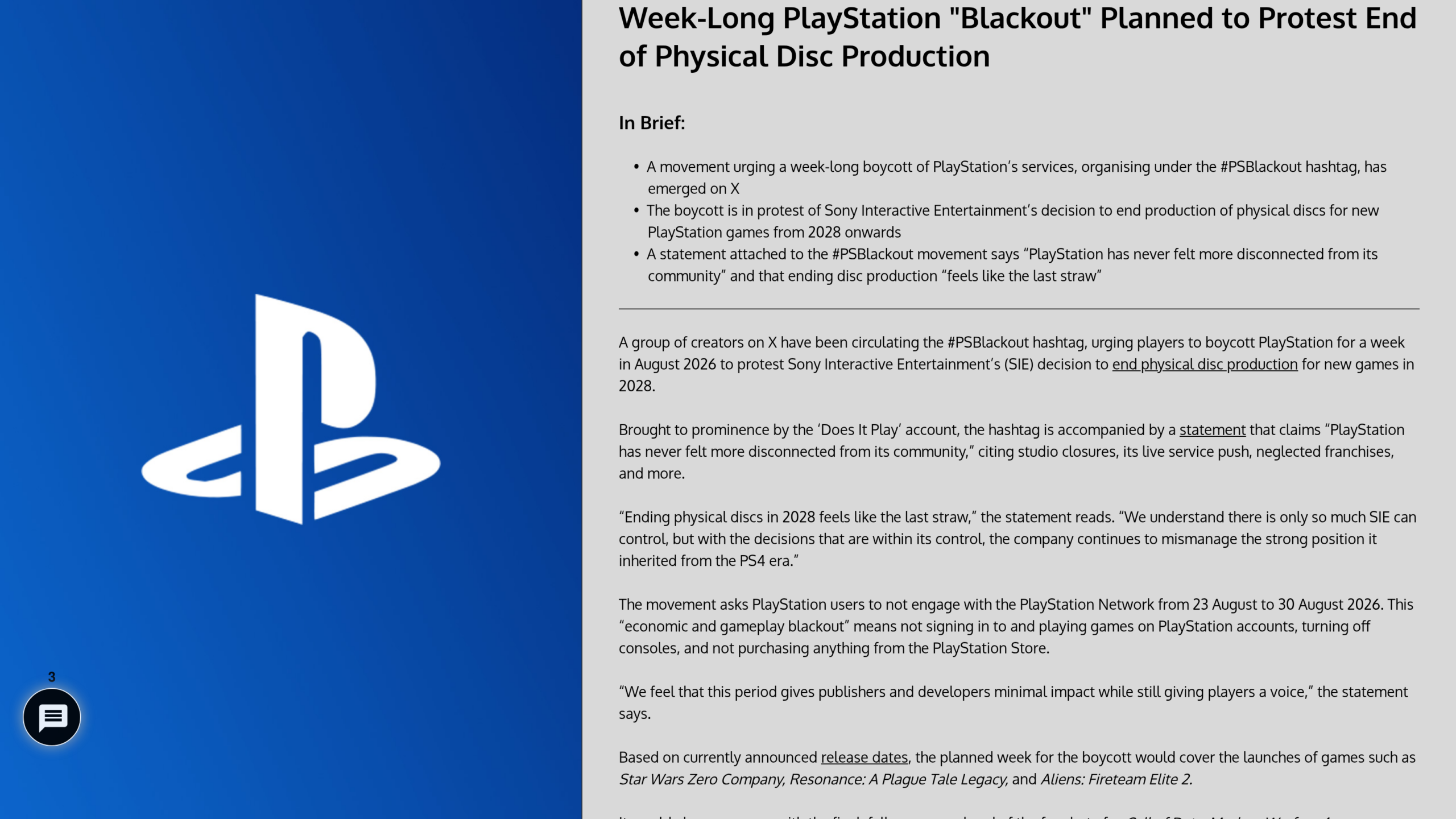
Add to that a fourth release the organisers didn’t mention: the compilation Metal Gear Solid Master Collection Vol. 2, due on 27 August, right in the middle of the blackout. The group says it wants « minimal impact » on developers. On paper, the coincidence of dates tells a different story: these releases end up at the centre of a boycott week.
DoesItPlay and the preservation question
Behind the call for a PlayStation blackout, DoesItPlay maintains a less visible but central tool for its argument: a public database that tracks, game by game, whether the physical version works offline. It listed 3,540 entries at the time of the snapshot. Across that catalogue, 94% of games are playable offline and 73% require no mandatory download. So just over a quarter still need something downloaded before they’ll work.
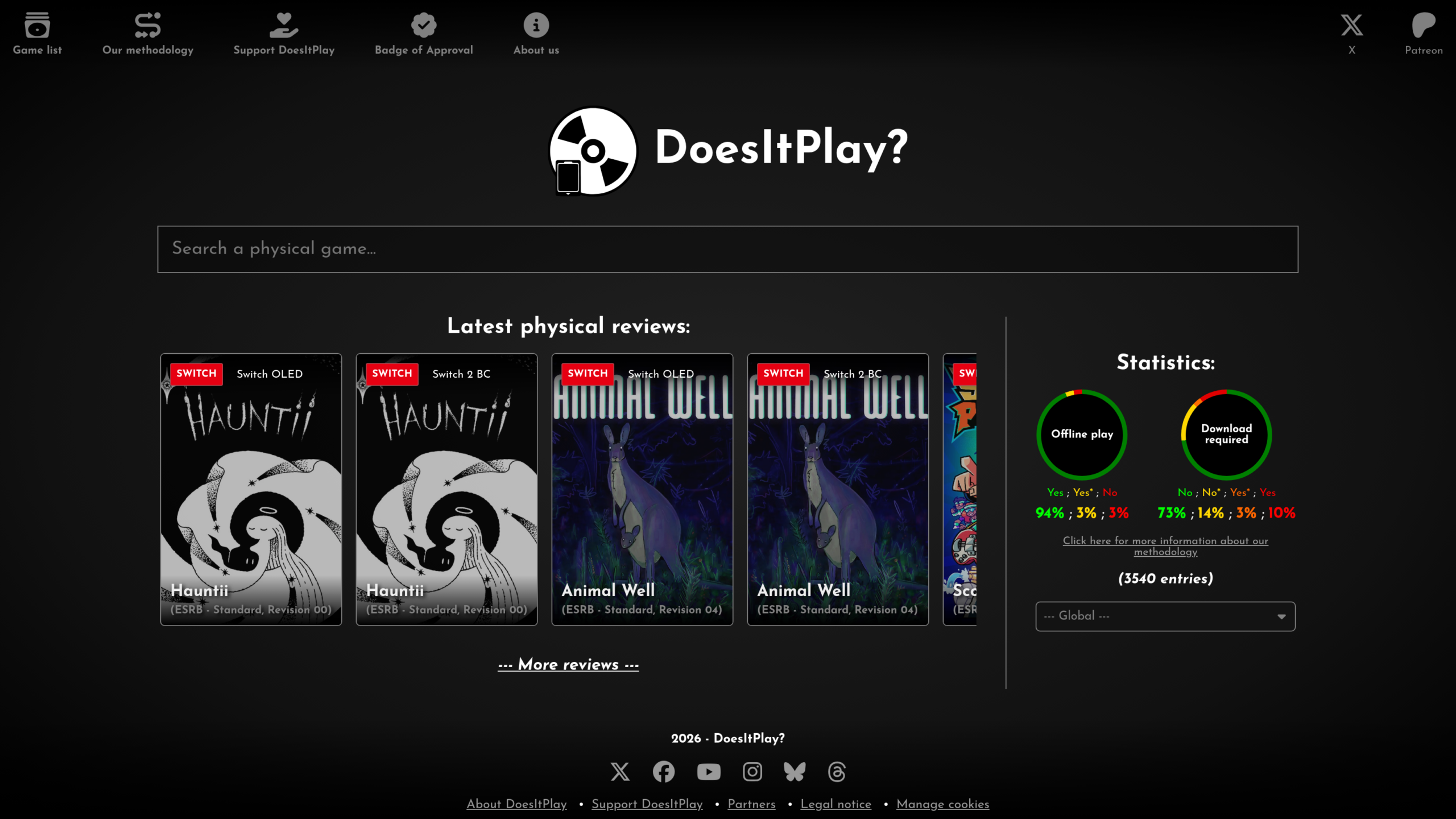
That quarter sheds light on part of the debate that goes beyond the PlayStation blackout alone. Even when the disc exists, it sometimes has only symbolic value: without an internet connection to download the launch patch, the box contains only an incomplete game. That’s exactly the argument highlighted by the trust crisis running through the video game industry over the past several months, between PlayStation and Xbox.
One question remains without a solid answer: how many players actually switched off their console. Sony publishes no real-time PSN usage data, and there’s no way to verify whether the PlayStation blackout dented sign-ins or store sales. The only solid figure is the one from the petition. The rest will be measured by Sony’s attitude in the weeks ahead, even as the group’s chief executive sold 56% of their shares right after the announcement that physical media was ending.







0 Commentaires
Aucun commentaire pour le moment. Soyez le premier à commenter !